
vitamine -
Boron: The Hidden Mineral for Bone and Hormones
The potential boron benefits for human health, particularly in supporting bone density and hormonal balance, are a subject of growing scientific interest. This trace mineral, found naturally in many plant-based foods, plays a complex and multifaceted role in the body's metabolic
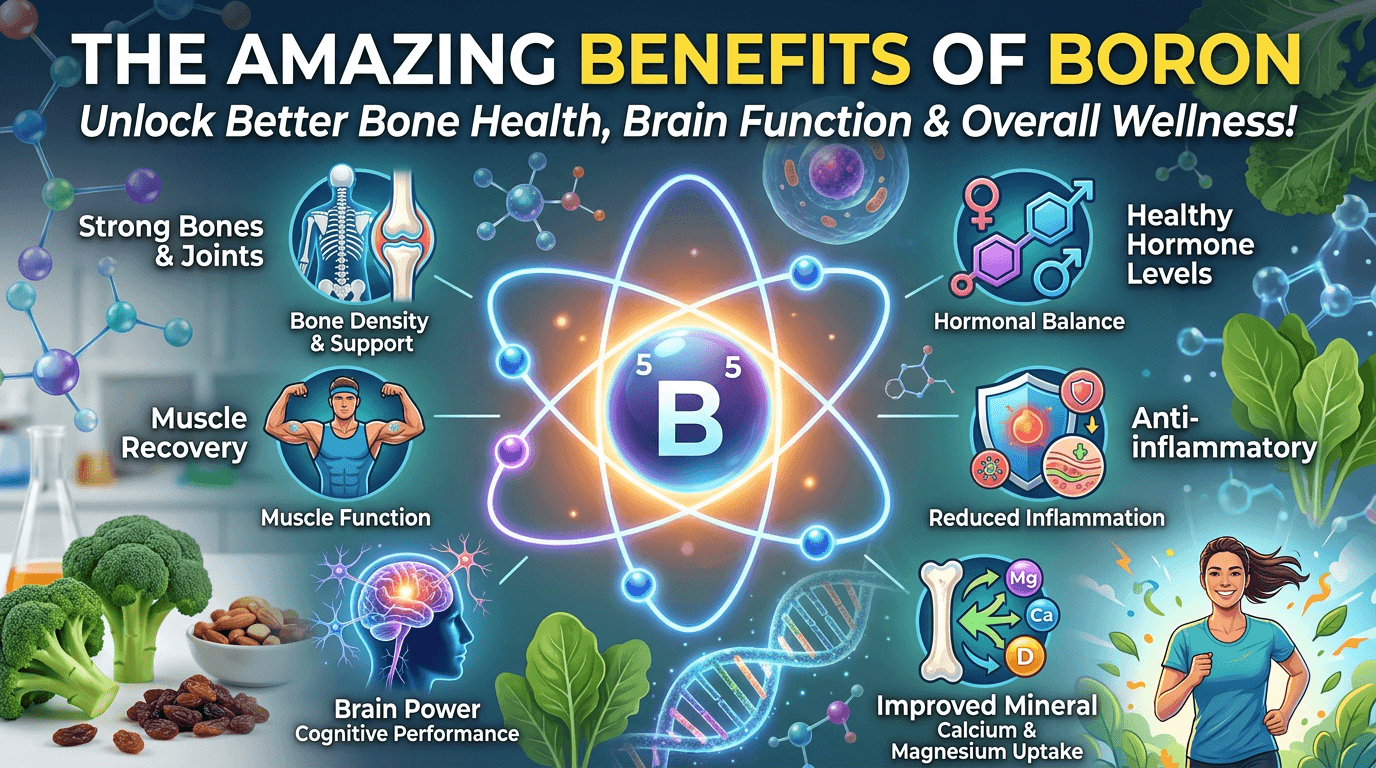
The potential boron benefits for human health, particularly in supporting bone density and hormonal balance, are a subject of growing scientific interest. This trace mineral, found naturally in many plant-based foods, plays a complex and multifaceted role in the body's metabolic processes. While not yet classified as an essential nutrient for humans, evidence suggests that adequate boron intake is important for the proper function and metabolism of key nutrients like vitamin D, calcium, and magnesium, and it may influence steroid hormone levels, including testosterone and estrogen.
Understanding boron's role can provide a more complete picture of nutritional health, especially for individuals focused on maintaining strong bones, supporting hormonal equilibrium, and promoting overall wellness. This article offers a detailed exploration of boron, covering its functions in the body, its relationship with bone and hormone health, dietary sources, supplementation guidelines, and crucial safety information. It aims to provide a clear, evidence-based perspective to help you make informed decisions in consultation with your healthcare provider.
What Is Boron and Why Is It Important?
Boron is a trace mineral that is ubiquitous in the environment, found in soil, rocks, and water. While it is essential for the growth and development of plants, its official status in human nutrition is still under review. It is not currently classified as an essential nutrient by U.S. regulatory bodies because a clear deficiency disease has not been identified. However, a growing body of research indicates that boron is biologically active in humans and performs several beneficial physiological functions, leading many scientists to consider it a "beneficial" or "bioactive" element for health.
In the human body, boron appears to influence a wide range of metabolic processes. It plays a role in the metabolism of other essential minerals, including calcium, magnesium, and phosphorus, which are critical for bone health. Boron also seems to affect the activity of certain enzymes and the stability of cell membranes. Its most researched roles involve its interactions with the endocrine system, where it may influence the production and metabolism of steroid hormones like testosterone and estrogen, and its contribution to maintaining bone tissue.
The amount of boron in the human body is very small, but it is concentrated in certain tissues, particularly the bones, spleen, and thyroid gland. This distribution suggests its importance in these specific areas. As research continues, the understanding of boron's full impact on human health is expanding, highlighting its significance beyond its traditional role in agriculture and plant biology. For this reason, maintaining an adequate intake through diet, and in some cases supplementation, is a topic of increasing discussion in the nutritional science community.
Boron and Bone Health: A Closer Look
Boron appears to be a significant, though often overlooked, contributor to bone health. Its primary benefit in this area stems from its synergistic relationships with other critical bone-building nutrients. By influencing how the body uses and retains minerals like calcium and magnesium and by affecting vitamin D activation, boron helps support the complex processes of bone maintenance and formation.
How Boron Interacts with Calcium, Vitamin D, and Magnesium
Boron's influence on bone health is largely indirect, operating through its effects on other key nutrients. It appears to act as a metabolic regulator, ensuring that other vitamins and minerals can perform their functions more effectively. This synergistic activity is a central aspect of boron's value for skeletal integrity.
- Calcium and Magnesium Metabolism: One of boron's most important functions is its ability to reduce the urinary excretion of calcium and magnesium. By helping the kidneys conserve these vital minerals, boron ensures more of them are available for building and maintaining bone matrix. This is especially important as we age, when mineral loss from bones can accelerate. Research suggests that in states of low boron intake, the loss of calcium and magnesium through urine increases.
- Vitamin D Activation: Boron appears to be necessary for the efficient activation of vitamin D. Vitamin D, in its inactive form, must be converted by the liver and kidneys into its active form, calcitriol. This active form is essential for calcium absorption in the gut. Studies indicate that boron may extend the half-life of vitamin D and enhance its biological effects, thereby improving calcium uptake and its integration into bone tissue. This interaction is particularly relevant for individuals with suboptimal vitamin D status.
This network of interactions demonstrates that boron doesn't work in isolation. Its presence helps create a more favorable metabolic environment for bone health, amplifying the benefits of a diet rich in calcium, magnesium, and vitamin D. A deficiency in any one of these nutrients can compromise the entire system, and ensuring adequate boron intake helps fortify the overall structure.
Boron's Role in Bone Mineral Density
Bone Mineral Density (BMD) is a key indicator of bone strength and a primary measure used to assess osteoporosis risk. While large-scale, long-term human trials are still needed, existing evidence from animal studies and smaller human observational studies suggests a positive association between boron intake and healthier bone density.
Animal studies have shown that diets deficient in boron can lead to bone development issues, including thinner, weaker bones. Conversely, boron supplementation in these studies has been shown to improve bone strength, thickness, and volume. For example, research has indicated that boron can enhance the mechanical properties of bone, making it more resistant to fracture.
In humans, some studies have observed that populations with higher dietary boron intake tend to have better bone health outcomes. A frequently cited study involving postmenopausal women found that a boron-supplemented diet (3 mg/day) significantly reduced the urinary loss of calcium and magnesium, especially when magnesium and vitamin D levels were also low. This suggests boron is particularly protective when the diet is not perfectly optimal. While this evidence is promising, it is not conclusive proof that boron supplements can prevent or treat osteoporosis. Instead, it positions boron as a supportive nutrient for maintaining skeletal integrity as part of a comprehensive approach that includes adequate calcium, vitamin D, and weight-bearing exercise.
Supporting Bone Repair and Formation
Beyond mineral metabolism, boron may also have a direct impact on the cells responsible for bone remodeling. The continuous process of breaking down old bone (resorption) by osteoclasts and building new bone (formation) by osteoblasts is essential for maintaining a healthy skeleton. Preliminary research suggests that boron may help shift this balance in favor of bone formation.
In vitro (lab-based) studies have suggested that boron can influence the expression of genes involved in the extracellular matrix, which provides the scaffold for new bone. It may also promote the proliferation and activity of osteoblasts, the cells that synthesize new bone tissue. While these cellular-level findings are intriguing, they need to be validated through more extensive human clinical trials. Nonetheless, they provide a potential mechanism for how boron contributes to the structural integrity and healing capacity of bone tissue.
The Connection Between Boron and Hormones
One of the most compelling areas of boron research is its influence on the endocrine system, particularly its effects on steroid hormones. Evidence from a number of small human studies suggests that boron may modulate the levels and metabolism of key hormones like testosterone and estrogen. The mechanisms are still being unraveled, but the findings point toward a significant role for this trace mineral in hormonal balance.
Boron and Testosterone Levels
Boron has gained significant attention in fitness and men's health communities due to studies suggesting it can impact testosterone levels. Testosterone exists in the body in two main forms: bound and free. Bound testosterone is attached to proteins, primarily Sex Hormone Binding Globulin (SHBG) and albumin, and is not readily available for use by tissues. Free testosterone is unbound and biologically active. It is the free testosterone that is responsible for many of its physiological effects.
Several small-scale human studies have reported that boron supplementation may lead to an increase in free testosterone levels. The proposed mechanism is that boron may reduce the amount of SHBG in the bloodstream. With less SHBG available to bind to testosterone, a higher proportion of testosterone remains in its free, active state. For example, one study in healthy men found that a daily dose of 10 mg of boron for one week was associated with a significant increase in free testosterone and a decrease in SHBG. Another study involving a 6 mg daily dose over a longer period also noted similar trends.
Boron's Influence on Estrogen
Boron's hormonal effects are not limited to testosterone; it also appears to influence estrogen levels and metabolism. This is particularly relevant for postmenopausal women, as estrogen levels naturally decline during this life stage, contributing to an increased risk of bone loss. Research suggests that boron may help support estrogen levels in this population.
One of the landmark studies on boron involved postmenopausal women who were not on hormone replacement therapy. The study found that supplementing with 3 mg of boron per day elevated blood levels of 17-beta-estradiol, the most biologically active form of estrogen, to levels similar to those seen in women on estrogen replacement. The same study also noted an increase in testosterone levels. The proposed mechanism is that boron may influence the hydroxylation reactions in the kidneys that are involved in steroid hormone synthesis, effectively promoting the production of estrogen and testosterone.
This effect could be one of the ways boron supports bone health in postmenopausal women, as estrogen is crucial for inhibiting bone resorption. By supporting estrogen levels, boron may help slow down the rate of age-related bone loss. However, this also means that individuals with hormone-sensitive conditions should exercise caution and consult a healthcare provider before using boron supplements.
Impact on Other Hormones (e.g., DHEA, Cortisol)
Boron's hormonal influence may extend to other important steroids. Some research suggests it can affect levels of DHEA (dehydroepiandrosterone), a precursor hormone that the body can convert into testosterone and estrogen. By potentially influencing DHEA levels, boron may provide upstream support for the entire steroid hormone cascade.
Additionally, some studies have looked at boron's relationship with cortisol, the body's primary stress hormone. Chronically elevated cortisol can have negative effects on bone density and overall health. While the evidence is mixed and less robust than for sex hormones, some preliminary findings suggest that adequate boron levels might be associated with a more balanced cortisol response. This area requires much more research to draw any firm conclusions, but it highlights the broad, systemic nature of boron's potential effects.
Potential Additional Benefits of Boron
Beyond its well-researched roles in bone and hormone health, emerging evidence suggests that boron may offer a range of other potential benefits. These areas of research are generally more preliminary but highlight the diverse biological activities of this trace mineral in supporting cognitive function, modulating inflammation, and aiding in tissue repair.
Supporting Cognitive Function
Early research indicates that boron may be important for healthy brain function. Studies in both humans and animals have linked low boron intake to poorer performance on tasks related to cognitive processing, attention, and memory. In one human study, participants were put on a low-boron diet, which resulted in decreased performance on tests measuring manual dexterity, eye-hand coordination, and short-term memory.
When their diets were supplemented with 3 mg of boron per day, their performance on these cognitive tasks improved significantly. The brain is a highly metabolic organ with complex electrical activity, and boron's apparent role in stabilizing cell membranes and influencing ion transport across them might be one mechanism for its effects. While it's not a "smart drug," ensuring adequate boron intake may be a supportive factor for maintaining normal cognitive processes, particularly as we age. More research is needed to understand this relationship fully.
Modulating Inflammatory Responses
Chronic inflammation is a contributing factor to many age-related health conditions. Boron appears to have anti-inflammatory properties, which may contribute to its overall health benefits. Several studies have shown that boron supplementation can lower the levels of key inflammatory markers in the blood.
Specifically, research has found that boron intake is associated with reduced concentrations of C-reactive protein (CRP) and tumor necrosis factor-alpha (TNF-α), two prominent markers of systemic inflammation. For example, a study from the National Health and Nutrition Examination Survey (NHANES) found an inverse relationship between dietary boron intake and CRP levels. Individuals consuming more boron tended to have lower inflammation. This effect has also been observed in studies investigating boron's potential role in joint health, as it may help temper the inflammatory processes involved in conditions like osteoarthritis.
Wound Healing and Cellular Repair
Boron's role in the formation of the extracellular matrix—the complex network of proteins and other molecules that provides structural support to cells—may also extend to wound healing. Some research has shown that topical applications containing boron can accelerate the healing of cuts and sores. It appears to stimulate the activity of key enzymes involved in cell turnover and tissue regeneration.
This property is linked to its influence on collagen production and the function of fibroblasts, the cells responsible for building connective tissue. By supporting the fundamental processes of cellular repair and matrix formation, boron contributes to the body's ability to heal and maintain tissue integrity. While most of this research is focused on topical use, it underscores another fundamental biological role of this versatile mineral.
Are You Getting Enough Boron? Deficiency and Risk Factors
Since boron is not officially classified as an essential nutrient for humans in the United States, there is no established Recommended Dietary Allowance (RDA) or a formally defined "deficiency" state. However, low dietary intake is common and may lead to suboptimal physiological function, even if it doesn't produce an overt deficiency disease. Scientists refer to this as a state of "boron insufficiency."
The lack of an RDA makes it challenging to define exactly how much boron is "enough." Daily intake in the U.S. typically ranges from 0.5 to 1.5 mg, depending heavily on dietary patterns. Many researchers in the field suggest that an intake of at least 3 mg per day may be needed to realize boron's full range of health benefits. Because the average diet often falls short of this amount, a significant portion of the population may have an insufficient intake.
Signs potentially associated with very low boron intake are subtle and non-specific, often overlapping with other nutrient deficiencies. These can include impaired bone metabolism, altered hormone levels, and decreased cognitive alertness. However, these symptoms are not unique to low boron status and require a comprehensive evaluation by a healthcare professional to determine the cause.
Risk factors for low boron intake are primarily dietary and geographical:
- Diets low in plant foods: The primary sources of boron are fruits, vegetables, nuts, and legumes. Individuals who consume a diet high in processed foods and low in plant-based items are at the highest risk for low intake.
- Geographical location: The boron content of soil varies significantly by region. Crops grown in boron-deficient soil will naturally contain less of the mineral. This means that even a plant-rich diet may provide less boron if the food is sourced from these areas.
- Water source: In some regions, drinking water can be a source of boron, but this is highly variable and generally not a significant contributor in most parts of the U.S.
How to Get Boron from Your Diet
For most people, the best way to ensure an adequate intake of boron is through a varied, whole-foods-based diet. Plant foods are by far the richest sources. Increasing your consumption of fruits, vegetables, nuts, and legumes is a simple and effective strategy. Animal products like meat and dairy contain very little boron.
Some of the most concentrated food sources of boron include:
- Fruits: Prunes (and prune juice), raisins, grapes, avocados, peaches, and apples are excellent sources.
- Nuts and Legumes: Almonds, peanuts, hazelnuts, Brazil nuts, lentils, and beans contain significant amounts.
- Vegetables: While vegetables generally contain less boron than fruits and nuts, sources like broccoli, carrots, and potatoes contribute to overall intake.
- Other Sources: Wine, cider, and beer also contain boron, derived from the fruits and grains used to make them. Honey is another notable source.
The boron content in food can vary widely based on the soil and growing conditions. However, consistently including a variety of these foods in your diet will help you achieve a healthy intake. Aiming for several servings of boron-rich foods each day is a practical goal.
| Food Source | Serving Size | Approximate Boron Content (mg) |
|---|---|---|
| Prunes, dried | 1/2 cup (about 100g) | 2.5 - 3.0 mg |
| Raisins | 1/2 cup (about 75g) | 1.5 - 2.2 mg |
| Avocado | 1 medium (about 150g) | 1.5 - 2.1 mg |
| Almonds | 1 ounce (about 23 nuts) | 0.8 mg |
| Peanut Butter | 2 tablespoons | 0.5 mg |
| Red Grapes | 1 cup | 0.5 - 0.75 mg |
| Apple | 1 medium | 0.4 mg |
| Broccoli | 1/2 cup, cooked | 0.3 mg |
A Guide to Boron Supplementation
While a food-first approach is always recommended, boron supplements are available for individuals who have difficulty achieving adequate intake through diet or who have been advised by a healthcare professional to supplement for specific reasons. If you are considering a boron supplement, it's important to understand the different forms, typical dosages used in research, and how to select a high-quality product.
Common Forms of Boron Supplements
Boron supplements come in several chemical forms, which are created by binding elemental boron to another molecule to improve its stability and absorption. While the body seems to absorb most forms of boron quite efficiently, there are some differences to be aware of.
- Boron Citrate, Aspartate, and Glycinate: These are common and affordable forms where boron is chelated (bound) to an organic acid or amino acid (citric acid, aspartic acid, or glycine). They are generally well-absorbed and are used in many supplements.
- Calcium Fructoborate: This is a nature-identical form of boron found in plants. It is a complex of calcium, fructose, and boron. Some research suggests that this form may have unique properties, including enhanced bioavailability and potentially greater anti-inflammatory effects compared to other forms. It is often favored in supplements targeting joint health.
- Boric Acid and Sodium Borate: These are inorganic forms of boron. While they are absorbed well, they are less commonly used in dietary supplements for direct oral consumption compared to chelated forms.
Currently, there is not enough evidence to definitively recommend one form over another for general health. The choice may depend on the specific health goal, individual tolerance, and product availability. All appear to be effective at raising blood and tissue levels of boron.
Understanding Dosage: What the Research Suggests
Since there is no RDA for boron, there is no official recommended supplement dose. Guidance on dosage is typically derived from the amounts used in clinical studies that have shown a beneficial effect. Most of this research has used daily doses in the range of 3 to 10 mg.
- General Support: A low dose, such as 1 to 3 mg per day, is often considered for general nutritional support, aiming to replicate the intake of a boron-rich diet. This amount is unlikely to cause adverse effects and helps bridge potential dietary gaps.
- Targeted Support (Bone and Hormone): Doses in the range of 3 to 6 mg per day are frequently used in studies investigating boron's effects on bone health and hormone levels.
- Higher Doses: Some studies, particularly those looking at testosterone, have used doses up to 10-12 mg per day, but this is typically for short-term use under observation. Long-term use of doses approaching the Tolerable Upper Intake Level (UL) is not recommended without medical supervision.
It is generally advisable to start with a lower dose (e.g., 3 mg) and assess your tolerance. There is no evidence to suggest that "more is better" with boron, and exceeding recommended amounts can increase the risk of side effects.
How to Choose a Quality Boron Supplement
The supplement market in the U.S. is not tightly regulated by the FDA. Therefore, it is important to be a discerning consumer. When choosing a boron supplement, consider the following factors:
- Third-Party Testing: Look for products that have been independently tested for purity and potency by organizations like NSF International, USP (U.S. Pharmacopeia), or ConsumerLab.com. This provides assurance that the product contains what it claims on the label and is free from contaminants.
- Clear Labeling: The label should clearly state the amount of elemental boron per serving, not just the total weight of the boron compound (e.g., "Boron (as Boron Glycinate) ... 3 mg").
- Minimal Additives: Choose a product with a clean ingredient list that is free from unnecessary fillers, artificial colors, and allergens you may be sensitive to.
- Appropriate Dosage: Select a supplement that provides a dose aligned with your health goals and professional guidance. A 3 mg capsule is a common and versatile starting point.
Safety, Side Effects, and Interactions
Boron is generally considered safe when consumed in amounts found in a normal diet and when taken as a supplement in appropriate doses. However, like any bioactive substance, it can cause side effects at high doses and may not be suitable for everyone. Understanding the safety profile of boron is crucial before starting supplementation.
Potential Side Effects of High Boron Intake
The risk of side effects from boron is dose-dependent. Acute toxicity from very high doses (typically in cases of accidental ingestion of boron-containing pesticides or cleaning products) can cause symptoms like nausea, vomiting, diarrhea, abdominal pain, headache, and skin flushing or rash (sometimes called "boron blush").
When taken as a dietary supplement, side effects are rare at doses below the established upper limit. However, consistently taking high doses may lead to an accumulation of boron in the body, potentially causing similar, albeit milder, symptoms over time. There is no evidence of toxicity from consuming boron-rich foods.
The Tolerable Upper Intake Level (UL) for Boron
To prevent the risk of adverse effects from over-supplementation, the Food and Nutrition Board of the Institute of Medicine has established a Tolerable Upper Intake Level (UL) for boron. The UL is the highest daily intake level likely to pose no risk of adverse health effects for almost all individuals in a specific life stage and gender group. It is not a recommended intake level.
Exceeding the UL consistently over a long period may increase the risk of toxicity. It is important to account for boron intake from all sources, including food and other supplements, when considering this limit.
| Age Group | Tolerable Upper Intake Level (UL) per Day |
|---|---|
| Infants 0-12 months | Not established* |
| Children 1-3 years | 3 mg |
| Children 4-8 years | 6 mg |
| Children 9-13 years | 11 mg |
| Adolescents 14-18 years | 17 mg |
| Adults 19 years and older | 20 mg |
| Pregnancy and Lactation (19+ years) | 20 mg |
*UL for infants is not established; intake should come only from food and formula under medical guidance.
Contraindications and Special Populations
Certain individuals should be particularly cautious with boron supplementation and should only use it under the guidance of a healthcare professional:
- Hormone-Sensitive Conditions: Because boron can influence estrogen and testosterone levels, individuals with conditions like breast cancer, prostate cancer, uterine fibroids, or endometriosis should avoid boron supplements unless specifically cleared by their oncologist or specialist.
- Kidney Disease: Boron is primarily excreted by the kidneys. Individuals with impaired kidney function may not be able to clear boron effectively, leading to its accumulation and an increased risk of toxicity.
- Pregnancy and Breastfeeding: While a UL has been set, the effects of supplemental boron on fetal development and infants are not well understood. It is recommended that pregnant and breastfeeding women rely on dietary sources for their boron intake and avoid supplementation.
- Children: Children should not be given boron supplements unless prescribed by a pediatrician, as their tolerance is lower and the risk of exceeding the UL is higher.
Potential Medication and Supplement Interactions
Boron's biological activity means it has the potential to interact with certain medications and other supplements. While research in this area is limited, theoretical interactions exist. It is essential to disclose all supplement use to your healthcare provider and pharmacist.
Given its effects on hormones, boron could potentially interact with hormone replacement therapy (HRT) or other medications that affect estrogen and testosterone levels. It may amplify or alter the effects of these drugs. It's also wise to be cautious when combining boron with other supplements known to affect hormones, such as DHEA or certain herbal extracts. Always consult a healthcare professional before combining these products.
Common Mistakes to Avoid When Using Boron
To maximize the potential benefits of boron while ensuring safety, it is helpful to be aware of common mistakes. Avoiding these pitfalls can lead to a more effective and responsible approach to using this trace mineral.
- Mistake 1: Expecting Immediate or Dramatic Results. Boron is a nutrient, not a drug. Its effects are subtle, supportive, and accumulate over time. It is unlikely to cause rapid, dramatic changes in hormone levels or bone density. Patience and consistency are key.
- Mistake 2: Taking High Doses Without Guidance ("More is Better" Fallacy). The most common mistake is assuming that a higher dose will produce better or faster results. This is not true for boron and can increase the risk of side effects. Stick to recommended dosage ranges (e.g., 3-6 mg) and never exceed the UL without medical supervision.
- Mistake 3: Ignoring Dietary Sources. Supplementation should complement, not replace, a healthy diet. Relying solely on a pill while consuming a diet low in plant foods means you are missing out on boron-rich foods and the thousands of other beneficial phytonutrients they contain.
- Mistake 4: Using Boron as a Standalone "Cure." Boron should not be used to self-treat diagnosed medical conditions like osteoporosis, arthritis, or low testosterone. It is a supportive nutrient that works best as part of a comprehensive plan that may include diet, exercise, and conventional medical care.
- Mistake 5: Not Considering the Bigger Nutritional Picture. Boron works synergistically with other nutrients, especially vitamin D and magnesium. Taking boron in isolation without ensuring adequacy of these other key nutrients may limit its effectiveness.
- Mistake 6: Not Disclosing Use to a Healthcare Provider. Failing to inform your doctor or pharmacist about your supplement use can be dangerous, especially if you take prescription medications or have an underlying health condition. This is particularly important with boron due to its hormonal effects.
Frequently Asked Questions About Boron
What is the best time of day to take boron?
There is no universally agreed-upon "best" time to take boron. It can be taken with or without food, as its absorption is generally efficient. Some people prefer taking it with a meal to minimize the small chance of stomach upset, while others take it at a specific time, like morning or night, simply for consistency.
Can I get enough boron from food alone?
Yes, it is possible to get an adequate amount of boron (e.g., 3 mg or more) from food alone, but it requires a diet rich in plant-based foods. Consistently eating boron-rich items like prunes, raisins, avocados, and nuts can help you achieve this. However, many typical American diets, which are lower in these foods, may provide only 1-1.5 mg per day.
Does boron really increase testosterone?
Some small human studies suggest that boron supplementation (typically 6-10 mg/day) may increase levels of free testosterone, which is the active form. The proposed mechanism is a reduction in Sex Hormone Binding Globulin (SHBG). However, the research is still preliminary, the effects are modest, and it should not be considered a treatment for clinically low testosterone.
Is boron safe for women?
Yes, boron is generally safe for women at appropriate dietary and supplemental doses. In fact, some of the key research on boron's benefits for bone health and estrogen support was conducted in postmenopausal women. However, women with hormone-sensitive conditions (like breast cancer or endometriosis) should avoid supplementation and consult their doctor due to boron's effects on estrogen.
How long does it take for boron to work?
The effects of boron are nutritional and build over time. Some studies have noted changes in biochemical markers (like hormone levels or mineral excretion) within a week. However, for structural changes like improvements in bone metabolism, the benefits are long-term and would likely take many months or years to become apparent as part of a comprehensive health strategy.
What's the difference between boron and borax?
Boron is a chemical element. Borax (sodium tetraborate) is a mineral compound that contains boron and is commonly used in household cleaning products and pesticides. While borax is a source of boron, it is not intended for human consumption and can be toxic if ingested. Boron supplements use purified, food-grade forms of boron, like boron glycinate or calcium fructoborate, that are specifically prepared for dietary use.
Can boron help with arthritis?
Some research suggests boron may be beneficial for joint health, particularly for osteoarthritis. Its anti-inflammatory properties and its role in calcium and vitamin D metabolism may contribute to this. Some studies have found that people living in areas with high boron intake have lower rates of arthritis. However, boron is not a cure for arthritis, and you should consult a healthcare professional for diagnosis and treatment.
Should I cycle boron supplements?
There is no established scientific protocol for cycling boron. Most research studies involve continuous daily use. Some individuals in the fitness community practice cycling (e.g., a few weeks on, one week off) out of a general precaution against the body adapting, but there is no strong evidence to suggest this is necessary or beneficial for standard doses (3-6 mg). It is best to follow the advice of your healthcare provider.
Conclusion: Integrating Boron Wisely
Boron is an intriguing and biologically active trace mineral that holds significant promise, particularly for supporting bone health and hormonal balance. Though not yet deemed "essential," the weight of scientific evidence suggests that maintaining an adequate intake is beneficial for overall health. Its ability to work synergistically with vitamin D, calcium, and magnesium underscores its role as a key player in nutrient metabolism, while its influence on testosterone and estrogen highlights its importance in the complex world of endocrinology.
For most individuals, the primary focus should be on a food-first approach. Building a diet rich in fruits, vegetables, nuts, and legumes is the safest and most holistic way to increase your boron intake and gain the benefits of countless other nutrients. Foods like prunes, avocados, and almonds are not only excellent sources of boron but also contribute to a healthy, well-rounded eating pattern.
When dietary intake is insufficient or when specific health goals warrant it, supplementation can be a reasonable option. However, it should be approached with care and knowledge. Choosing a quality product, adhering to sensible dosages (typically 3-6 mg), and understanding the safety limits are paramount. The most crucial step is to engage in an open dialogue with a licensed healthcare professional. They can help you assess your individual needs, consider potential interactions, and integrate boron supplementation into your health plan in a way that is both safe and effective.