
vitamine -
The Impact of Sugar on Biological Aging
Glycation and aging are closely connected because excess sugar in the body can attach to proteins and fats, forming compounds that may affect how tissues function over time. This does not mean sugar directly “causes” aging in a simple way, but it is one factor that may contribute
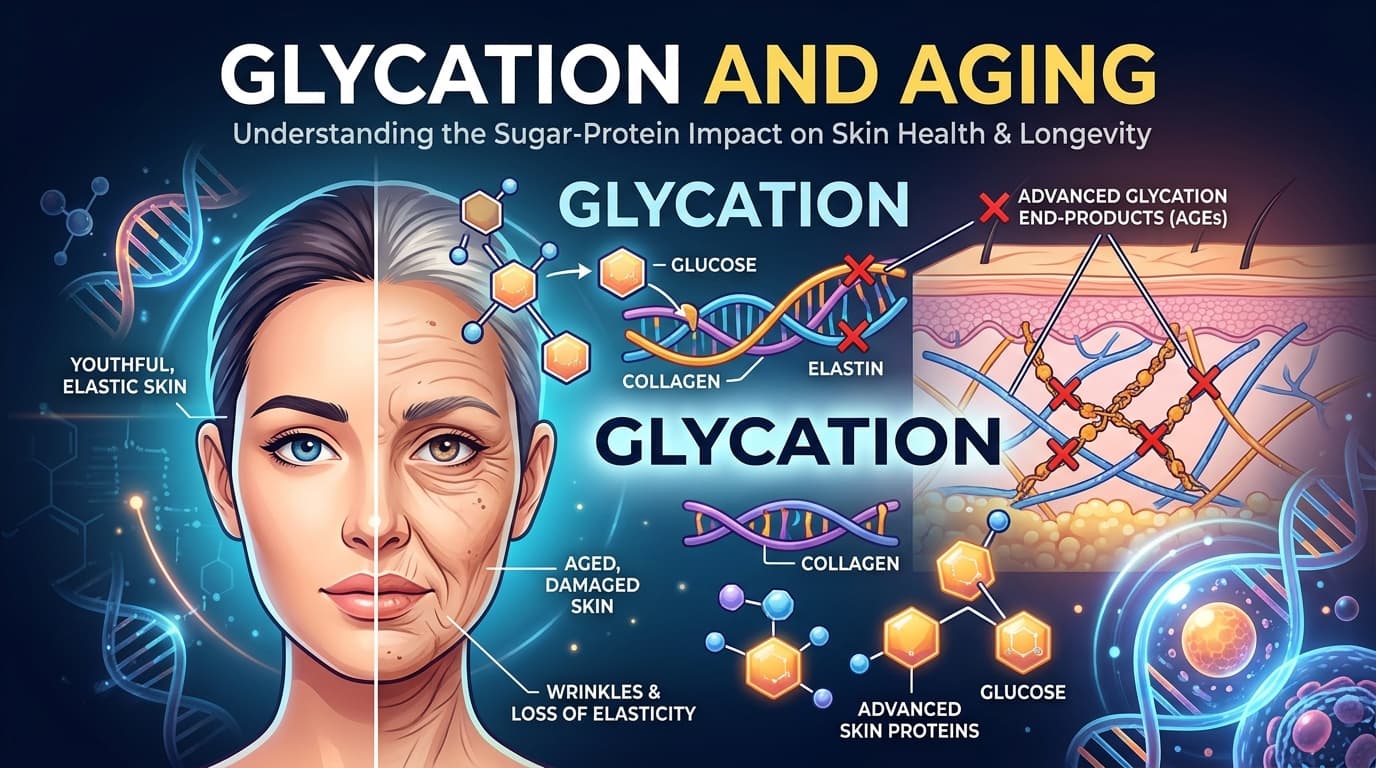
Glycation and aging are closely connected because excess sugar in the body can attach to proteins and fats, forming compounds that may affect how tissues function over time. This does not mean sugar directly “causes” aging in a simple way, but it is one factor that may contribute to age-related wear in cells and tissues.
Understanding this topic can help readers make more informed choices about diet, blood sugar balance, and overall metabolic health. In this article, you’ll learn what glycation is, how it relates to biological aging, what increases risk, how diet and lifestyle can influence it, and when it is appropriate to talk with a licensed healthcare professional.
What biological aging means and why sugar is part of the conversation
Biological aging refers to the gradual changes that happen in cells, tissues, and organs over time. It is different from chronological age, which is simply how many years a person has lived. Two people of the same age can have different biological aging patterns depending on genetics, diet, sleep, physical activity, stress, and medical conditions.
Sugar enters the conversation because it can influence blood glucose levels and, over time, the chemistry of proteins and fats in the body. When glucose is too abundant, it can bind to molecules in a non-enzymatic process called glycation. This process may contribute to the formation of advanced glycation end products, often called AGEs, which are commonly discussed in relation to aging biology.
That does not mean all sugar is harmful or that a single food choice determines long-term aging. The bigger issue is the overall pattern: frequent high-sugar intake, consistently elevated blood glucose, poor metabolic health, and low intake of nutrient-dense foods may together increase stress on the body. This is why the topic is relevant for readers interested in healthy aging, blood sugar balance, and supplement safety.
Chronological age versus biological age
Chronological age is fixed, but biological aging is shaped by multiple factors. Some people have lab markers, functional measures, or clinical patterns that suggest faster or slower aging relative to their age group. Researchers often study glucose metabolism, oxidative stress, inflammation, and protein modification as part of that broader picture.
Glycation is one of those processes because it affects the structure and function of proteins. Over time, this can matter in tissues that rely on elasticity, repair, and long-lived proteins, such as skin, blood vessels, eyes, kidneys, and nerves. Still, biological aging is multifactorial, and sugar is only one piece of a much larger system.
What glycation is and how it differs from normal metabolism
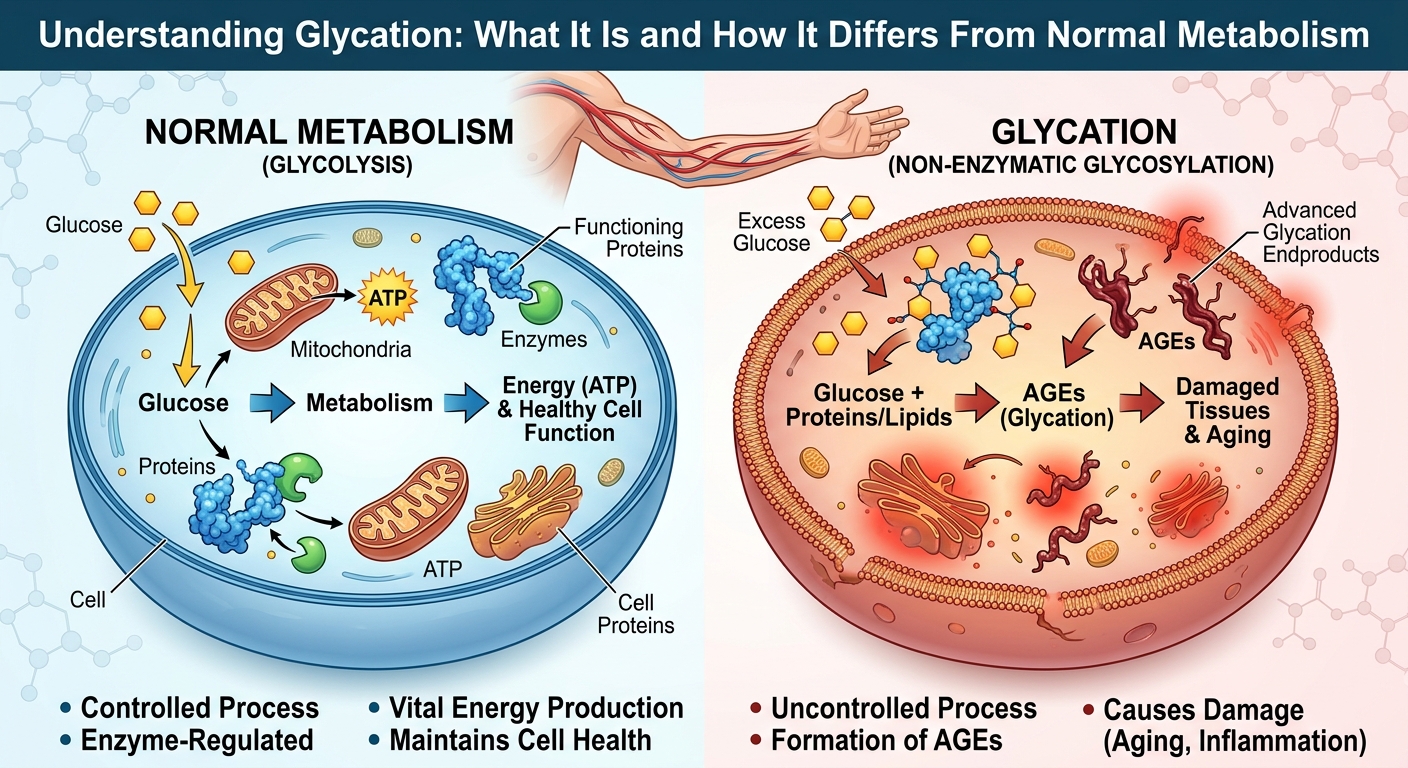
Glycation is a chemical process in which sugar molecules, especially glucose, attach to proteins, lipids, or nucleic acids without the help of enzymes. This can happen naturally in the body and is not inherently abnormal. The concern arises when glycation happens too often or becomes excessive, because it can alter the structure and function of the molecules involved.
Normal metabolism depends on glucose for energy. The body regulates blood sugar through hormones such as insulin and glucagon, and under typical conditions, glucose is moved into cells and used efficiently. Problems may arise when glucose remains elevated for long periods or when metabolic regulation is impaired, which may increase the likelihood of glycation.
Over time, early glycation products can develop into AGEs. These compounds can accumulate in tissues, especially when turnover is slow. Researchers study AGEs because they may be associated with stiffness in connective tissues, oxidative stress, inflammatory signaling, and other changes linked to biological aging.
How glycation happens step by step
The process begins when a reducing sugar, such as glucose, reacts with amino groups in proteins. This first reaction forms an unstable intermediate that can rearrange into more stable compounds. If the process continues, the molecules may undergo additional changes and eventually form AGEs.
This chemistry is influenced by both internal and external factors. Inside the body, higher glucose exposure, insulin resistance, and metabolic dysfunction can increase glycation pressure. Outside the body, certain cooking methods, especially high-heat dry cooking, can also create AGEs in food. Both sources are relevant, although the body’s own metabolic state usually matters most for long-term aging discussions.
Why AGEs are discussed in aging research
AGEs are discussed because they can bind to proteins that are important for structural support and cellular signaling. In collagen, for example, cross-linking may affect elasticity and repair. In blood vessels, that may relate to stiffness. In other tissues, it may affect resilience and normal function.
It is also important to keep the evidence in context. AGE biology is an active area of study, but not every AGE measurement predicts disease or personal aging speed in a simple way. Still, the topic matters because it connects daily food patterns, glucose control, and long-term metabolic health.
| Term | Meaning | Why it matters |
|---|---|---|
| Glycation | Sugar binding to proteins, fats, or DNA without enzymes | Can change molecule structure and function over time |
| AGEs | Advanced glycation end products | May accumulate in tissues and are often studied in aging research |
| Blood glucose | Sugar circulating in the bloodstream | Higher levels can increase glycation exposure |
| Biological aging | Functional aging of cells and tissues | Can differ from chronological age |
How excess sugar may influence biological aging
Excess sugar may influence biological aging through several overlapping pathways, including glycation, oxidative stress, inflammation, and metabolic strain. These mechanisms do not act in isolation. They often reinforce one another, which is why long-term dietary patterns matter more than any single meal or ingredient.
One of the most discussed mechanisms is the accumulation of AGEs. When more glucose is available than the body can readily process, glycation may increase. If that process continues over time, tissue proteins can become modified in ways that may reduce flexibility or interfere with normal cell signaling.
Another pathway involves blood sugar variability. Frequent spikes and crashes may reflect less stable glucose handling, which is often associated with insulin resistance or dietary patterns high in refined carbohydrates and low in fiber, protein, and micronutrients. Although the science is complex, stable glucose control is generally viewed as more supportive of long-term metabolic health than repeated high spikes.
Protein cross-linking and tissue stiffness
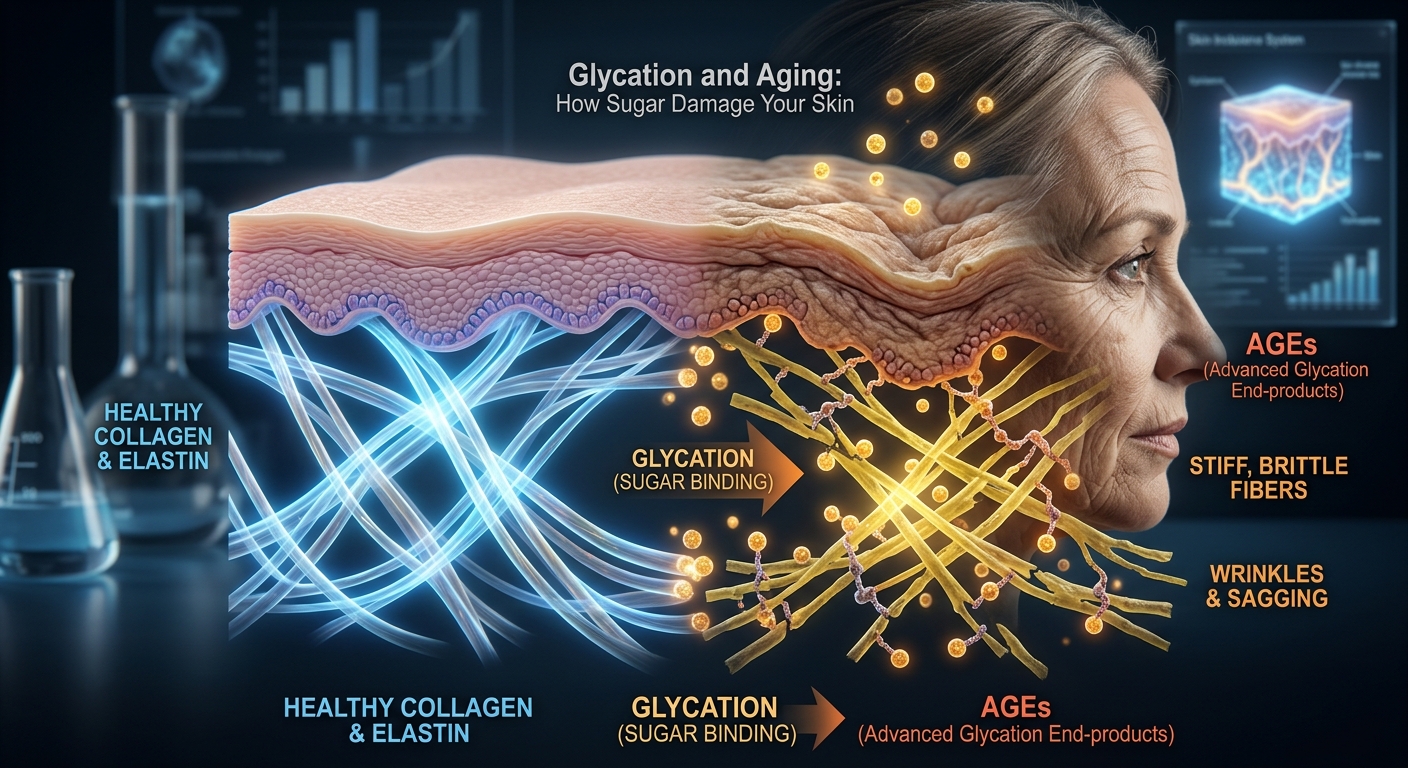
Proteins such as collagen and elastin help tissues remain flexible and resilient. When glycation products form cross-links between these proteins, the tissue structure may change. This is one reason glycation is discussed in relation to skin, blood vessels, and connective tissue aging.
Cross-linking is not the only factor that affects tissue quality, and it does not explain every age-related change. Still, it is a useful concept because it helps explain why long-term metabolic health can matter for healthy aging. The concern is less about sugar as an isolated nutrient and more about chronic exposure to excess glucose and its downstream effects.
Oxidative stress and inflammatory signaling
AGEs may interact with receptors and signaling pathways that influence oxidative stress and inflammation. Oxidative stress occurs when the body’s antioxidant defenses are not fully balancing reactive molecules. Inflammation is a normal protective response, but persistent low-grade inflammatory signaling may be undesirable when it is chronic.
This interaction matters because biological aging is often discussed in terms of cumulative damage and reduced repair capacity. Sugar-related glycation may be one contributor among many, including smoking, poor sleep, sedentary behavior, chronic stress, and nutrient deficiencies. The body’s response to these factors is highly individualized.
Blood vessels, collagen, and long-lived proteins
Some proteins in the body turn over quickly, but others are long-lived and more prone to accumulating modifications over time. Collagen is one example. Blood vessel walls also contain structural proteins that may become less flexible as glycation-related changes build up.
This does not mean someone with a sweet tooth will automatically experience serious vascular problems. It means repeated exposure to high glucose, especially in the context of metabolic dysfunction, may contribute to a biological environment that is less favorable for healthy aging. That distinction is important because it keeps the topic grounded in risk modulation rather than fear.
| Mechanism | Potential effect | How sugar may be involved |
|---|---|---|
| Glycation | Protein modification | More glucose exposure may increase formation of glycation products |
| Cross-linking | Stiffer tissue structure | AGEs may promote structural changes in collagen and related proteins |
| Oxidative stress | Cellular strain | AGE-related signaling may increase reactive stress |
| Inflammatory signaling | Chronic low-grade inflammation | High-sugar patterns may contribute indirectly in susceptible people |
Signs that sugar intake or glycation may be part of a larger metabolic issue
There is no single symptom that proves glycation is happening at a harmful level. Many signs that people associate with “sugar aging” are nonspecific and may have multiple causes. That is why self-diagnosis based on appearance, fatigue, or cravings is not reliable.
What can be useful is looking for broader metabolic patterns. These may include frequent blood sugar swings, a history of elevated lab values, weight changes, increased waist circumference, or a diet that is high in added sugars and low in fiber and protein. A licensed healthcare professional can help interpret symptoms and labs in context.
Common but nonspecific signs people may notice
- Energy swings after meals, especially after high-sugar or refined carbohydrate meals
- Frequent cravings, which may reflect diet composition, sleep issues, or stress as well as glucose dynamics
- Dry-looking skin or a “tired” appearance, which can have many causes unrelated to sugar
- Slower recovery after poor dietary patterns, illness, or inactivity
- A personal history of prediabetes, insulin resistance, or abnormal fasting glucose or A1C
These signs are not diagnostic. They can also result from low iron, thyroid problems, dehydration, poor sleep, depression, medications, or other medical issues. If symptoms are persistent, worsening, or concerning, it is better to speak with a clinician rather than assume sugar or glycation is the explanation.
Lab results that may be discussed with a clinician
People sometimes ask whether they should check markers related to glucose control or glycation. In routine practice, clinicians may look at fasting glucose, A1C, or other tests depending on a person’s risk profile and medical history. Some advanced tests or research markers may be used in specific settings, but they are not always necessary or widely used.
Lab interpretation should always be individualized. An isolated number does not tell the full story. Results need to be viewed alongside diet, medications, body weight, family history, activity level, and overall health status.
Who may be more vulnerable to sugar-related glycation
Not everyone is affected by sugar in the same way. The same dietary pattern may have a different impact depending on genetics, age, activity level, body composition, sleep, and existing medical conditions. People with impaired glucose regulation are often more likely to worry about glycation because their bodies may be exposed to higher or more prolonged glucose levels.
Risk is also influenced by total dietary pattern and lifestyle habits. A person who occasionally eats dessert but otherwise has good metabolic health may differ greatly from someone who frequently consumes highly refined foods and has limited physical activity. That is why the conversation should be individualized rather than based on one food or one meal.
| Group | Why glycation concern may be higher | What to discuss with a professional |
|---|---|---|
| People with prediabetes or diabetes | More frequent or prolonged glucose elevation may increase glycation exposure | Glucose monitoring, diet, medications, and supplement interactions |
| Older adults | Longer exposure time may allow more accumulation of modified proteins | Medication review, nutrition, and lab interpretation |
| People with insulin resistance | Glucose may remain elevated after meals | Weight, activity, dietary composition, and clinical follow-up |
| People with low-fiber, high-added-sugar diets | Frequent spikes and low nutrient density may contribute to metabolic strain | Practical food swaps and sustainable meal planning |
| People with chronic kidney disease or other chronic conditions | Metabolism and clearance may differ, changing risk and supplement considerations | Condition-specific dietary and supplement guidance |
Why age itself matters
As people age, the body may become less flexible in how it handles glucose, and long-lived proteins have more time to accumulate modifications. This is one reason glycation is often discussed in the context of aging biology rather than only diabetes care. However, aging does not automatically mean unhealthy glycation, and many older adults maintain good metabolic control with appropriate support.
Age-related changes also make medication review more important. Older adults often take multiple prescriptions and over-the-counter products, which can affect blood sugar, appetite, and nutrient status. Any supplement plan should be discussed with a healthcare professional to reduce the chance of interactions or unnecessary duplication.
Dietary sugar versus total carbohydrate versus blood glucose
People often use “sugar” as a broad term, but from a metabolic standpoint, the distinction between added sugar, total carbohydrate, and blood glucose response matters. Not all carbohydrates act the same way in the body. Fiber-rich foods, protein-containing meals, and minimally processed starches often have a different effect from highly refined sweets and beverages.
The amount of sugar a person eats is only part of the picture. Meal timing, portion size, the presence of fiber and protein, physical activity, and individual insulin sensitivity all affect blood sugar response. That is why some people tolerate certain foods better than others, even if the foods contain similar total carbohydrate.
For readers focused on glycation and aging, a helpful goal is not “zero sugar” but rather a pattern that minimizes excessive glucose exposure while still being practical and nutritionally adequate. Overly restrictive eating can create its own problems if it becomes hard to maintain or lowers intake of important nutrients.
Added sugar, naturally occurring sugar, and fiber
Added sugar is the sugar put into foods during processing or preparation. Naturally occurring sugar is found in foods such as fruit and dairy. The presence of sugar alone does not determine metabolic impact; what matters is the whole food matrix, including fiber, water content, fat, and protein.
For example, whole fruit generally has a very different effect than a sugary beverage because fruit contains fiber and water, which slow absorption. Similarly, a dessert eaten after a balanced meal may affect blood sugar differently than soda consumed on an empty stomach. These differences help explain why dietary context matters so much in glycation discussions.
High-glycemic patterns and blood sugar spikes
Foods that are highly refined and quickly digested may lead to a sharper rise in blood glucose. Repeated spikes are not ideal for everyone, especially for those already struggling with metabolic health. Still, a single spike is not the same as chronic dysregulation, and occasional indulgence is not equivalent to long-term excess.
A useful perspective is to think in patterns. A diet built around vegetables, legumes, protein, healthy fats, and high-fiber carbohydrates tends to support more stable glucose handling than one centered on sweets, sweetened drinks, and refined snacks. That pattern-based approach is usually more realistic and nutritionally sound than focusing on one ingredient alone.
| Food pattern | Typical glucose effect | Glycation relevance |
|---|---|---|
| Sugary beverage on an empty stomach | Often rapid rise | May increase glucose exposure more sharply |
| Fruit with yogurt or nuts | Usually slower and steadier | May be less glycation-promoting than isolated sugar |
| Refined snack foods | Often quick digestion | Frequent use may contribute to metabolic strain |
| High-fiber meal with protein | Often more gradual rise | May support more stable glycemic exposure |
Food sources that may influence glycation burden
Food choices matter both because of blood sugar effects and because some foods contain preformed AGEs depending on how they are prepared. The way food is cooked can change its glycation load. For example, grilling, frying, roasting, and broiling at high heat may increase AGE formation more than moist-heat cooking methods.
That said, food should be viewed in context. A nutrient-dense grilled protein meal is not automatically “bad,” and a highly processed snack is not only a glycation issue. Overall quality, preparation method, and frequency all matter.
Food categories often discussed in relation to glycation
Foods high in added sugar and low in fiber can contribute to higher blood glucose exposure, especially when consumed frequently. Sweetened drinks are especially notable because they are easy to consume in large amounts and do not provide much satiety. Highly refined grain products and desserts may also be relevant when they dominate the diet.
On the other hand, foods rich in fiber, protein, and micronutrients may support more stable glucose handling. These include vegetables, beans, lentils, nuts, seeds, fish, eggs, plain dairy if tolerated, and minimally processed whole grains. The goal is not perfection but a nutrient-dense pattern that works in real life.
Cooking methods can matter
High-heat dry cooking can produce more AGEs in food than simmering, steaming, poaching, or stewing. This does not mean people must avoid grilled or roasted foods altogether. It simply means that rotating cooking methods and using gentler techniques more often may be a practical way to reduce AGE exposure.
Marinades, acidic ingredients, and lower cooking temperatures may also influence AGE formation in food preparation. The evidence here is still evolving, and the biggest impact usually comes from the overall dietary pattern rather than one cooking choice. For many readers, the most realistic strategy is to prioritize home-prepared meals using a mix of cooking methods.
How to lower glycation stress through diet and lifestyle
There is no single strategy that eliminates glycation, and that is not the goal. The practical aim is to reduce avoidable metabolic stress and support overall health. For most people, that means focusing on dietary pattern, movement, sleep, and consistency rather than chasing a “detox” or quick fix.
Small, sustainable changes often matter more than dramatic restrictions. A balanced plate, fewer sugary beverages, and more fiber-rich foods can have a meaningful effect over time. Pairing those choices with regular activity and good sleep habits can further support glucose regulation.
Nutrition strategies that may help support healthier glucose handling
- Choose more fiber-rich carbohydrates such as beans, lentils, vegetables, berries, and intact whole grains
- Include protein with meals to slow digestion and improve satiety
- Use water, unsweetened tea, or other low-sugar beverages more often than sweetened drinks
- Build meals around minimally processed foods rather than ultra-processed snacks
- Pay attention to portion size for desserts and sweetened foods
These are general nutrition principles, not individualized prescriptions. Someone with diabetes, kidney disease, gastrointestinal disorders, eating disorder history, or other medical issues may need different guidance. A registered dietitian or other clinician can help tailor choices safely.
Physical activity and glucose use
Muscle contraction helps the body use glucose, which is one reason physical activity is commonly recommended as part of metabolic health support. Regular movement may help reduce the glucose burden after meals and support insulin sensitivity over time. This can be especially useful for people trying to manage blood sugar variability.
The exact exercise plan depends on age, ability, injuries, and medical conditions. Even modest increases in walking or post-meal movement may be helpful for some people. The key is consistency and safety rather than intensity alone.
Sleep and stress also matter
Poor sleep and chronic stress can affect hunger regulation, insulin sensitivity, and glucose control. That means a person may see less progress if diet changes are made in isolation while sleep remains poor or stress is unmanaged. The relationship is complex and highly individual.
For readers interested in glycation and aging, it helps to think of glycation as part of a broader metabolic network. Supporting regular sleep, managing stress, and maintaining movement routines may not sound glamorous, but they can materially support the body’s ability to handle glucose more efficiently.
Supplements sometimes discussed for glycation and aging
Some supplements are marketed or discussed in relation to blood sugar, oxidative stress, or glycation, but evidence quality and relevance vary. Supplements should not be treated as a replacement for food choices, glucose monitoring, or medical care. They may have a role in some cases, but only when used carefully and with attention to interactions and contraindications.
Because this is a U.S.-focused health article, it is important to be cautious. Supplements are not approved to diagnose, treat, cure, or prevent disease. They can also interact with medications, affect lab interpretation, or cause side effects. If a person wants to use a supplement for metabolic support, it is wise to discuss it with a licensed healthcare professional first.
| Supplement category | Why people discuss it | Caution points |
|---|---|---|
| Alpha-lipoic acid | Antioxidant support and glucose-related discussions | May interact with diabetes medications and can cause GI side effects |
| Benfotiamine / thiamine-related products | Often discussed in relation to glucose metabolism and nerve health | Product quality and appropriate use should be reviewed clinically |
| Magnesium | Supports many enzymatic reactions and may be low in some diets | Can cause diarrhea; some forms and doses may be inappropriate with kidney disease |
| Chromium | Sometimes marketed for glucose support | Evidence is mixed; interactions and dosing should be reviewed |
| Antioxidant blends | Often promoted for “aging support” | Formulas vary widely; benefits are not guaranteed |
What the evidence can and cannot say
Some nutrients and compounds have been studied for their potential role in glucose metabolism or oxidative balance. However, research findings do not automatically translate into a recommendation for every person. A supplement that looks promising in one setting may not produce meaningful benefits in another, especially when diet, medications, and baseline health differ.
It is also easy to overinterpret marketing language. Claims about “anti-aging” or “glycation blocking” can sound compelling without offering enough context. Readers should be skeptical of any product that promises dramatic results, especially if it does not clearly explain its risks, quality standards, or interaction concerns.
Safety considerations before using any supplement
Before starting a supplement for glycation or aging concerns, a person should consider whether there is a clear reason to use it, whether it could interact with medications, and whether it has been discussed with a clinician. That is particularly important for people who take insulin, oral diabetes medications, blood pressure medications, anticoagulants, or drugs with narrow therapeutic ranges.
People who are pregnant, breastfeeding, trying to conceive, have liver or kidney disease, or have a history of nutrient imbalance should be even more cautious. Supplements can be useful in some circumstances, but they should not be added casually when health status is complex.
General dosage framing, timing, and absorption considerations
Supplement dosage should not be personalized in a general article because the right amount depends on age, diet, medication use, kidney and liver function, and the specific product. What can be discussed safely is general framing: follow the label unless a clinician advises otherwise, and avoid assuming that more is better. For many nutrients, the margin between helpful and excessive can be narrower than people expect.
Timing can affect tolerance and absorption. Some supplements are easier on the stomach with food, while others may have better absorption under certain conditions. In practice, the main priority is safe, consistent use rather than trying to optimize every variable without clinical guidance.
| General issue | Why it matters | Practical caution |
|---|---|---|
| Taking supplements on an empty stomach | May improve absorption for some products but worsen nausea for others | Check label guidance and tolerance |
| Combining multiple products | Can duplicate ingredients or increase side effects | Review the full supplement stack with a professional |
| Taking with medications | Possible interactions or altered absorption | Ask a pharmacist or clinician |
| High-dose use | May increase risk of side effects or toxicity | Do not exceed recommended intake without medical advice |
Absorption depends on the nutrient and the person
Some nutrients are better absorbed with food, especially if they are fat-soluble or irritating to the stomach. Others may require separation from minerals, medications, or coffee to reduce interference. This is one reason blanket advice about “best time to take a supplement” is often too simplistic.
Individual differences also matter. Digestive conditions, gallbladder issues, low stomach acid, bariatric surgery, and medication use can all affect how well a supplement is tolerated or absorbed. If someone has a medical history that may change absorption, personalized guidance is the safer route.
A cautious rule of thumb for readers
If a supplement is being considered for glycation-related concerns, the safest first step is to ask three questions: Do I actually need this, could it interact with my medications, and is there evidence it fits my situation? If the answer is unclear, a healthcare professional can help decide whether the product is appropriate.
It is also useful to think about laboratory monitoring when relevant. Some supplements can influence blood sugar or related markers, which may matter if a person is already being followed for metabolic conditions. That is another reason to avoid self-directed dose changes without professional input.
Medication interactions, contraindications, and side effects to consider
Supplement safety is especially important for readers who are also taking prescription medications. Even products that are “natural” can alter glucose levels, increase bleeding risk, affect the liver, or change how other nutrients are absorbed. Because of this, the question is never just whether a supplement is popular, but whether it is appropriate for a specific person’s health profile.
Side effects may be mild, such as stomach upset, or more serious, such as hypoglycemia risk when combined with certain diabetes medications. Contraindications vary by product and health condition. This is why clinicians and pharmacists are valuable resources when someone is considering a supplement related to glycation or aging support.
Common interaction categories
- Diabetes medications: some supplements may affect blood sugar and could increase the risk of low glucose if combined inappropriately
- Blood thinners: certain supplements may alter clotting risk
- Blood pressure medications: some products may influence pressure or fluid balance
- Thyroid medications: minerals and other ingredients may interfere with absorption if taken together
- Antibiotics: some minerals can reduce absorption when taken at the same time
The exact interaction depends on the product and the medication. A pharmacist can often help check timing and compatibility, but the final plan should also fit the person’s medical history.
Who should be especially cautious
People with kidney disease should be careful with mineral supplements and products that affect electrolyte balance. People with liver disease should be cautious with concentrated botanicals or high-dose products. Pregnant and breastfeeding individuals should avoid assuming that a supplement is automatically appropriate just because it is widely marketed.
Anyone with unexplained symptoms should seek evaluation rather than trying to self-manage with supplements. Nonspecific symptoms like fatigue, brain fog, dry skin, or cravings can come from many causes, some of which require medical assessment. Supplements should not delay diagnosis or appropriate care.
Upper limits, overuse, and myths about anti-glycation products
One of the most common mistakes is assuming that if a little is good, more must be better. That is not true for many vitamins, minerals, or metabolic support supplements. High intake can create new problems, including toxicity, GI distress, mineral imbalance, or interactions with medication.
Another common misconception is that a single supplement can “reverse” aging or “erase” glycation. No over-the-counter product should be viewed that way. Biological aging is influenced by many systems, and glycation is only one part of the picture.
Myths worth correcting
- Myth: All sugar is equally harmful. Reality: The effect depends on dose, food context, and metabolic health.
- Myth: If a supplement is natural, it is automatically safe. Reality: Natural products can still cause side effects and interactions.
- Myth: Glycation can be measured or “fixed” by one simple test or pill. Reality: Assessment and management are broader and should be individualized.
- Myth: Avoiding dessert once in a while matters more than the full dietary pattern. Reality: Habitual intake patterns are usually more important than isolated choices.
Readers should also be aware that supplement labels may not fully capture quality differences between brands. Third-party testing, manufacturing standards, and ingredient transparency can vary. Even with good-quality products, taking more than recommended can still be a problem.
Why upper limits matter
Many nutrients have tolerable upper intake levels or other safety boundaries because excessive intake can be harmful. Although not every product linked to glycation has a clearly established upper limit for every use case, the principle still applies: more is not automatically better. This is especially relevant when products contain multiple ingredients that can overlap with diet or medication effects.
If a person is already using a multivitamin, fortified foods, or other targeted supplements, additional products may duplicate ingredients unintentionally. Reviewing the full regimen with a clinician or pharmacist is a practical way to reduce the risk of overuse.
When to talk with a healthcare professional
Readers should talk with a licensed healthcare professional if they suspect blood sugar problems, have concerns about glycation, or want to use supplements for metabolic support. This is especially important when symptoms are persistent or when there are known risk factors such as family history, elevated labs, obesity, or chronic conditions. Professional guidance helps avoid guesswork and unnecessary supplement use.
A clinician may also help decide whether any testing is appropriate. In some cases, lifestyle changes may be enough. In others, a broader medical workup or medication review may be needed. The right next step depends on the full clinical picture rather than on one isolated concern.
Situations that deserve prompt attention
- Symptoms of low blood sugar, such as shakiness, sweating, confusion, or faintness
- Repeated high blood glucose readings or abnormal lab results
- Unexplained weight loss, excessive thirst, or frequent urination
- New symptoms after starting a supplement
- Pregnancy, breastfeeding, kidney disease, liver disease, or multiple medications
These symptoms are not specific to glycation, and they should not be ignored. When in doubt, it is better to seek professional input than to assume a supplement or diet change will resolve the issue.
Practical takeaways for readers who want to reduce sugar-related aging stress
The most useful approach is usually the simplest one: support steady blood sugar, eat a nutrient-dense diet, move regularly, and avoid relying on supplements as a shortcut. Glycation and aging are connected through broader metabolic health, so the goal is to reduce repeated stressors rather than chase perfection. That approach is more realistic and more sustainable.
For many readers, this means reducing frequent intake of sugary beverages and highly refined foods, eating more fiber and protein, and paying attention to sleep and activity. If supplements are considered at all, they should be chosen carefully, used conservatively, and reviewed with a healthcare professional. This is especially true if medications or chronic conditions are part of the picture.
| Best-practice area | Simple action | Why it helps |
|---|---|---|
| Diet | Reduce frequent added-sugar intake | May lower glucose spikes and glycation exposure |
| Meal composition | Pair carbohydrates with fiber and protein | Can support steadier glucose responses |
| Cooking methods | Use moist-heat methods more often | May reduce dietary AGE formation |
| Movement | Stay physically active consistently | May improve glucose handling |
| Supplements | Review with a professional before starting | Helps avoid interactions and unnecessary use |
Frequently asked questions
Does sugar make you age faster?
Sugar does not “make you age faster” in a simple or guaranteed way, but frequent high sugar intake may contribute to metabolic stress and glycation. The concern is more about long-term patterns than occasional dessert. Overall diet quality, blood sugar control, sleep, activity, and health conditions all matter.
What is glycation in simple terms?
Glycation is when sugar molecules attach to proteins, fats, or other molecules without enzymes. Over time, this can change how those molecules work. It is a normal chemical process, but it may become more relevant when glucose levels are frequently elevated.
Are AGEs always harmful?
AGEs are a normal part of metabolism and food chemistry, so they are not automatically harmful in every context. The issue is excessive accumulation or repeated exposure over time. Researchers study them because they may be relevant to aging biology and metabolic health.
Can I test glycation at home?
Home testing for glycation is not straightforward, and most people do not need to self-measure AGEs directly. If you are concerned about blood sugar or metabolic health, talk with a clinician about appropriate testing such as fasting glucose or A1C. Lab interpretation should be personalized.
Do sugar-free sweeteners affect glycation?
Sugar-free sweeteners do not contain the same glucose load as sugar, so they are generally discussed differently in this context. However, the health impact depends on the specific product and overall diet pattern. It is still wise to review sweetener use in the context of your total nutrition plan.
Can supplements reduce glycation?
Some supplements are studied for blood sugar support or antioxidant effects, but results are mixed and they are not a substitute for medical care or dietary habits. Supplements can also cause side effects and interact with medications. If you are considering one, talk with a licensed healthcare professional first.
Is fruit bad because it contains sugar?
Fruit is not generally treated the same as added sugar because it contains fiber, water, and micronutrients. For most people, whole fruit fits differently into the diet than sweetened drinks or desserts. If you have diabetes or another medical condition, your clinician can help tailor advice.
Should older adults avoid sugar completely?
No single dietary rule fits everyone, and complete avoidance is not necessary for most people. A more practical goal is to limit frequent added sugar, build balanced meals, and support overall metabolic health. Older adults with chronic conditions or medications should ask a clinician for individualized guidance.
Conclusion
Glycation and aging are linked through the chemistry of blood sugar, protein modification, and long-term metabolic stress. Sugar is not the only factor in biological aging, but frequent high intake of added sugars, poor diet quality, and impaired glucose regulation may contribute to conditions that are less favorable for healthy aging.
The most useful response is usually not fear or extreme restriction. Instead, focus on stable blood sugar patterns, more fiber-rich and minimally processed foods, regular movement, good sleep, and careful review of supplements and medications when relevant. If you have symptoms, chronic conditions, abnormal labs, or questions about supplements, talk with a licensed healthcare professional for personal guidance.