
vitamine -
NMN vs Resveratrol: Which is Better for Aging?
NMN vs resveratrol is a common comparison for people who want to support healthy aging, energy, or cellular function with supplements. The short answer is that neither supplement is clearly “better” for everyone, because they work through different pathways and the evidence for h
NMN vs resveratrol is a common comparison for people who want to support healthy aging, energy, or cellular function with supplements. The short answer is that neither supplement is clearly “better” for everyone, because they work through different pathways and the evidence for human aging outcomes is still evolving.
This article explains what NMN and resveratrol are, how they differ, what the current evidence can and cannot say, and how to think about safety, interactions, forms, timing, and practical selection. The goal is to help U.S. readers make a more informed conversation with a licensed healthcare professional, especially if they have medical conditions, take medications, or are considering long-term supplement use.
What NMN and Resveratrol Are
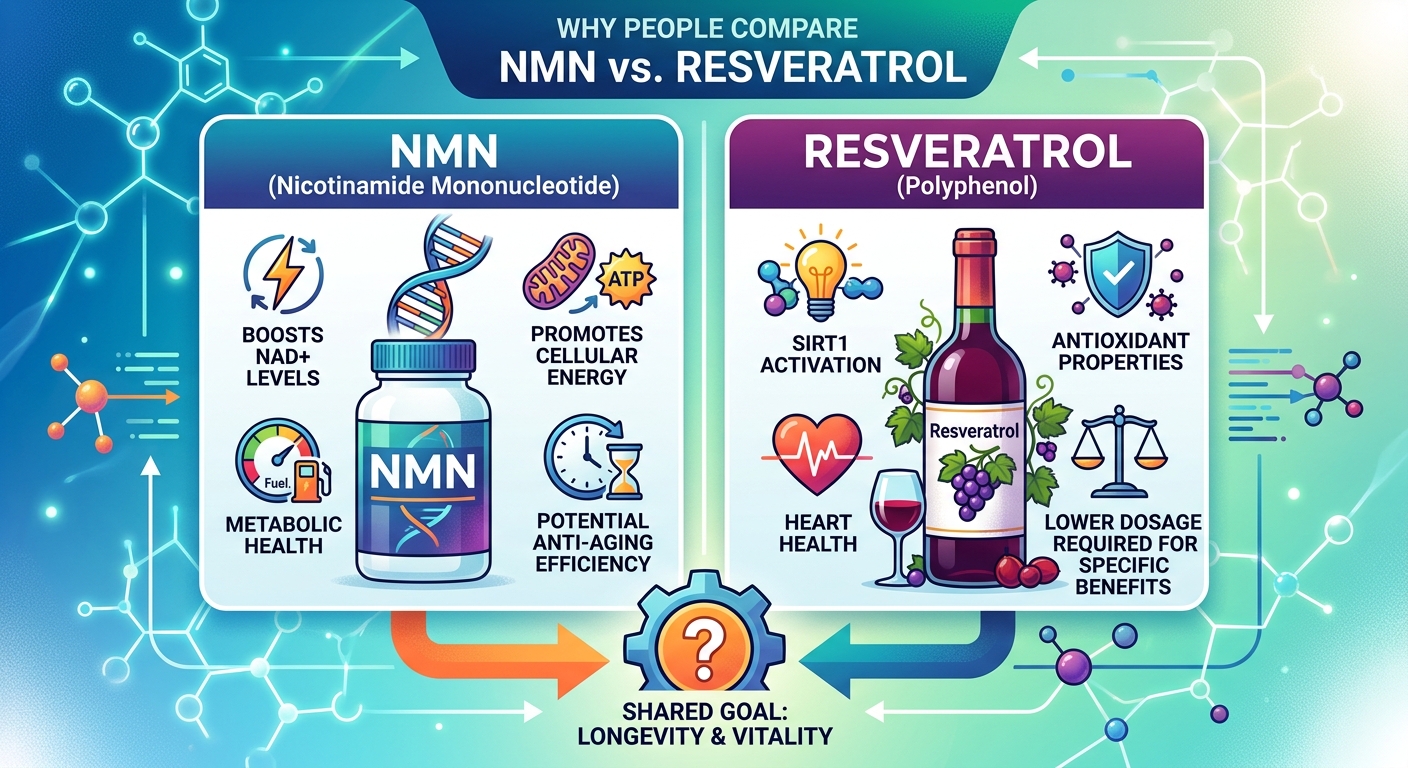
NMN and resveratrol are both popular in the longevity and healthy-aging supplement conversation, but they are not the same compound. NMN, short for nicotinamide mononucleotide, is a molecule involved in the body’s NAD+ production pathway, while resveratrol is a plant polyphenol found naturally in foods such as grapes, berries, and peanuts.
People often compare them because both are discussed in relation to cellular health, stress response, and age-related biology. However, a comparison is only useful if it recognizes that they are different tools with different evidence, different safety considerations, and different practical limitations.
NMN in plain English
NMN is best understood as a precursor in the biochemical pathway that helps the body make NAD+, a coenzyme used in energy metabolism and many cellular processes. NAD+ levels tend to decline with age in some tissues, which is one reason NMN has drawn interest in aging research.
That interest does not mean NMN is proven to slow aging in humans. It means researchers are studying whether supporting NAD+ pathways may be relevant to age-related changes, metabolism, physical function, or cellular resilience. For consumers, the key point is that NMN is a biologically active supplement with an evolving evidence base, not a guaranteed anti-aging solution.
Resveratrol in plain English
Resveratrol is a naturally occurring polyphenol that plants produce in response to stress. It is found in small amounts in foods and is also sold as a supplement, often marketed for antioxidant or longevity support.
Unlike NMN, resveratrol is not a direct NAD+ precursor. It is often discussed in relation to signaling pathways involved in inflammation, oxidative stress, and cellular adaptation. The challenge is that much of the excitement around resveratrol comes from laboratory or animal research, while human evidence is more mixed and often limited by dose, absorption, and study design.
| Supplement | What it is | Main interest area |
|---|---|---|
| NMN | A NAD+ precursor involved in cellular energy pathways | NAD+ support, aging biology, metabolic research |
| Resveratrol | A plant polyphenol found in grapes and other foods | Antioxidant signaling, inflammation-related pathways, longevity research |
Why People Compare NMN vs Resveratrol
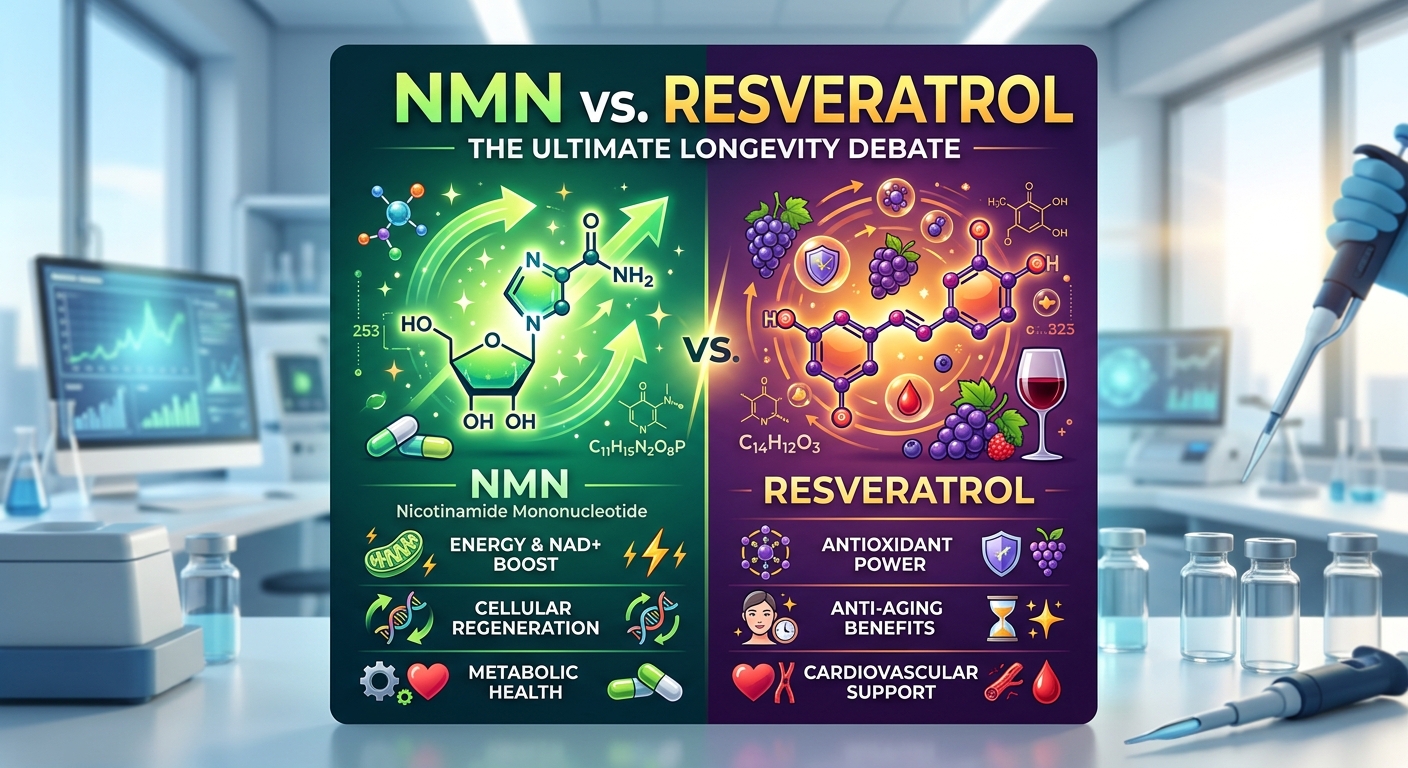
People search for nmn vs resveratrol because both supplements are frequently mentioned in longevity discussions, especially in relation to sirtuins, NAD+, and cellular health. They are often grouped together in online articles, podcasts, and product marketing, which can make it seem as if they are interchangeable.
In reality, the comparison is more nuanced. NMN is more directly tied to NAD+ biology, while resveratrol is more associated with polyphenol signaling and antioxidant-related pathways. Some people want to know which one has better evidence; others want to know which is safer, which is more absorbable, or whether they can take both.
The most useful way to approach the question is to separate hype from evidence. That means looking at the proposed mechanism, the human data, side effects, interactions, and whether the supplement fits a person’s age, health status, medication list, and goals.
The aging question is really several questions
When someone asks which is “better for aging,” they may mean different things. Some are interested in healthy aging support, some want to maintain energy, some are trying to support exercise recovery, and others are looking for a general wellness supplement.
Because those goals are different, the answer may differ too. A supplement that looks promising for one biological marker may not translate into noticeable daily benefits for a healthy adult. The evidence also may not be strong enough to prefer one supplement universally over the other.
How NMN Works in the Body
NMN is primarily discussed because it may help raise NAD+ availability. NAD+ is involved in energy metabolism, DNA repair processes, and other cellular functions, which is why it appears in many aging-related conversations. The body can make NAD+ through several pathways, and NMN is one step in that process.
That biological role is real, but it does not automatically mean supplementation produces dramatic anti-aging effects. The body’s handling of NAD+ is complex, and raising a lab marker does not necessarily guarantee meaningful changes in health outcomes.
NAD+ and why it matters
NAD+ is used by cells for redox reactions and as a substrate for enzymes involved in cellular maintenance. Researchers are interested in whether declining NAD+ availability with age contributes to changes in metabolism, mitochondrial function, and stress response.
For consumers, this means NMN is often framed as a way to support a pathway that becomes more interesting in aging research. That is different from saying it has been proven to extend lifespan or prevent disease in humans, which would go beyond current evidence.
Potential practical implications
Some people take NMN hoping for changes in perceived energy, endurance, or general vitality. Those experiences are subjective and can be influenced by sleep, nutrition, exercise, stress, and placebo effects, so they should be interpreted cautiously.
If someone is considering NMN, it is reasonable to ask whether the goal is biomarker support, general wellness, or a specific symptom. If there is fatigue, brain fog, weight change, or exercise intolerance, those symptoms deserve medical evaluation rather than supplement guessing.
| NMN topic | What to know |
|---|---|
| Primary role | Precursor involved in NAD+ production |
| Main research focus | Cellular energy, aging biology, metabolic markers |
| Evidence gap | Human long-term aging outcomes remain uncertain |
How Resveratrol Works in the Body
Resveratrol is studied because it may influence cellular signaling pathways related to oxidative stress, inflammation, and stress adaptation. It is often described as a polyphenol with antioxidant properties, although antioxidant language can be oversimplified when applied to human supplement use.
Resveratrol is also famous because it appears in discussions of the “French paradox” and because it has been studied in the context of sirtuin-related pathways. That scientific interest has made it a major player in the longevity supplement market, but the jump from mechanism to real-world benefit is not straightforward.
Bioavailability matters
One of the main issues with resveratrol is that oral absorption and metabolism can limit how much of the compound reaches circulation in an active form. This does not make it useless, but it does complicate claims that sound dramatic on a label or website.
Because of this, researchers and supplement companies have explored different formulations, doses, and combinations. Still, a product that sounds scientifically sophisticated is not automatically better for outcomes, especially if the human evidence remains limited or inconsistent.
What that means for aging
Resveratrol is commonly discussed as a way to support healthy aging because of its possible effects on cellular stress pathways. However, these ideas are based on a mixture of laboratory findings, animal studies, and a smaller amount of human data that does not always line up cleanly with the excitement.
For a consumer, the practical takeaway is simple: resveratrol may be interesting, but it should not be treated as a proven anti-aging therapy. Any decision to use it should also take into account drug interactions and the need for caution in people with bleeding concerns or medication use.
NMN vs Resveratrol: Key Differences at a Glance
Comparing NMN and resveratrol works best when you focus on mechanism, evidence, and safety rather than marketing language. NMN is more directly connected to NAD+ biology, while resveratrol is more often discussed in relation to polyphenol signaling and antioxidant-related pathways.
Neither supplement is a magic answer to aging. The “better” choice, if any, depends on the goal, the person’s medication list, and how much uncertainty they are willing to accept.
| Factor | NMN | Resveratrol |
|---|---|---|
| Main biological focus | NAD+ support | Polyphenol signaling, antioxidant-related pathways |
| Human evidence for aging | Promising but still developing | Mixed and often limited by bioavailability |
| Common appeal | Energy, metabolic support, NAD+ interest | Longevity, antioxidant, stress-response interest |
| Interaction concerns | Less defined, but caution still needed with medical conditions and drugs | More notable concerns with blood thinners and other medications |
| Absorption issues | Generally easier to frame as a precursor supplement | Bioavailability is a common limitation |
What the Evidence Suggests About Healthy Aging
People want a direct answer to which supplement is better for aging, but the evidence does not support a simple winner. In broad terms, NMN has attracted attention because it maps more directly onto a measurable biological pathway, while resveratrol has a longer history of research but more practical issues with absorption and translation to real-world outcomes.
Human studies on both compounds are still relatively limited compared with the size of the claims made online. That means the evidence is best described as exploratory or promising in certain contexts, rather than definitive.
What counts as “better” depends on the outcome
If “better” means a more direct link to NAD+ biology, NMN often gets the edge. If “better” means a compound found naturally in food with a broad research history, resveratrol may seem appealing. If “better” means proven aging reversal, neither one meets that standard.
From a practical health perspective, people should pay close attention to what they are actually trying to influence. Energy, exercise tolerance, cardiometabolic markers, and healthy aging are not identical goals, and supplement outcomes can differ across those categories.
Why human evidence is hard to interpret
Supplement studies often vary in dose, formulation, duration, age of participants, baseline health, and endpoints. Some studies focus on biomarkers instead of symptoms or long-term outcomes, which makes it difficult to know how meaningful the changes are.
It is also common for a supplement to look more impressive in preclinical studies than in human use. That does not mean the research is worthless; it means consumers should keep expectations modest and avoid assuming that early findings will translate into major benefits.
Who Might Consider NMN or Resveratrol
Some adults consider these supplements because they are interested in healthy aging, especially if they are already paying attention to exercise, diet, and sleep. Others are drawn to them because of online discussions about NAD+ or because they are looking for a supplement with a scientific rationale.
That said, not everyone is a good candidate for either product. People with medical conditions, medication use, pregnancy or breastfeeding, and unexplained symptoms should be especially careful and should not use supplement trends as a substitute for medical evaluation.
Potentially relevant groups
NMN or resveratrol may be considered by adults who are curious about healthy-aging support and want to discuss it with a healthcare professional. They may also appeal to people who prefer to focus on a specific mechanism rather than a broad “wellness” formula.
Even for these groups, the decision should be individualized. Age alone is not a reason to take either supplement, and there is no universal threshold where one becomes necessary.
Groups that need more caution
People taking anticoagulants, antiplatelet drugs, diabetes medications, blood pressure medications, or complex prescription regimens should review supplement use carefully with a clinician. Resveratrol deserves particular attention because of possible interaction concerns, while NMN still deserves caution because “natural” does not mean interaction-free.
Pregnant and breastfeeding individuals should generally be especially conservative, since evidence for both supplements in these populations is limited. Anyone with liver disease, kidney disease, bleeding disorders, or a history of unusual reactions to supplements should also seek professional guidance before starting either one.
| Situation | Why caution matters |
|---|---|
| Prescription medications | Possible interactions, additive effects, or altered absorption |
| Pregnancy or breastfeeding | Limited safety data for both supplements |
| Bleeding disorders or blood thinners | Resveratrol may raise concern about bleeding risk |
| Chronic illness | Needs individualized advice and monitoring |
| Unexplained fatigue or symptoms | Symptoms may signal a condition that should be evaluated, not self-treated |
Food Sources, Diet, and Why Supplements Are Not the Same as Food
Diet matters because supplement decisions should be viewed in the context of overall nutrition. Resveratrol is naturally present in certain foods, while NMN is not typically discussed as a common food nutrient in the same way vitamins and minerals are.
That distinction matters because food sources bring a broader package of nutrients and generally lower risk than supplement stacks. It also means a person may not need a supplement if their goal can be addressed through dietary patterns and overall health management.
Resveratrol food sources
Resveratrol is found in small amounts in foods such as grapes, red wine, peanuts, pistachios, and some berries. Food amounts are usually much lower than supplement doses, which is one reason the supplement market grew around this compound.
Still, food should not be dismissed. Eating polyphenol-containing foods can fit into a broader dietary pattern without the uncertainties that come with concentrated extracts. For many people, that may be a more practical and lower-risk approach.
What about NMN in food?
NMN can be discussed in the context of naturally occurring molecules in certain foods, but it is not generally consumed as a mainstream dietary nutrient the way vitamin C or magnesium is. This makes the supplement conversation more about targeted biochemical support than correcting a common dietary deficiency.
That distinction is important because consumers sometimes assume a supplement is “needed” if it is naturally occurring. In reality, the decision to use NMN is more of an optional, research-driven choice rather than a standard nutrition correction for most adults.
- Food-first approach: Often a reasonable starting point when the goal is general health support rather than a specific lab target.
- Supplement use: More relevant when someone is pursuing a specific biological pathway or making a clinician-guided decision.
- Do not assume deficiency: Interest in aging support does not mean you are deficient in NMN or resveratrol.
Supplement Forms, Absorption, and Practical Differences
Choosing between NMN and resveratrol is not only about the ingredient itself. Formulation, absorption, and product quality can affect how useful a supplement may be in practice.
This matters especially for resveratrol, where bioavailability is a known issue, and for NMN, where product type and manufacturing quality can influence consumer confidence and consistency. A well-chosen product is not the same thing as a better biology story, but it can affect the user experience.
Common NMN forms
NMN is usually sold in capsules or powders. Some products are positioned around rapid absorption, sublingual use, or specific delivery technologies, although practical benefits can be hard to verify from label language alone.
Consumers should be cautious with exaggerated claims. “Better absorption” sounds appealing, but unless there is credible evidence and transparent quality information, the claim may simply be marketing.
Common resveratrol forms
Resveratrol is often sold as trans-resveratrol, which is the form commonly emphasized in supplements. Some products combine it with other ingredients intended to support absorption, or they use formulations designed to improve bioavailability.
Because resveratrol has a history of metabolism and absorption challenges, product form matters more than many shoppers realize. Even so, a more expensive formula is not automatically better for everyone, and a clinician can help interpret whether it makes sense in a given context.
| Practical issue | NMN | Resveratrol |
|---|---|---|
| Absorption concern | Moderate; product form may matter | Often a bigger issue due to metabolism and bioavailability |
| Common label claim | NAD+ support, cellular energy | Antioxidant support, healthy aging |
| User consideration | Quality and consistency of the brand matter | Formulation and interaction risk deserve attention |
General Dosage Framing and Timing: What Consumers Should Know
It is not appropriate to give personalized dosing advice in an article like this, but it is useful to explain general dosage framing. For both NMN and resveratrol, the label dose is only one part of the decision, because age, health status, medications, and tolerance all matter.
When reading about these supplements online, be careful with content that implies one universal “best dose.” That approach is not medically responsible, and it can be especially misleading for people with chronic conditions or prescription medications.
How to think about dose in general
When evaluating any supplement, start by asking why the dose was chosen, whether it is within common label ranges, and whether the product provides a clear serving size. The practical question is not only how much is listed, but whether the amount aligns with the available evidence and with your health context.
Higher is not automatically better. For supplements with uncertain long-term data, taking more than the label suggests or combining multiple products can raise the risk of side effects without guaranteeing additional benefit.
Timing considerations
Some people take these supplements in the morning because they associate them with energy or daily routine. Others take them with food to reduce stomach upset, especially if the product causes digestive discomfort.
However, timing should not be chosen purely from social media advice. If you take prescription medications, the safest approach is to confirm timing with a pharmacist or clinician so that the supplement does not interfere with absorption or create avoidable issues.
Side Effects, Contraindications, and Interaction Risks
Safety is a major part of the NMN vs resveratrol discussion, especially because supplements are often perceived as gentler than prescription drugs. That assumption can be misleading, because side effects and interactions are possible with both products.
Resveratrol has more clearly discussed interaction concerns, particularly around blood-thinning effects and medication overlap. NMN has fewer widely recognized interaction issues in consumer conversations, but that does not mean it should be used casually or without attention to the person’s health picture.
Possible side effects
Reported side effects can vary by person and product quality, but digestive symptoms are among the more common concerns for many supplements. Nausea, stomach discomfort, bloating, or changes in bowel habits may occur in sensitive individuals.
Some people also report headaches or a general sense of not tolerating a product well. If side effects appear, the responsible step is to stop the supplement and speak with a healthcare professional, especially if symptoms are significant, persistent, or severe.
Medication interactions and special caution with resveratrol
Resveratrol may be especially important to review if a person takes anticoagulants, antiplatelet medications, or other drugs that could be affected by changes in bleeding risk or metabolism. It may also deserve caution with medications for blood sugar or blood pressure, depending on the overall regimen and health status.
Because supplement-drug interactions are complex, this is not a situation for guesswork. A pharmacist is often a very practical resource for interaction screening, and a prescribing clinician should be informed about all supplements being used.
Contraindications and when not to self-experiment
People with a history of unusual bleeding, surgery planning, liver disease, kidney disease, uncontrolled chronic illness, or multiple medications should not treat these supplements as casual wellness add-ons. There may be cases where a supplement is inappropriate, unnecessary, or requires monitoring.
Pregnancy and breastfeeding are also times to be conservative. In those situations, supplements should not be started just because they are popular online or because “natural” seems reassuring.
| Safety issue | Why it matters | Practical response |
|---|---|---|
| Blood thinners | Potential interaction concern, especially with resveratrol | Ask a pharmacist or clinician before use |
| Diabetes medication | Possible effect on glucose-related management | Monitor only with professional guidance |
| Surgery | Bleeding and medication concerns may matter | Tell the surgical team about all supplements |
| Pregnancy/breastfeeding | Safety data may be limited | Avoid self-starting; seek medical advice |
Upper Limits, Long-Term Use, and Overuse Concerns
One problem with longevity supplements is that there may not be a well-established, universally accepted upper limit for consumer use in the same way there is for some vitamins and minerals. That makes it easy for marketing to fill the gap left by uncertainty.
In practical terms, this means consumers should be wary of “more is better” thinking. Taking multiple products that overlap, using high doses for long periods, or cycling supplements based on anecdote instead of evidence can increase risk without proving benefit.
Why long-term use deserves caution
Even if a supplement seems well tolerated at first, long-term safety may not be fully established for every use case. A person’s medication list, liver function, digestive tolerance, and lifestyle can also change over time, which may alter risk.
That is one reason regular check-ins with a healthcare professional are wise when supplement use becomes ongoing. A supplement should have a reason to remain in the routine, not just momentum.
Product quality concerns
Long-term use also raises questions about product quality, purity, and label accuracy. Supplements are not all manufactured to the same standards, and consumers should look for brands that provide clear labeling, third-party testing when available, and transparent ingredient information.
Even then, quality control does not solve the evidence gap. A well-made product can still be poorly matched to a person’s needs.
Can You Take NMN and Resveratrol Together?
Some people combine NMN and resveratrol because they believe the two work in complementary pathways. The idea is understandable: NMN is tied to NAD+ biology, while resveratrol is often discussed in relation to cellular signaling pathways linked to aging.
However, combining supplements is not automatically better than choosing one. The decision should be based on rationale, tolerance, interactions, and whether a clinician thinks the combination makes sense for the individual.
Why people stack them
Online longevity communities often pair these supplements because they are seen as “synergistic.” That word can sound compelling, but it does not substitute for human evidence showing clear real-world benefit from the combination.
If a person is already taking several supplements, adding both NMN and resveratrol can make it harder to identify what is helping and what is causing side effects. Simpler routines are usually easier to evaluate and safer to manage.
Why stacking deserves medical review
Any combination should be reviewed for interactions, total pill burden, and the person’s main goal. This is particularly important if resveratrol is part of the stack, because medication interaction concerns may become more relevant.
If a person wants to explore a combination approach, it is best done with professional guidance rather than by stacking multiple products at once. That allows for more careful monitoring and a better chance of identifying tolerance issues early.
Common Mistakes People Make When Comparing NMN vs Resveratrol
One of the biggest mistakes is assuming that a supplement with more scientific buzz is automatically better. Another common mistake is treating marketing claims as if they were equivalent to medical evidence.
Healthy-aging supplements attract strong opinions, but the best decisions are usually the simplest ones: understand the mechanism, recognize the uncertainty, check for interactions, and involve a professional when needed.
- Assuming equivalence: NMN and resveratrol are not interchangeable just because both are discussed in aging research.
- Expecting dramatic results: A supplement is unlikely to replace sleep, nutrition, exercise, or medical care.
- Ignoring medications: This is especially risky with resveratrol.
- Using symptoms as a guide: Fatigue, brain fog, or poor stamina can have many causes that should be evaluated.
- Stacking too many products: More ingredients can mean more uncertainty and more side effect potential.
Myths worth correcting
One myth is that NMN or resveratrol can “reverse aging.” That is not supported by current evidence. Another myth is that if a supplement is derived from a natural source, it automatically has a favorable safety profile.
A more accurate view is that both compounds are scientifically interesting, but both have limitations. That balanced understanding is more useful than hype, especially for U.S. readers navigating a supplement market filled with strong claims.
How to Choose Between NMN and Resveratrol
If you are deciding between NMN and resveratrol, start with your goal, your medications, and your tolerance for uncertainty. For many people, NMN may feel more directly connected to the aging conversation because of NAD+ biology, while resveratrol may appeal to those looking for a polyphenol-based supplement with a long research history.
Still, the “better” supplement is often the one that fits the person’s situation more safely and realistically. In some cases, the best choice may be neither supplement, particularly if the goal is vague or symptoms need medical evaluation.
Practical decision framework
Ask yourself a few basic questions before buying anything. What exact goal am I trying to support? Do I take medications that could interact? Am I pregnant, breastfeeding, or managing a chronic condition? Have I discussed this with a clinician if I have symptoms or lab concerns?
If those questions are hard to answer, that is a sign to slow down. Supplement decisions are best made with clarity, not urgency.
| If your priority is... | NMN may appeal because... | Resveratrol may appeal because... |
|---|---|---|
| NAD+ biology | It is directly tied to NAD+ precursor pathways | Not as direct a fit |
| Polyphenol-based support | Less central to its identity | It is a classic polyphenol supplement |
| Medication caution | Still needs review, but interaction profile is less commonly discussed | Interaction review is especially important |
| Simplicity | May be easier to frame as a targeted pathway supplement | May be complicated by bioavailability and interaction concerns |
When to Talk to a Doctor or Pharmacist
There are many situations where professional input is the safest next step. This is especially true if you have symptoms, a diagnosed condition, or a medication list that is more than simple and occasional.
Although supplements are sold over the counter, that does not mean they should be self-managed without thought. The more complex your health picture, the more useful professional review becomes.
Seek professional guidance if you:
- Take prescription medications, especially anticoagulants, antiplatelets, diabetes drugs, or blood pressure medications.
- Are pregnant, breastfeeding, or trying to conceive.
- Have a chronic condition such as liver disease, kidney disease, cardiovascular disease, or a bleeding disorder.
- Have abnormal labs or a suspected deficiency.
- Are dealing with fatigue, weakness, brain fog, weight changes, or other persistent symptoms.
- Want to combine NMN, resveratrol, or either supplement with other longevity products.
Pharmacists can be especially helpful for interaction screening, while physicians, nurse practitioners, and physician assistants can help determine whether symptoms warrant evaluation or whether a supplement is appropriate at all.
Frequently Asked Questions
Is NMN better than resveratrol for aging?
Not necessarily. NMN is more directly tied to NAD+ biology, while resveratrol is a polyphenol with different pathways and more absorption challenges. The better choice depends on the person’s goals, medications, and tolerance for uncertainty.
Can you take NMN and resveratrol together?
Some people do, but combination use should be reviewed carefully. Adding both at once can make side effects harder to interpret, and resveratrol may be more relevant for medication interactions. A healthcare professional can help decide whether the combination makes sense.
Does resveratrol have better research than NMN?
Resveratrol has been studied for a long time, but more research does not always mean clearer real-world benefit. NMN is newer in the consumer market but has strong interest because of its direct link to NAD+ pathways. Both still need more human evidence for long-term aging outcomes.
Which supplement is better for energy, NMN or resveratrol?
Neither should be viewed as a proven energy supplement. NMN is more often discussed in relation to cellular energy pathways, but subjective energy changes vary and are not guaranteed. If fatigue is persistent, a medical evaluation is more appropriate than self-treating with supplements.
Are there side effects of NMN or resveratrol?
Yes, side effects can happen. Digestive symptoms such as nausea or stomach upset are among the possible concerns, and resveratrol may have more interaction issues with certain medications. Stop the supplement and consult a healthcare professional if side effects occur.
Is resveratrol safe with blood thinners?
It may not be appropriate without professional review. Resveratrol is often discussed as a supplement that could matter for bleeding risk or medication overlap. Anyone taking a blood thinner should ask a clinician or pharmacist before using it.
Do NMN or resveratrol prevent aging?
No supplement has been proven to prevent aging. NMN and resveratrol are studied for healthy-aging support and related biological pathways, but current evidence does not support claims that they stop or reverse aging.
Should older adults take NMN or resveratrol?
Older adults may be more interested in these supplements, but age alone is not a reason to take them. Medication use, chronic conditions, and overall health status matter more than age alone. A healthcare professional can help decide whether either supplement is appropriate.
Conclusion
When comparing nmn vs resveratrol, the most responsible answer is that neither is clearly superior for everyone. NMN is more directly connected to NAD+ biology, while resveratrol is a polyphenol with its own interesting but less straightforward evidence and more notable interaction concerns.
If your goal is healthy aging, the best decision depends on what you mean by aging support, whether you take medications, and whether you have symptoms or a condition that should be medically evaluated. For many people, the right next step is not choosing a supplement first, but discussing goals, risks, and evidence with a licensed healthcare professional.
Supplements can be part of a careful wellness plan, but they should not replace professional care, especially when symptoms, chronic illness, pregnancy, breastfeeding, or medication use are part of the picture.