
vitamine -
Phosphorus: Roles in Energy and Bone Health
The primary phosphorus benefits relate to its fundamental roles in the body, including building strong bones and teeth, producing energy at a cellular level, and forming the very structure of our DNA and cell membranes. As the second most abundant mineral in the body after calciu
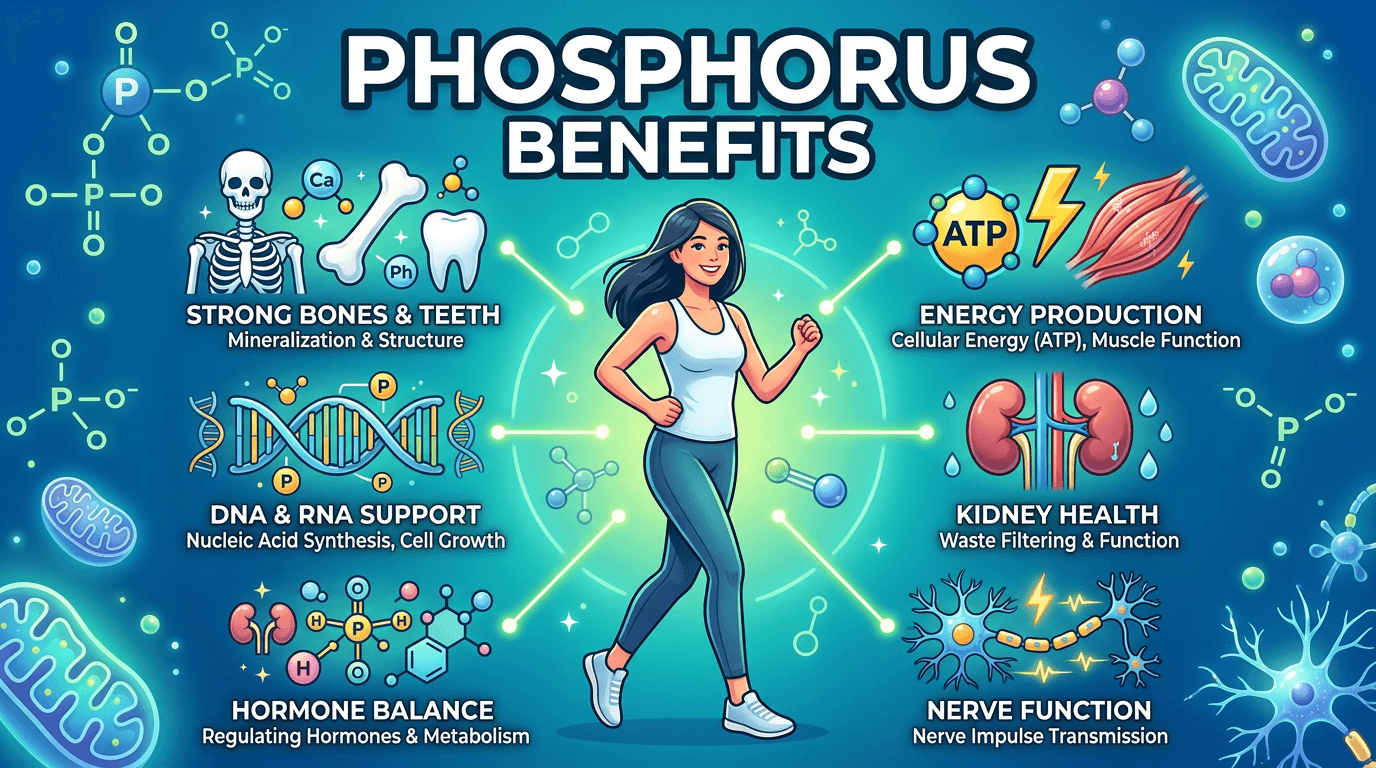
The primary phosphorus benefits relate to its fundamental roles in the body, including building strong bones and teeth, producing energy at a cellular level, and forming the very structure of our DNA and cell membranes. As the second most abundant mineral in the body after calcium, phosphorus is an essential component of every single cell, making its consistent supply from the diet crucial for overall health.
While this mineral is often overshadowed by its more famous counterpart, calcium, understanding phosphorus is key to appreciating the intricate systems that support your body's structure and energy. This article provides a detailed overview of phosphorus, exploring its critical functions, dietary sources, and the important concept of balance. You will learn about the signs of deficiency and excess, who is at risk for imbalances, how it interacts with other nutrients and medications, and why supplementation should be approached with caution and professional guidance.
What Is Phosphorus and Why Is It Essential?

Phosphorus is an essential mineral that the human body requires to function correctly. It is a highly reactive element that is never found free in nature; instead, it combines with other elements, primarily oxygen, to form compounds called phosphates. In the context of human nutrition and biology, when we talk about "phosphorus," we are almost always referring to these phosphate compounds, which are integral to countless physiological processes.
After calcium, phosphorus is the most plentiful mineral in the body, accounting for about 1% of a person's total body weight. It is a core component of every cell, playing irreplaceable roles in structure, energy, and genetic regulation. Approximately 85% of the body's phosphorus is found in bones and teeth, where it provides strength and durability. The remaining 15% is distributed throughout soft tissues and extracellular fluid, where it participates in the metabolic activities that keep us alive.
The body maintains a tight control over phosphorus levels in the blood through a complex interplay of hormones and organ systems, primarily involving the kidneys, bones, and intestines. This strict regulation highlights its importance; both too little (hypophosphatemia) and too much (hyperphosphatemia) can lead to significant health problems. Therefore, understanding its function is not just about getting enough, but about maintaining the right balance.
The Crucial Roles of Phosphorus in the Body
The benefits of phosphorus stem from its ubiquitous presence and multifaceted functions within the body's chemistry. It is not just a passive structural element but an active participant in energy transfer, cell communication, and genetic expression. Exploring these roles reveals why a steady dietary supply is so critical.
Building Strong Bones and Teeth
The most well-known function of phosphorus is its structural role in the skeleton. It works in close partnership with calcium to form a crystalline substance called calcium hydroxyapatite. This compound is the primary inorganic component of bone and tooth enamel, giving them their hardness and rigidity. Without adequate phosphorus, bones cannot properly mineralize, a process essential for building bone mass during growth and maintaining bone density throughout life.
The body is constantly remodeling bone tissue, breaking down old bone and forming new bone in a process that requires a continuous supply of both calcium and phosphorus. An imbalance, particularly high phosphorus with low calcium, can disrupt this process. It can trigger the release of parathyroid hormone (PTH), which instructs the body to pull calcium from the bones to stabilize blood levels, potentially leading to bone weakening over time.
Fueling the Body: Energy Production and Storage
Perhaps the most dynamic role of phosphorus is in energy metabolism. All life-sustaining activities in the body—from muscle contraction and nerve impulse transmission to protein synthesis and cell division—require energy. This energy is supplied in the form of a molecule called Adenosine Triphosphate (ATP).
The "T" and "P" in ATP stand for "tri-phosphate," indicating that the molecule contains a chain of three phosphate groups. The bonds connecting these phosphate groups store a large amount of chemical energy. When a cell needs energy, it breaks off the outermost phosphate group, converting ATP to Adenosine Diphosphate (ADP). This breakage releases a burst of energy that the cell can use to perform its work. Phosphorus is thus at the very heart of the body's energy economy, constantly being cycled between ATP and ADP to power life.
Cell Structure and Communication
Every cell in the body is enclosed by a membrane that acts as a barrier, controlling what enters and leaves. The fundamental structure of this membrane is the phospholipid bilayer. As the name suggests, phospholipids are lipids (fats) that contain a phosphate group. This phosphate group forms a "head" that is hydrophilic (attracted to water), while the fatty acid "tails" are hydrophobic (repelled by water).
This dual nature causes phospholipids to spontaneously arrange themselves into a bilayer in a watery environment, with the water-loving heads facing outwards and the water-fearing tails tucked inside. This structure is essential for cellular integrity and function. Furthermore, phosphorus plays a key role in cell signaling through a process called phosphorylation. Enzymes called kinases add phosphate groups to proteins, which can switch them "on" or "off," thereby regulating a vast array of cellular activities, from growth and proliferation to metabolism.
Genetic Blueprint: DNA and RNA Formation
Phosphorus is an indispensable component of the building blocks of life: Deoxyribonucleic Acid (DNA) and Ribonucleic Acid (RNA). These nucleic acids carry the genetic instructions for the development, functioning, growth, and reproduction of all known organisms. The iconic double helix structure of DNA is formed by two long strands, and the backbone of each strand is composed of alternating sugar and phosphate groups.
This sugar-phosphate backbone provides the structural framework that holds the entire genetic code together. Similarly, RNA, which is crucial for translating the genetic code into proteins, also relies on a sugar-phosphate backbone. Without phosphorus, the very molecules that define our biological identity and orchestrate the symphony of life could not exist.
Maintaining Acid-Base Balance
The pH of the blood must be kept within a very narrow range (around 7.35 to 7.45) for enzymes and cells to function optimally. The body has several buffer systems to prevent drastic shifts in pH. Phosphate compounds are one of the body's most important intracellular and urinary buffers.
Phosphate ions can accept or donate hydrogen ions (H+) as needed, helping to neutralize excess acids or bases in the blood and urine. This buffering capacity is particularly important in the kidneys, where phosphates help excrete acids from the body while conserving bicarbonate, the body's primary alkaline buffer. This role is vital for maintaining systemic pH homeostasis.
Phosphorus Deficiency (Hypophosphatemia): Causes and Risk Factors
True dietary phosphorus deficiency is extremely rare in the general U.S. population. The mineral is abundant in a wide variety of foods, and most people consume amounts that meet or exceed the recommended daily intake. Consequently, low phosphorus levels, known clinically as hypophosphatemia, are almost always caused by underlying medical conditions that affect its absorption, excretion, or distribution in the body, rather than a simple lack of dietary intake.
It's important to distinguish between a short-term dip in intake and the clinically significant condition of hypophosphatemia, which refers to abnormally low concentrations of phosphate in the blood. This condition is typically seen in hospitalized or critically ill patients and is not something healthy individuals usually need to worry about. The body has robust mechanisms to conserve phosphorus when intake is low, such as increasing intestinal absorption and reducing urinary excretion, which prevents deficiency under normal circumstances.
Who is at Risk for Low Phosphorus Levels?
While rare in the general population, certain groups and conditions significantly increase the risk of developing hypophosphatemia. These risk factors disrupt the body's ability to maintain phosphorus balance.
- Severe Malnutrition and Starvation: Individuals with very low food intake due to conditions like anorexia nervosa, or those experiencing famine, are at risk. The risk is particularly high during refeeding (refeeding syndrome), when the sudden reintroduction of carbohydrates causes a rapid shift of phosphate from the blood into cells, leading to a dangerous drop in blood levels.
- Chronic Alcoholism: Alcohol abuse is a leading cause of hypophosphatemia. It contributes to the condition through multiple mechanisms, including poor dietary intake, impaired absorption in the gut, and increased excretion of phosphate by the kidneys.
- Certain Medical Conditions: Several diseases can disrupt phosphate metabolism. These include:
- Hyperparathyroidism: Overactive parathyroid glands produce excess parathyroid hormone (PTH), which increases the excretion of phosphate by the kidneys.
- Vitamin D Deficiency: Severe and prolonged deficiency of vitamin D impairs the absorption of both calcium and phosphorus from the intestine.
- Diabetic Ketoacidosis (DKA): During the treatment of this life-threatening complication of diabetes, insulin administration drives phosphate into cells along with glucose, which can cause a sharp drop in blood phosphate levels.
- Genetic Disorders: Rare inherited conditions, such as X-linked hypophosphatemia (XLH), cause the kidneys to waste excessive amounts of phosphate, leading to chronic low levels.
- Medication Use: The long-term, high-dose use of certain medications can interfere with phosphorus balance. Phosphate-binding antacids containing aluminum, magnesium, or calcium can prevent dietary phosphorus from being absorbed. Certain diuretics can also increase urinary phosphate loss.
Understanding these risk factors is crucial for healthcare providers in identifying individuals who may need their phosphate levels monitored. For the average healthy person, however, these scenarios are not typical.
Signs and Symptoms Associated with Phosphorus Deficiency
The signs and symptoms of low phosphorus levels (hypophosphatemia) are often non-specific and depend on the severity and duration of the deficiency. Because phosphorus is essential for energy production, many symptoms relate to a lack of cellular energy. Mild cases may be asymptomatic or cause vague complaints, while severe deficiency can be life-threatening.
Symptoms are generally categorized based on the severity of the deficiency:
- Mild to Moderate Hypophosphatemia: This is often discovered incidentally on blood tests and may not cause noticeable symptoms. When symptoms do occur, they can be subtle and include:
- Loss of appetite
- Muscle weakness, particularly in major muscle groups
- Bone pain
- General fatigue and irritability
- Numbness or tingling sensations
- Severe Hypophosphatemia: This is a medical emergency most often seen in critically ill or hospitalized patients. The widespread depletion of ATP affects all major organ systems, leading to severe and potentially fatal complications:
- Muscular: Severe muscle weakness, including weakness of the diaphragm leading to respiratory failure. Rhabdomyolysis (rapid breakdown of muscle tissue) can also occur, releasing harmful substances into the bloodstream and causing kidney damage.
- Neurological: Confusion, disorientation, delirium, seizures, and even coma.
- Cardiovascular: Impaired heart muscle function (cardiomyopathy), arrhythmias (irregular heartbeats), and heart failure.
- Skeletal: In chronic cases, especially in children, it can lead to rickets (impaired bone mineralization) and in adults, osteomalacia (softening of the bones), increasing the risk of fractures.
Again, it is critical to emphasize that severe symptoms are confined to specific, high-risk clinical populations. A healthy person eating a varied diet is not at risk for developing respiratory failure or coma from a lack of phosphorus.
How Much Phosphorus Do You Need? Recommended Intakes
The Food and Nutrition Board at the U.S. National Academies of Sciences, Engineering, and Medicine has established Recommended Dietary Allowances (RDA) for phosphorus. The RDA is the average daily intake level sufficient to meet the nutrient requirements of nearly all (97%–98%) healthy individuals in a particular life stage and gender group.
For most healthy adults, the RDA for phosphorus is straightforward and easily met through a typical American diet. The needs are highest during periods of rapid growth, such as childhood and adolescence, as well as during pregnancy and lactation to support the development of the fetus and milk production.
| Age Group | Recommended Dietary Allowance (RDA) in milligrams (mg) |
|---|---|
| Birth to 6 months* | 100 mg |
| 7–12 months* | 275 mg |
| 1–3 years | 460 mg |
| 4–8 years | 500 mg |
| 9–18 years | 1,250 mg |
| 19–50+ years | 700 mg |
| Pregnancy (all ages) | 700 mg |
| Lactation (all ages) | 700 mg |
*For infants, this value represents an Adequate Intake (AI), which is established when there is insufficient evidence to develop an RDA.
The RDA for adults 19 years and older is 700 mg per day. Notably, this requirement does not change for older adults, and it remains the same during pregnancy and lactation. However, the requirement during the adolescent growth spurt (ages 9–18) is significantly higher at 1,250 mg per day to support the rapid accretion of bone mass. Data from national surveys indicate that most Americans of all ages consume phosphorus in amounts that comfortably exceed these recommendations.
Top Food Sources of Phosphorus
Phosphorus is widely distributed in the food supply, making it one of the easier minerals to obtain through diet. It is found naturally in many protein-rich foods and is also used extensively as an additive in processed foods. The bioavailability of phosphorus varies depending on the source; phosphorus from animal sources is more readily absorbed than from plant sources.
Natural Sources of Phosphorus
Whole, unprocessed foods are excellent sources of phosphorus. Protein-rich foods are generally the best sources.
- Dairy Products: Milk, yogurt, and cheese are renowned for their calcium content, and they are equally rich in phosphorus. The favorable calcium-to-phosphorus ratio in dairy supports bone health.
- Meat and Poultry: Beef, pork, chicken, and turkey are all significant contributors to phosphorus intake.
- Fish and Seafood: Salmon, scallops, sardines, cod, and tuna are excellent sources. Certain fish, like salmon, also provide vitamin D, which aids phosphorus absorption.
- Legumes, Nuts, and Seeds: Lentils, chickpeas, kidney beans, pumpkin seeds, sunflower seeds, and almonds are packed with phosphorus. However, the phosphorus in these plant-based foods is primarily in the form of phytic acid (or phytate). The human digestive system lacks the enzyme to fully break down phytate, so only about 50% of the phosphorus from these sources is bioavailable. Soaking, sprouting, or fermenting these foods can help increase phosphorus absorption.
- Whole Grains: Foods like quinoa, oats, whole wheat, and brown rice contain phosphorus, also largely in the form of phytate.
| Food Item | Serving Size | Approximate Phosphorus (mg) |
|---|---|---|
| Salmon, cooked | 3 ounces | 315 |
| Plain low-fat yogurt | 6 ounces | 385 |
| Milk, 1% | 1 cup | 232 |
| Chicken breast, roasted | 3 ounces | 180 |
| Lentils, cooked | 1 cup | 356 |
| Pumpkin seeds, shelled | 1 ounce | 332 |
| Quinoa, cooked | 1 cup | 281 |
Phosphorus Additives in Processed Foods
A significant portion of phosphorus in the modern American diet comes not from natural food sources but from inorganic phosphate additives. Food manufacturers add these phosphate salts to a vast array of processed products to serve various functions, such as leavening agents, emulsifiers, stabilizers, and moisture retainers. They can also enhance flavor and extend shelf life.
Common foods containing these additives include:
- Fast food
- Processed meats (sausages, bacon, deli meats)
- Frozen, ready-to-eat meals
- Processed cheese
- Baked goods and mixes
- Colas and some other dark soft drinks
Unlike the organically bound phosphorus in plants (phytate), the inorganic phosphate from these additives is not bound and is highly absorbable—up to 90-100%. While food labels must list ingredients, they are not required to quantify the amount of added phosphorus, making it difficult for consumers to track their intake. This high absorption rate, combined with the prevalence of processed foods, is a primary reason why excessive phosphorus intake is a growing concern, particularly for individuals with compromised kidney function.
Phosphorus Supplements: Forms, Uses, and Considerations
Phosphorus supplements are generally not necessary or recommended for healthy individuals eating a balanced diet. Due to the mineral's abundance in food and the potential risks of excess intake, supplementation should only be undertaken for a specific medical reason and under the direct supervision of a healthcare professional. Over-the-counter phosphorus-only supplements are uncommon in the U.S.
Common Forms of Phosphorus Supplements
When phosphorus is given as a supplement or medication, it is in the form of a phosphate salt, combined with another mineral. The choice of salt depends on the clinical objective. Common forms include:
- Potassium Phosphate: Often used to correct hypophosphatemia, especially when the patient also has low potassium levels (hypokalemia).
- Sodium Phosphate: Also used to treat low phosphate levels. In high doses, it has a laxative effect and is sometimes used for bowel preparation before a colonoscopy.
- Calcium Phosphate: This form is commonly found as a source of calcium in dietary supplements. While it contributes to phosphorus intake, it's primarily marketed as a calcium supplement.
Phosphorus is also a component of many multivitamin/mineral supplements, but typically in small amounts that are unlikely to pose a risk for healthy individuals.
When Might Phosphorus Supplements Be Considered?
The use of high-dose phosphorus supplements is restricted to specific medical contexts, always guided by laboratory testing and clinical assessment.
- Treating Diagnosed Hypophosphatemia: The primary use is to correct clinically significant low blood phosphate levels in hospitalized patients or those with conditions known to cause phosphate wasting. This is often administered intravenously in severe cases.
- Genetic Disorders: Individuals with certain rare genetic disorders that cause renal phosphate wasting may require lifelong supplementation with oral phosphate and active vitamin D to prevent severe bone disease.
- Athletic Performance (Phosphate Loading): Some athletes have experimented with "phosphate loading"—taking large doses of phosphate supplements for several days before an endurance event. The theory is that this might enhance oxygen delivery to muscles and improve ATP production. However, the scientific evidence supporting this practice is mixed and inconsistent, and it carries risks of gastrointestinal upset and other side effects. This practice is not generally recommended.
The Dangers of Too Much Phosphorus (Hyperphosphatemia)
For the general population, the health concern surrounding phosphorus is not deficiency, but excess. High levels of phosphate in the blood, a condition called hyperphosphatemia, can have serious long-term consequences. While this is primarily a problem for people with impaired kidney function, chronically high dietary intake from processed foods and additives can be a contributing factor.
Healthy kidneys are remarkably efficient at managing phosphorus levels. When you consume more phosphorus than your body needs, your kidneys simply filter out the excess and excrete it in the urine. However, this protective mechanism begins to fail when kidney function declines. For people with chronic kidney disease (CKD), the body's ability to get rid of excess phosphorus is diminished, causing it to accumulate in the blood.
The Consequences of High Phosphorus Levels
Persistent hyperphosphatemia, especially in the context of CKD, sets off a cascade of damaging events in the body, primarily related to its interaction with calcium.
- Calcium Imbalance and Bone Disease: High blood phosphorus levels disrupt the normal calcium-phosphorus balance. This stimulates the parathyroid glands to release more parathyroid hormone (PTH). PTH works to lower blood phosphorus by increasing its excretion (a mechanism that fails in advanced kidney disease) and to raise blood calcium by pulling it from the bones. This chronic "theft" of calcium weakens bones, a condition known as renal osteodystrophy, increasing fracture risk.
- Vascular and Soft Tissue Calcification: This is the most dangerous consequence. When both phosphorus and calcium levels are high in the blood, they can combine to form hard, crystal-like deposits in soft tissues where they don't belong. These deposits can form in blood vessels, making them stiff and narrow (a process similar to atherosclerosis), which dramatically increases the risk of heart attacks, strokes, and peripheral vascular disease. Calcification can also occur in the heart muscle, lungs, joints, and skin.
- Severe Itching (Pruritus): Many patients with advanced CKD and hyperphosphatemia suffer from persistent, severe itching, which can be debilitating and significantly reduce quality of life. The exact cause is complex, but it is believed to be related to phosphate deposits in the skin.
Who is at Risk for Hyperphosphatemia?
The risk of developing high blood phosphorus is almost exclusively limited to specific groups:
- Chronic Kidney Disease (CKD): This is by far the most common cause. As kidney function declines, so does the ability to excrete phosphorus. It is a major focus of management for all patients with moderate to advanced CKD.
- Hypoparathyroidism: Underactive parathyroid glands lead to low levels of PTH, which results in decreased renal excretion of phosphate and high blood levels.
- Massive Phosphorus Load: In rare cases, an acute, massive intake of phosphorus can overwhelm even healthy kidneys. This can happen from the overuse of phosphate-containing laxatives or enemas, or from conditions involving massive cell destruction (e.g., severe trauma, tumor lysis syndrome during chemotherapy) that release large amounts of intracellular phosphate into the bloodstream.
Tolerable Upper Intake Levels (UL) for Phosphorus
To address the risks associated with excessive intake, the Food and Nutrition Board has established Tolerable Upper Intake Levels (UL) for phosphorus. The UL is the maximum daily intake of a nutrient that is unlikely to cause adverse health effects for almost all individuals in the general population. Exceeding the UL on a regular basis may increase the risk of negative outcomes.
The UL for phosphorus applies to total intake from all sources, including food (both natural and from additives) and supplements. It's important to note that these levels are set for healthy individuals with normal kidney function. People with chronic kidney disease have a much lower tolerance for phosphorus and must follow specific dietary restrictions prescribed by their healthcare team.
| Age Group | Tolerable Upper Intake Level (UL) in grams (g) |
|---|---|
| Birth to 6 months | Not established |
| 7–12 months | Not established |
| 1–3 years | 3 g (3,000 mg) |
| 4–8 years | 3 g (3,000 mg) |
| 9–70 years | 4 g (4,000 mg) |
| >70 years | 3 g (3,000 mg) |
| Pregnancy | 3.5 g (3,500 mg) |
| Lactation | 4 g (4,000 mg) |
The UL for adults aged 19 to 70 is 4,000 mg (4 grams) per day. This level is lowered to 3,000 mg per day for adults over 70, due to a higher likelihood of impaired kidney function in this age group. While it is difficult to reach these levels through a diet of whole foods alone, a diet high in processed foods containing phosphate additives, potentially combined with supplement use, could push intake toward or over the UL.
Phosphorus Interactions with Medications and Nutrients
Phosphorus does not act in a vacuum. Its absorption, metabolism, and effects in the body are closely intertwined with other nutrients, and its levels can be significantly altered by various medications. Understanding these interactions is key to appreciating the importance of overall nutritional balance and communicating with healthcare providers about all medications and supplements.
Medication Interactions
Several classes of medications can affect phosphorus balance, either by reducing its absorption or increasing its excretion.
- Phosphate Binders: This is the most direct interaction. Prescription medications like sevelamer (Renvela®) and lanthanum carbonate (Fosrenol®) are specifically designed to bind to dietary phosphate in the gut, preventing its absorption. They are a cornerstone of therapy for patients with CKD to control hyperphosphatemia.
- Antacids: Over-the-counter antacids that contain aluminum, magnesium, or high doses of calcium can also act as phosphate binders. While occasional use is not a concern, long-term, high-dose use without medical supervision can lead to phosphate depletion and hypophosphatemia.
- Diuretics: Certain types of diuretics (water pills), such as thiazides and loop diuretics, can increase the amount of phosphorus excreted in the urine, potentially contributing to lower levels with chronic use.
- Insulin: In acute medical situations, such as the treatment of diabetic ketoacidosis or during refeeding syndrome, insulin administration causes a rapid shift of phosphorus from the bloodstream into cells, which can induce acute hypophosphatemia.
Nutrient Interactions
Phosphorus has a close and critical relationship with several other key nutrients, particularly those involved in bone health.
- Calcium: The calcium-phosphorus relationship is the most important. The body strives to maintain a specific ratio of these two minerals in the blood. A high intake of phosphorus, especially when calcium intake is low, can disrupt this balance. It stimulates the secretion of PTH, which restores balance by leaching calcium from the bones. This highlights the importance of consuming adequate calcium along with phosphorus.
- Vitamin D: Vitamin D is essential for maintaining mineral homeostasis. In its active form (calcitriol), it promotes the absorption of both calcium and phosphorus from the small intestine. Therefore, adequate vitamin D status is necessary to effectively utilize dietary phosphorus.
- Magnesium: Magnesium is another mineral crucial for bone structure and is involved in the regulation of PTH and active vitamin D. An imbalance in any one of these three minerals—calcium, phosphorus, or magnesium—can affect the others.
- Iron and Zinc: Very high intake of phosphorus, particularly from supplements, may potentially interfere with the absorption of other essential minerals, including iron and zinc. Additionally, the phytates found in plant-based sources of phosphorus also bind to these minerals, reducing their bioavailability.
Frequently Asked Questions About Phosphorus
What are the main benefits of phosphorus?
The main benefits of phosphorus are its fundamental roles in the body. It partners with calcium to build strong bones and teeth, it is a key component of ATP (the body's main energy molecule), it forms the structure of cell membranes and the backbone of DNA and RNA, and it helps maintain the body's acid-base balance.
Is phosphorus deficiency common?
No, true dietary phosphorus deficiency is very rare in healthy people in the U.S. because the mineral is abundant in many foods. Clinically low phosphorus levels (hypophosphatemia) are typically caused by specific medical conditions like alcoholism, severe malnutrition, or certain genetic disorders, rather than inadequate dietary intake.
Can I get enough phosphorus on a vegan or vegetarian diet?
Yes, it is entirely possible to get enough phosphorus on a vegan or vegetarian diet. Excellent plant-based sources include lentils, beans, chickpeas, nuts, seeds, and whole grains. While the phosphorus in plants (phytate) is less bioavailable, the sheer quantity in a varied plant-based diet usually ensures adequate intake.
Should I take a phosphorus supplement?
For most healthy individuals, the answer is no. Phosphorus supplements are generally unnecessary and should not be taken without a specific medical diagnosis and recommendation from a healthcare professional. Self-supplementing carries a risk of creating mineral imbalances and can be dangerous, especially for those with undiagnosed kidney issues.
What's the difference between phosphorus in food and phosphorus in additives?
Phosphorus in natural foods (like meat or beans) is organically bound and less completely absorbed. Phosphorus used as an additive in processed foods (like colas or cured meats) is an inorganic salt that is almost 100% absorbed. This high bioavailability of additive phosphorus is a primary contributor to excessive intake in modern diets.
How does phosphorus affect the kidneys?
Healthy kidneys are responsible for filtering excess phosphorus from the blood and excreting it in urine. However, in individuals with chronic kidney disease, this function is impaired, leading to a buildup of phosphorus in the blood (hyperphosphatemia), which can cause serious bone and cardiovascular disease.
What is the ideal calcium-to-phosphorus ratio?
While an exact dietary ratio is debated, a general goal is to have calcium intake be equal to or greater than phosphorus intake (a ratio of 1:1 to 2:1). The typical American diet, high in processed foods and low in dairy, often has a much higher phosphorus content relative to calcium, which can be detrimental to bone health over time.
Can drinking soda lead to too much phosphorus?
Yes, many dark-colored sodas (colas) contain phosphoric acid as a flavor enhancer. This is a highly absorbable form of phosphorus. Frequent consumption of these beverages can contribute significantly to total phosphorus intake and may disrupt the calcium-phosphorus balance, especially if dairy or other calcium sources are not consumed.
Does phosphorus help with weight loss?
There is no strong scientific evidence to suggest that taking phosphorus supplements promotes weight loss. While phosphorus is essential for energy metabolism, adding more via supplements does not "boost" metabolism or cause weight loss in healthy individuals. Weight management is best achieved through a balanced diet and regular physical activity.
How is phosphorus deficiency diagnosed?
Phosphorus deficiency (hypophosphatemia) is diagnosed through a blood test that measures the concentration of phosphate in the serum. It is not diagnosed based on symptoms alone. If a low level is found, a healthcare professional will conduct further investigations to determine the underlying cause.
Conclusion: The Importance of Phosphorus Balance
Phosphorus is an unsung hero of mineral nutrition. It is absolutely essential, forming the bedrock of our bones, the currency of our cellular energy, and the blueprint of our genetic code. The vast phosphorus benefits are realized not through supplementation or special effort, but simply through its constant, quiet presence in a well-balanced diet.
The central theme of the phosphorus story is balance. For healthy individuals, the body's finely tuned regulatory systems, particularly the kidneys, manage phosphorus levels with remarkable precision. Deficiency is a clinical rarity, typically linked to specific diseases rather than diet. The more pressing modern concern is excess, driven by the pervasive use of highly absorbable phosphate additives in processed foods, which can strain our systems and, for those with kidney disease, pose a grave threat.
The most prudent approach to phosphorus is to focus on a dietary pattern rich in whole foods—fruits, vegetables, whole grains, and high-quality proteins—which provide phosphorus in its natural, organically bound form alongside a symphony of other essential nutrients. By prioritizing these foods and limiting processed items, you naturally promote a healthy calcium-to-phosphorus balance and support the systems that rely on this vital mineral. As with any aspect of health, if you have concerns about your phosphorus status, a consultation with a licensed healthcare professional is the only appropriate course of action.