
vitamine -
Quercetin and Senolytic Therapy Explained
Quercetin benefits are often discussed in relation to antioxidant support, immune function, and cellular health, but the conversation gets more specific when quercetin is mentioned in the context of senolytic therapy. Quercetin is a flavonoid found in many plant foods and also so
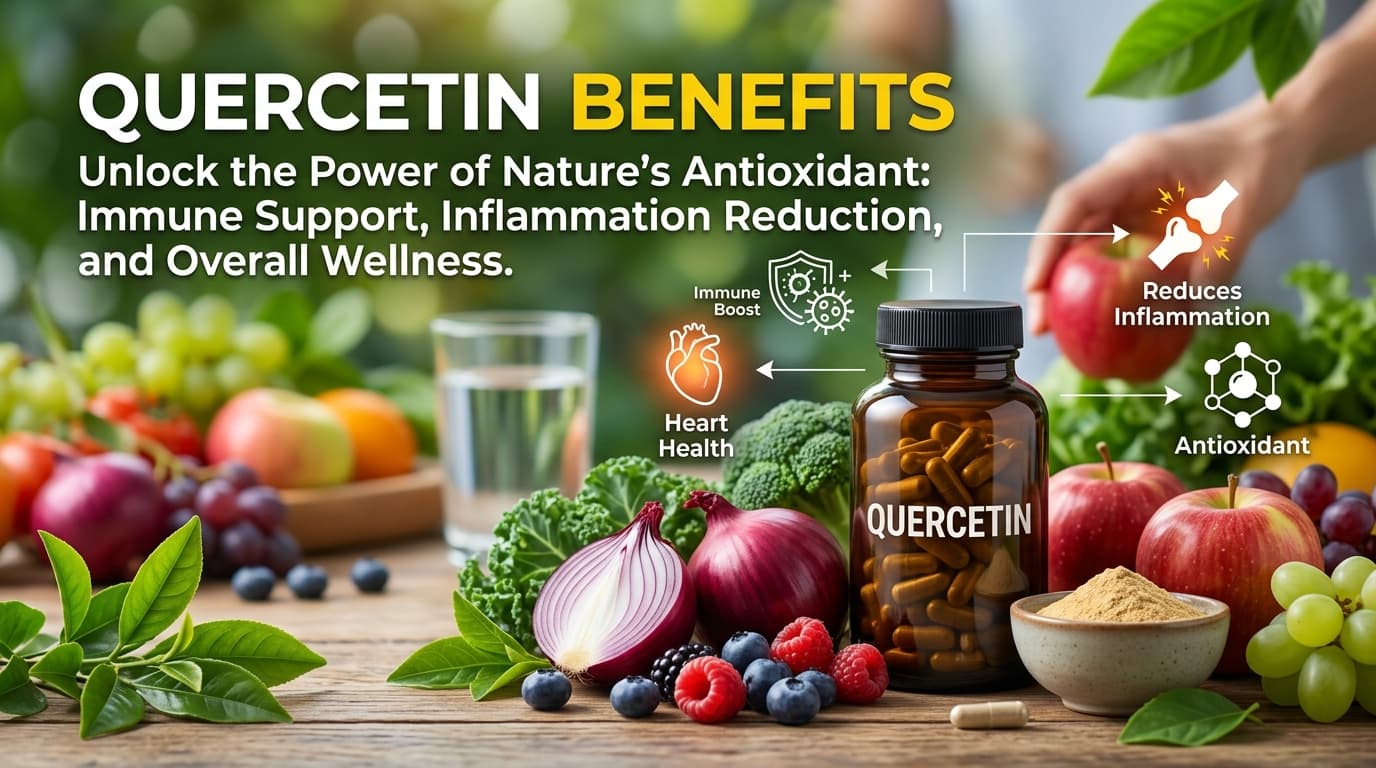
Quercetin benefits are often discussed in relation to antioxidant support, immune function, and cellular health, but the conversation gets more specific when quercetin is mentioned in the context of senolytic therapy. Quercetin is a flavonoid found in many plant foods and also sold as a supplement; some early research has explored it as part of strategies aimed at supporting healthy aging at the cellular level.
This article explains what quercetin is, why it is linked to senolytic therapy, what the evidence can and cannot say, how people typically think about supplement forms and absorption, and which safety issues matter most for U.S. readers. It is designed to help you understand the topic in a cautious, practical way so you can have a more informed conversation with a licensed healthcare professional if you are considering supplementation.
What Quercetin Is and Why It Is Discussed So Often
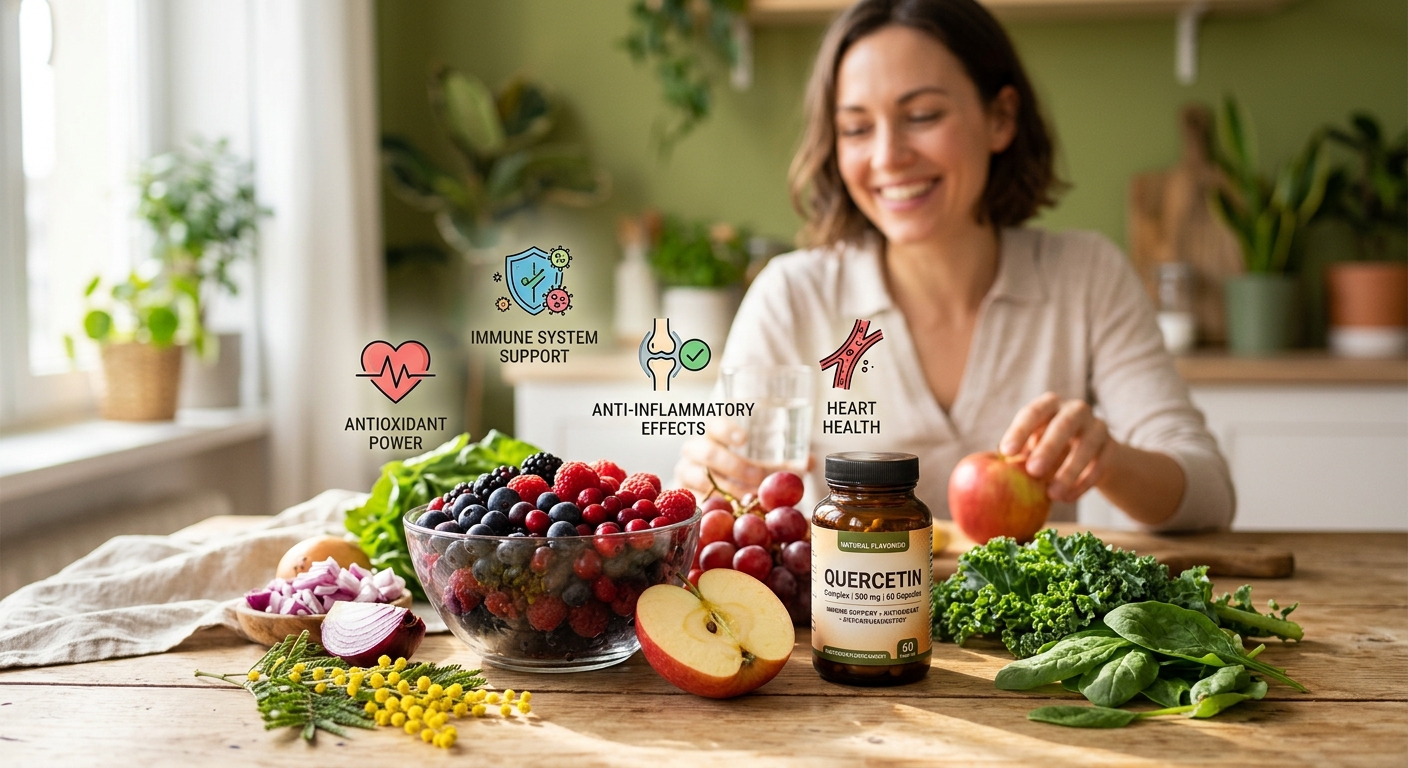
Quercetin is a naturally occurring plant compound in the flavonoid family. It is found in foods such as onions, apples, berries, capers, kale, and tea, and it is also available as an over-the-counter supplement in the United States. People search for quercetin benefits because it is widely marketed for general wellness, yet the real reasons it attracts attention are more specific: antioxidant activity, inflammatory signaling pathways, and its possible role in cellular aging research.
It is helpful to separate food-based quercetin from supplement-based quercetin. Most people consume quercetin in small amounts through a normal diet, while supplements provide much larger doses in forms meant to increase exposure. That difference matters because the body handles quercetin from food, pills, and combination products in different ways, and higher supplemental amounts may also change the risk profile.
Quercetin is not an essential nutrient in the same way vitamin C or iron is. In other words, there is no official requirement that everyone must meet through supplements. Instead, it is best thought of as a bioactive plant compound that may contribute to dietary quality and, in some contexts, may be studied for targeted uses. That is why it sits at the intersection of nutrition, supplementation, and emerging longevity research.
Where quercetin fits in the supplement landscape
Quercetin is commonly sold as a standalone supplement and also appears in formulas with bromelain, vitamin C, zinc, or other plant compounds. Some products position it as an antioxidant support ingredient, while others connect it to seasonal comfort, immune support, or healthy aging. These product categories may use similar ingredients but very different marketing language, so it helps to focus on the actual ingredient rather than the label claim.
For U.S. readers, the key point is that supplements are regulated differently from prescription drugs. A product can be sold without being proven to treat a disease, and consumer-facing claims are often broader than the scientific evidence. This does not mean quercetin is unhelpful; it means the evidence should be interpreted carefully and not overextended.
| Quercetin topic | What it means | Why it matters |
|---|---|---|
| Plant flavonoid | A natural compound found in fruits, vegetables, and tea | Explains why quercetin is associated with a plant-rich diet |
| Supplement form | A capsule, tablet, powder, or combination product | May provide much higher exposure than food alone |
| Research interest | Studied for antioxidant, anti-inflammatory, and cellular-aging pathways | Helps explain why it appears in longevity discussions |
| Not an essential nutrient | No official daily requirement like some vitamins and minerals | Makes routine supplementation less straightforward |
What Quercetin Does in the Body
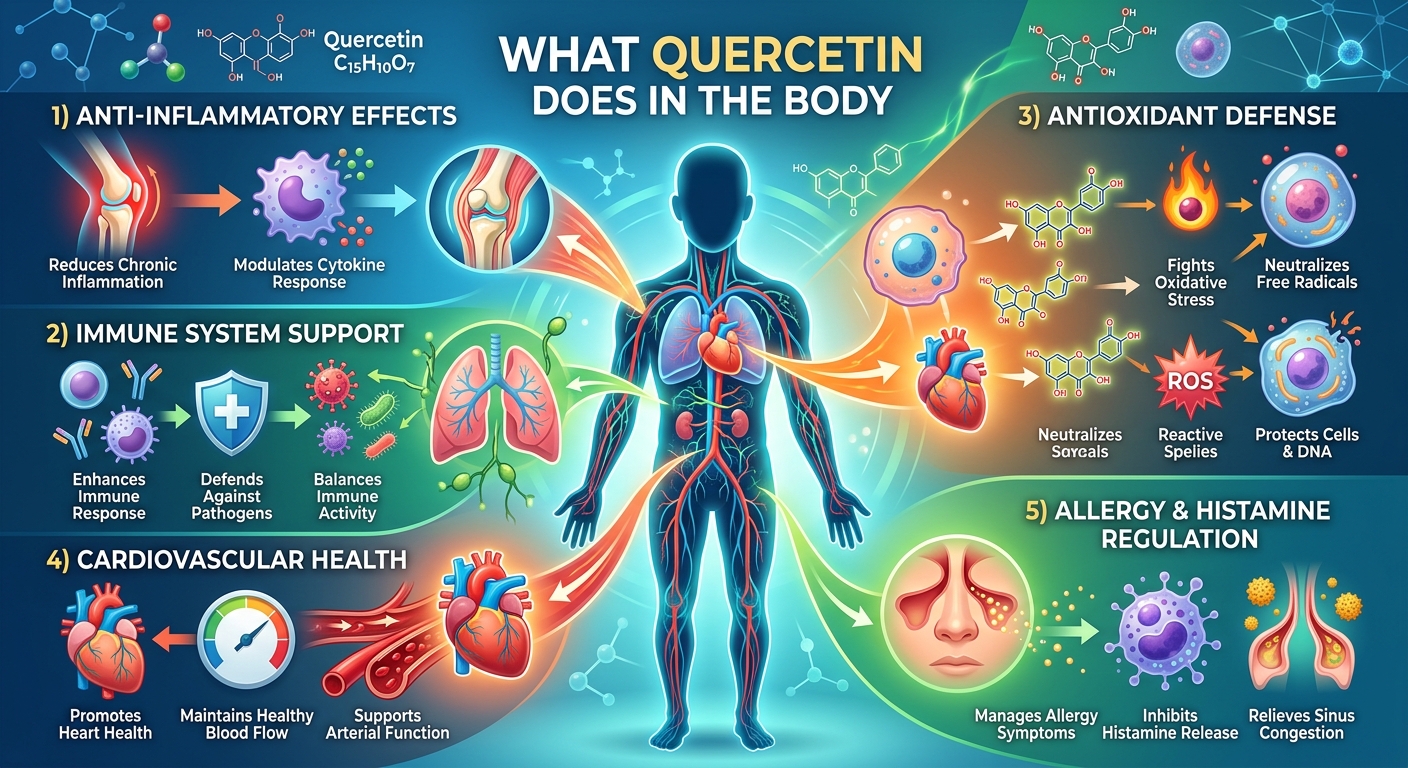
Quercetin is studied because it appears to influence several biological pathways at once. Researchers have explored its antioxidant properties, its effects on inflammatory signaling, and its possible impact on enzymes and cell communication. These mechanisms are scientifically interesting, but they do not automatically translate into a clear consumer health benefit, especially when evidence comes from laboratory or animal studies rather than human trials.
One reason quercetin is so widely discussed is that it has a broad biological footprint. Compounds like this are sometimes appealing because they touch multiple pathways, but broad activity can also make real-world effects harder to predict. A molecule that looks promising in a lab setting may behave differently in a supplement user, depending on dose, form, diet, gut absorption, and other variables.
It is also important to remember that “antioxidant” does not mean “better” in a simple, automatic way. The human body already maintains its own balance of oxidation and repair, and supplements do not necessarily improve that balance just because they have antioxidant properties on paper. The practical question is whether a supplement meaningfully changes an outcome that matters to the person taking it.
Antioxidant and inflammatory signaling
In nutrition conversations, quercetin is often grouped with other plant compounds that may help support the body’s normal response to oxidative stress. That wording is cautious for a reason: oxidative stress is a normal biological process, not a condition that should be overdramatically framed. Research interest exists because excess oxidative stress may be relevant in some contexts, but the degree to which a quercetin supplement changes that in a healthy person is not settled.
Quercetin has also been studied for pathways connected to inflammatory signaling. This is one reason it appears in discussions of recovery, immune support, and overall wellness. However, the presence of a pathway in a research paper does not mean someone should expect a supplement to feel dramatic or immediate. Human biology is more complex than ingredient marketing suggests.
What “bioavailability” means for quercetin
Bioavailability refers to how much of a substance is absorbed and becomes available to the body after you take it. Quercetin is known for having variable absorption, which helps explain why different supplement forms exist and why some products combine it with other ingredients. A product that looks identical on the shelf may not behave the same way in the body, especially if particle size, salt form, and accompanying compounds differ.
This matters because more milligrams on the label do not always translate into more useful exposure. Some forms may absorb better than others, and some combinations may be intended to change how the body handles quercetin. That is one reason responsible supplement selection should consider formulation, not just dose.
| Concept | Simple explanation | Why it matters |
|---|---|---|
| Antioxidant activity | May help support normal balance against oxidative stress | Often cited as a reason people take quercetin |
| Inflammatory signaling | May influence pathways involved in the body’s response | Relevant to many supplement discussions, but evidence varies |
| Bioavailability | How much is absorbed and used | Explains why form and timing matter |
| Cellular pathways | Processes researchers study at the cellular level | Useful scientifically, but not a guarantee of consumer benefit |
Quercetin Benefits: What the Evidence Suggests and What It Does Not
When people search for quercetin benefits, they are usually looking for practical answers: Does it support immunity? Does it help with aging? Is it worth taking at all? The most responsible answer is that quercetin has several areas of scientific interest, but the evidence is uneven, and many claims are stronger than the research supports.
Quercetin may be useful in some cases as part of an overall diet or supplement strategy, but it should not be described as a cure-all. Some research suggests it may support aspects of oxidative balance, inflammatory response, exercise recovery, or seasonal comfort, yet these effects are not guaranteed. Human studies vary widely in dose, duration, participant characteristics, and product formulation.
For readers, this means quercetin is best evaluated in context. If the question is whether the compound has interesting biological activity, the answer is yes. If the question is whether everyone should take it or whether it produces a reliable, dramatic result, the answer is much less certain.
Potential quercetin benefits people commonly look for
- Antioxidant support: Quercetin may help support the body’s normal defenses against oxidative stress.
- Inflammatory balance: It may influence some pathways involved in the body’s response to stress or irritation.
- Cellular health interest: It is studied in relation to cellular senescence and aging-related biology.
- Diet quality marker: Quercetin-rich foods often come with other beneficial nutrients and fiber.
- Seasonal and recovery use: Some people use it as part of broader wellness routines, though evidence is mixed.
These points reflect why quercetin remains popular, but they do not mean the supplement works equally well for every person or situation. For example, a person whose diet already includes a variety of fruits and vegetables may not notice much from adding a supplement. Another person may be taking a combination product for a specific reason, but the benefit could come from the overall formula rather than quercetin alone.
The strongest, most reliable “benefit” may be that quercetin is a marker of plant-rich eating patterns. Foods that naturally contain quercetin also bring fiber, water, potassium, vitamin C, and other phytonutrients. In other words, whole foods often provide a broader nutritional context than isolated supplements do.
What quercetin should not be expected to do
Quercetin should not be described as a replacement for medical care, a substitute for prescription treatment, or a guaranteed way to address a disease process. If someone is dealing with persistent symptoms, abnormal labs, or a diagnosed condition, self-directed supplement use can be a distraction rather than a solution. Supplements can be part of a wellness plan, but they should not stand in for professional evaluation when that evaluation is warranted.
It is also a mistake to assume that “natural” automatically means “gentle” or “appropriate in high doses.” Quercetin may be well tolerated by many people, yet side effects and interactions are still possible. A responsible article should emphasize informed use rather than enthusiasm alone.
Quercetin and Senolytic Therapy: Why the Connection Matters
Quercetin enters longevity discussions because it has been studied as part of senolytic research. Senolytic therapy refers to approaches aimed at selectively targeting senescent cells, which are damaged or aged cells that no longer divide normally and may contribute to harmful signaling in tissues. This is an active area of scientific exploration, but it remains an emerging field rather than a routine, established consumer therapy.
Quercetin is often mentioned alongside other compounds because some early studies suggest it may help influence senescent-cell pathways under certain conditions. However, the senolytic concept is complex, and research is ongoing. Much of the interest comes from preclinical work, specific experimental contexts, or combination strategies that do not translate directly into self-directed supplement use.
For readers, the main takeaway is that quercetin’s senolytic discussion is more about research than about standard health advice. It is not a reason to assume that a quercetin capsule will “clear out aging cells” in a meaningful way, and it is not a substitute for medical guidance. The topic is exciting scientifically, but caution is appropriate when moving from theory to supplements sold to the public.
What senolytic means in plain English
“Senescent” cells are cells that have stopped dividing normally and may release signals that affect nearby tissues. “Senolytic” refers to a substance or strategy that may help eliminate these cells selectively. Researchers are interested in this area because cellular senescence may play a role in aging biology, but that does not mean every senolytic candidate will work in humans the way it does in a lab model.
Quercetin is not the only compound studied in this space, and it is not universally accepted as a proven senolytic therapy. In some research settings, it has been paired with other compounds, such as dasatinib, in experimental combinations. That does not make it appropriate for casual supplement use, and it certainly does not mean people should try to replicate research protocols on their own.
Why the science is still early
Senolytic research is promising, but it is still evolving. Human biology is very different from cell culture and animal studies, and the best dose, timing, duration, and target population are not settled for consumer use. The fact that quercetin appears in senolytic discussions should be read as “scientific interest” rather than “standard recommendation.”
When a topic is in early research, oversimplified claims can spread quickly. People may hear that a compound “targets aging cells” and assume the story is complete. In reality, a rigorous interpretation must include uncertainty, safety considerations, and the difference between experimental work and practical supplementation.
| Senolytic concept | Plain-language meaning | Reader takeaway |
|---|---|---|
| Senescent cell | A cell that no longer divides normally and may send stress signals | Part of aging biology research |
| Senolytic | A substance studied for selective effects on senescent cells | An experimental concept, not a routine supplement claim |
| Combination research | Studies using quercetin with other compounds | Not the same as taking over-the-counter quercetin alone |
| Human evidence | Studies in people, not just lab models | Still limited for consumer recommendations |
Food Sources of Quercetin and How Diet Changes Exposure
For many people, the most practical way to think about quercetin is through food. Quercetin is naturally present in a wide range of plant foods, especially certain fruits and vegetables. That means a diet rich in plant foods can provide quercetin along with fiber and other bioactive compounds, which may be one reason quercetin-rich diets are often associated with healthier patterns overall.
Food sources do not provide the same concentrated dose as supplements, but they can offer a steadier and more balanced way to consume plant compounds. They also reduce the chance of side effects linked to very high supplemental intake. For some readers, food is enough; for others, a supplement may be discussed if there is a specific reason and a professional agrees it is appropriate.
It is worth noting that food composition is not identical across all varieties or preparation methods. Factors like ripeness, storage, cooking, and processing can influence the amount of quercetin retained in a serving. That is another reason exact intake is difficult to estimate from diet alone.
| Common quercetin-rich foods | Notes | Practical use |
|---|---|---|
| Onions | Often highlighted as a major food source | Easy to add to many meals |
| Apples | Varieties differ in composition | Useful as part of an overall fruit intake pattern |
| Berries | Contain multiple polyphenols, not only quercetin | Support dietary variety |
| Capers | Often considered one of the richer dietary sources | Used in small amounts, so serving size matters |
| Kale and leafy greens | Contribute additional nutrients | Good for overall diet quality |
| Tea | Contains several plant compounds | May contribute modestly to intake |
Why food sources matter before supplements
Food-based quercetin comes with natural limits. That can be helpful because it makes it easier to avoid overdoing a single compound. Foods also bring other nutrients that work together in the diet, so the effect is less isolated and more physiologic than swallowing a concentrated capsule.
For someone whose goal is general wellness rather than a narrowly defined research question, food is often the first place to start. Supplement decisions should usually come after diet, medication review, and any needed lab evaluation are considered. This is especially true if the person has symptoms, a medical condition, or a long medication list.
Supplement Forms, Label Terms, and How to Compare Products
Quercetin supplements are sold in several forms, and the label can be confusing. Some products contain plain quercetin, while others use quercetin phytosome or other enhanced-absorption formats. You may also find it paired with bromelain, vitamin C, or zinc, sometimes because marketers want to position it for immune support or seasonal use.
Not every formulation is equal, and the “best” form depends on what you are trying to understand. If you want a basic supplement overview, plain quercetin is the simplest starting point. If you are evaluating bioavailability, the form can matter a great deal. If you are trying to avoid unnecessary interactions, combination products can be more complicated than standalone options.
Reading the Supplement Facts panel carefully is essential. The ingredient name, dose per serving, other active ingredients, and suggested use instructions all matter. Product claims on the front label may sound impressive, but the back panel tells you what you are actually buying.
| Form | What it is | Why someone might choose it | Caution |
|---|---|---|---|
| Plain quercetin | Standalone quercetin ingredient | Simpler formula, easier to compare | Absorption may be variable |
| Quercetin phytosome | A form designed to improve absorption | May be preferred when bioavailability is a concern | Can be more expensive |
| Quercetin with bromelain | Combination with a pineapple-derived enzyme | Common in supplement blends | May not be suitable for people with certain sensitivities or medication issues |
| Quercetin with vitamin C | Combination formula | Often marketed for immune support | Extra ingredients add complexity, not always extra benefit |
| Powder or capsule | Different delivery formats | Convenience and dosing preference | Taste, tolerance, and consistency vary |
What to look for on the label
- Exact ingredient name: plain quercetin versus a branded or enhanced form.
- Serving size: the amount per capsule or per serving may differ from the daily total.
- Other active ingredients: especially bromelain, vitamin C, zinc, or herbal blends.
- Third-party testing: helpful for quality assurance, though not a guarantee of benefit.
- Suggested use: the manufacturer’s instructions are not the same as a personal medical recommendation.
Why enhanced-absorption forms matter
Because quercetin has variable absorption, some manufacturers use delivery systems meant to improve bioavailability. That can be meaningful if a person is comparing products for consistency or trying to understand why two labels with the same milligram amount may not act the same way. Still, better absorption does not automatically mean better outcomes.
Consumers should be careful not to equate technology with proven clinical superiority. A more absorbable form may increase exposure, but whether that exposure translates into a noticeable or relevant health effect depends on the goal and the evidence. This is where consultation with a healthcare professional can be especially useful.
General Dosage Framing, Timing, and Absorption Factors
Quercetin dosing is a topic where caution matters. There is no single universally appropriate dose for all adults, and this article does not provide individualized dosing advice. In general, supplement labels often list ranges that vary by product, and study designs may use different amounts depending on the question being asked.
Because quercetin is not an essential nutrient with a standard daily requirement, the conversation is not as simple as meeting a Recommended Dietary Allowance. Instead, supplement use should be framed around purpose, tolerance, possible interactions, and whether a clinician has advised it in a specific context. The goal is informed use, not self-experimentation.
Timing may also matter because some people prefer taking quercetin with food to reduce stomach upset, while others follow product-specific instructions. Absorption can be influenced by the form used, whether it is taken with a meal, and what other ingredients are included. Since quercetin is a compound with variable bioavailability, practical tolerance matters just as much as theoretical potency.
| Absorption factor | Possible effect | Practical note |
|---|---|---|
| Supplement form | Some forms may be absorbed more efficiently | Form matters as much as milligrams |
| Taking with food | May improve tolerance for some people | Follow product instructions and professional guidance |
| Combination ingredients | Can change how the product behaves | Combination formulas require extra caution |
| Gut and liver handling | Individual metabolism differs | Results are not identical from person to person |
Timing questions people commonly ask
Some readers ask whether quercetin is better in the morning, evening, with meals, or on an empty stomach. The honest answer is that it depends on the product, the person, and the reason for use. If a product label provides specific instructions, those should be followed unless a healthcare professional recommends otherwise.
If a person notices stomach upset, taking it with food may improve comfort. If the product is part of a broader regimen involving medications or other supplements, timing should be reviewed to reduce overlap or interaction concerns. This is especially relevant when the supplement is not being used casually but as part of a structured plan.
Potential Side Effects, Contraindications, and Medication Interactions
Quercetin is often described as a plant compound, but that should not be mistaken for a universal safety guarantee. Side effects are possible, especially at higher supplemental intakes or when quercetin is combined with other active ingredients. The likelihood of problems may depend on dose, sensitivity, the specific product, and whether a person takes medications.
The most common concerns are usually digestive discomfort, headaches, or general intolerance, although not everyone experiences side effects. More important for many readers are the interaction questions. Quercetin can be relevant in the context of prescription medications because compounds that affect enzymes or transporters may alter how drugs are handled by the body.
People taking medication should not assume that a “natural” supplement is automatically interaction-free. Even when the supplement itself is not highly risky, the combination may matter. This is one of the strongest reasons to involve a licensed healthcare professional before starting quercetin if you use regular medications.
Possible side effects
- Stomach upset or nausea
- Headache in some users
- Loose stool or digestive discomfort
- Sensitivity to combination ingredients, such as bromelain or herbs
Medication and supplement interaction considerations
Quercetin may interact with some medications through metabolic pathways or by affecting absorption and transport. Because the clinical significance varies, there is no one-size-fits-all list that replaces a medication review. The safest approach is to ask a pharmacist or physician about your exact medication list, including prescription drugs, over-the-counter medicines, and other supplements.
This is especially important for people taking medications that require stable blood levels, have narrow safety margins, or are already associated with interaction concerns. It is also wise to review any combination product rather than only the quercetin ingredient itself, because added components may contribute their own interaction risks.
| Safety issue | Why it matters | Action step |
|---|---|---|
| Digestive upset | May limit tolerance | Consider food timing and professional guidance |
| Prescription interactions | May affect medication handling | Review with a pharmacist or clinician |
| Combination ingredients | Bromelain, herbs, or minerals may add risk | Check the full label, not just quercetin |
| High-dose use | Greater chance of side effects | Avoid escalating dose without guidance |
Who May Need Extra Caution With Quercetin
Some people are more likely than others to need a conservative approach. This does not mean quercetin is automatically inappropriate, but it does mean that self-directed use is not the best starting point. A person’s age, health status, medications, pregnancy status, and lab results all change the conversation.
People with chronic conditions may already have medications, dietary restrictions, or organ-function concerns that affect supplement choice. Pregnant or breastfeeding individuals should be especially cautious, because supplement safety data may be limited or context-specific. Children and adolescents also require age-appropriate guidance rather than adult supplement habits copied from social media or marketing.
Anyone with unexplained symptoms should also avoid using quercetin as a way to delay medical evaluation. Supplements are not a substitute for diagnosis, and symptoms such as persistent fatigue, shortness of breath, palpitations, bleeding, or significant digestive change deserve clinical attention. A supplement might be discussed later, but the symptom itself should be evaluated first.
Higher-caution groups
- People taking prescription medications
- Pregnant or breastfeeding individuals
- People with liver, kidney, or bleeding-related concerns
- Anyone scheduled for surgery or a medical procedure
- Individuals with multiple supplements or complex combination products
When symptoms need medical evaluation first
It is reasonable to ask whether a nutrient or supplement fits into a broader plan after a clinician has evaluated symptoms. It is not reasonable to assume that quercetin can explain or fix symptoms that have not yet been assessed. If a person is trying supplements because they are worried about a real health issue, that concern should be addressed directly.
In practical terms, this means quercetin should not be used to self-manage new, severe, or worsening symptoms. A clinician can determine whether the issue is related to diet, medication side effects, labs, or something unrelated to supplementation. That distinction is one of the reasons professional input matters.
How Quercetin Compares With Other Popular Supplement Ingredients
Quercetin is often compared with other ingredients that appear in antioxidant or immune-support products. These comparisons can be helpful, but they can also create confusion if people assume one ingredient can replace another. Each compound has its own evidence profile, absorption pattern, safety issues, and ideal context.
For example, vitamin C is an essential nutrient with established dietary requirements, while quercetin is a plant flavonoid without a required intake level. Bromelain is an enzyme complex with its own potential uses and cautions. Zinc is a mineral that plays essential roles in the body but can be harmful in excess. Putting them all in the same “immune” category can hide meaningful differences.
Consumers sometimes choose combination products because they seem simpler, but simplicity is not always the best option. If one ingredient causes intolerance or interacts with a medication, it becomes harder to identify the cause when multiple actives are packed into one capsule. In many cases, a single-ingredient approach is easier to evaluate.
| Ingredient | Category | Key difference from quercetin |
|---|---|---|
| Vitamin C | Essential vitamin | Has a defined dietary requirement |
| Zinc | Essential mineral | Can be helpful when intake is low, but excess can cause problems |
| Bromelain | Enzyme complex | Has different tolerance and interaction considerations |
| Quercetin | Plant flavonoid | Studied for bioactive effects, but not an essential nutrient |
Common Mistakes, Myths, and Misunderstandings
Quercetin is one of those ingredients that attracts confident claims and oversimplified advice. The result is a long list of myths that can make informed decision-making harder. Some of these misunderstandings come from marketing, while others come from people trying to apply early research too broadly.
One common mistake is assuming that more milligrams automatically means better results. Another is believing that because quercetin is plant-based, it cannot cause side effects or interact with medication. A third mistake is using the supplement for a serious symptom pattern without first getting medical evaluation.
It is also easy to overvalue combination products. If a formula includes several ingredients, people may attribute any positive or negative effect to quercetin alone, even though the result may come from something else in the blend. Careful readers should resist that shortcut.
Myths worth correcting
- Myth: Quercetin is proven to reverse aging.
Reality: It is being studied in aging biology, but human evidence is still limited. - Myth: Natural means no interaction risk.
Reality: Quercetin can still raise medication and tolerance questions. - Myth: If a little is good, more is better.
Reality: Higher doses may increase side effects without clear added value. - Myth: Combination formulas are always superior.
Reality: They may be harder to evaluate and may add unnecessary ingredients.
Practical mistakes to avoid
One practical mistake is failing to read the whole label. Another is ignoring the person’s broader supplement list, which may already include overlapping ingredients. A third is starting a supplement when symptoms suggest a medical issue that deserves clinical evaluation first.
Readers sometimes also overlook the importance of product quality. Even when an ingredient is reasonable, poor manufacturing quality can undermine consistency. Choosing a reputable product does not guarantee a benefit, but it can reduce avoidable quality concerns.
How to Talk With a Healthcare Professional About Quercetin
If you are considering quercetin, a short conversation with a pharmacist, primary care clinician, or another licensed healthcare professional can be very useful. This is especially true if you take medications, have chronic health conditions, or are trying to make sense of a lab result or symptom pattern. The goal is not to seek permission for every supplement idea, but to make sure the choice is informed and appropriate.
To make the conversation efficient, bring a complete list of your medications, over-the-counter products, and supplements, including doses if you know them. Also mention why you are interested in quercetin, whether you are thinking about food sources or a supplement, and what outcome you are hoping to support. That context helps the professional evaluate whether quercetin makes sense at all.
If you have been reading about quercetin benefits in connection with senolytic therapy, say that directly. Clinicians can help separate the early science from the practical realities of supplement use. That distinction matters because longevity research is not the same thing as a self-directed routine recommendation.
Frequently asked questions
What are the main quercetin benefits people look for?
People usually look to quercetin for antioxidant support, inflammatory balance, and general cellular health interest. Some also discuss it for seasonal wellness or as part of longevity research. The evidence is mixed, so it is best viewed as a compound of interest rather than a guaranteed solution.
Is quercetin a senolytic supplement?
Quercetin is often discussed in senolytic research, but that does not mean it is established as a proven senolytic supplement for consumer use. The science is still developing, and much of the interest comes from early-stage or combination research. It should not be self-prescribed as a longevity treatment.
Should quercetin be taken with food or on an empty stomach?
It depends on the product and how your stomach tolerates it. Some people prefer taking quercetin with food to reduce digestive discomfort. Follow the product label and ask a healthcare professional if you are unsure, especially if you take medications.
Can quercetin interact with medications?
Yes, it may interact with some medications, and the significance depends on the specific drug and the full supplement formula. This is one reason medication review matters before starting quercetin. A pharmacist or clinician can help assess your exact situation.
Is more quercetin better?
Not necessarily. Higher doses may increase the chance of side effects without offering clear added value. Since quercetin is not an essential nutrient with a standard daily requirement, dosing should be approached cautiously and ideally discussed with a healthcare professional.
What foods are highest in quercetin?
Common food sources include onions, apples, berries, capers, kale, and tea. The exact amount can vary by variety, preparation, and serving size. Food sources can be a practical way to include quercetin as part of a varied diet.
Is quercetin safe during pregnancy or breastfeeding?
Pregnancy and breastfeeding are situations where supplement decisions should be reviewed with a licensed healthcare professional. Safety data may be limited or situation-specific, and it is not appropriate to assume a supplement is automatically suitable. Use professional guidance rather than self-starting a new product.
What are the most common mistakes people make with quercetin supplements?
Common mistakes include assuming natural means harmless, choosing combination products without understanding the other ingredients, and taking quercetin for symptoms that should be medically evaluated first. Another mistake is assuming a higher dose will work better. Careful reading of labels and professional guidance can prevent many of these problems.
Conclusion
Quercetin is a widely discussed plant flavonoid with interesting biology, a place in the supplement market, and growing attention in senolytic research. For readers interested in quercetin benefits, the most balanced conclusion is that quercetin may support certain aspects of antioxidant and cellular health, but the evidence is not strong enough to support dramatic claims or routine self-treatment strategies.
The connection between quercetin and senolytic therapy is scientifically interesting, yet still early. That makes it a topic for informed curiosity, not aggressive supplementation. Food sources, product form, absorption, interaction risk, and individual health status all matter more than marketing headlines suggest.
If you are considering quercetin, especially in the context of medications, chronic conditions, pregnancy, breastfeeding, abnormal labs, or symptoms, speak with a licensed healthcare professional first. The safest and most useful approach is to treat quercetin as one piece of a bigger health picture, not as a stand-alone answer.