
vitamine -
Biohacking Your Sleep for Longevity
Sleep biohacking is the practice of using evidence-informed habits, tools, and, in some cases, supplements to support better sleep quality, sleep timing, and next-day recovery. For longevity, the goal is not “perfect sleep” but more consistent, restorative sleep that fits your he

Sleep biohacking is the practice of using evidence-informed habits, tools, and, in some cases, supplements to support better sleep quality, sleep timing, and next-day recovery. For longevity, the goal is not “perfect sleep” but more consistent, restorative sleep that fits your health status, medications, schedule, and personal needs.
This topic matters because sleep affects many systems involved in long-term health, including mood regulation, metabolic function, immune resilience, alertness, and recovery. In this article, you will learn what sleep biohacking means, which strategies are most practical, how supplements fit in, what to avoid, and when to talk with a licensed healthcare professional.
What Sleep Biohacking Means for Longevity
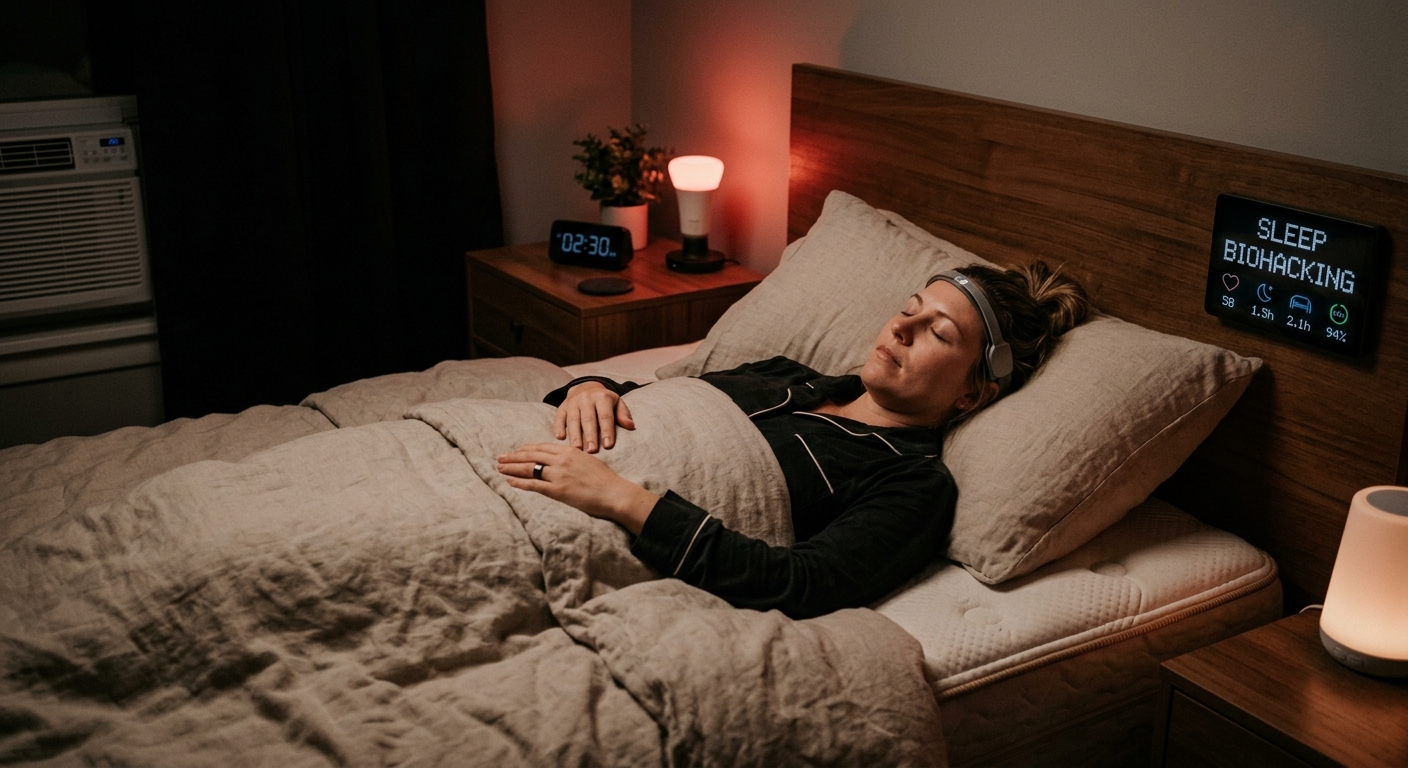
Sleep biohacking usually refers to making deliberate, measurable changes to improve sleep quality and consistency. For longevity, the emphasis is not only on sleeping longer, but on helping the body maintain a stable sleep-wake rhythm, adequate total sleep, and enough deep and REM sleep to support recovery. The term can sound high-tech, but many of the most useful strategies are simple and low-cost.
People search for sleep biohacking because sleep is one of the few recovery behaviors that is both highly personal and highly modifiable. A person may want to fall asleep faster, wake up less often, reduce grogginess, or better align sleep with work and travel demands. Others are interested in whether better sleep habits may support healthy aging, energy, and daytime function over time.
Why sleep matters in a longevity-focused plan
Sleep supports multiple biological processes that matter for long-term health, including memory consolidation, hormonal regulation, tissue repair, and immune signaling. Poor or inconsistent sleep can affect appetite, stress resilience, reaction time, and perceived energy, which may make it harder to maintain exercise, nutrition, and medication routines. From a longevity perspective, sleep is not a side issue; it is part of the foundation.
That said, sleep is not something you can force through willpower alone. Short-term stress, shift work, pain, snoring, restless legs, hormonal changes, medications, alcohol, caffeine, and an inconsistent schedule can all influence sleep. A good sleep biohacking plan takes those realities into account rather than assuming one universal fix.
| Sleep biohacking goal | What it usually means | Why it matters |
|---|---|---|
| Sleep onset | Falling asleep without long delays | May support consistent rest and less bedtime frustration |
| Sleep maintenance | Staying asleep through the night | Can improve recovery and next-day energy |
| Circadian alignment | Keeping sleep and wake timing steady | Helps the body expect sleep at a regular time |
| Sleep quality | More restorative sleep overall | May support daytime functioning and recovery |
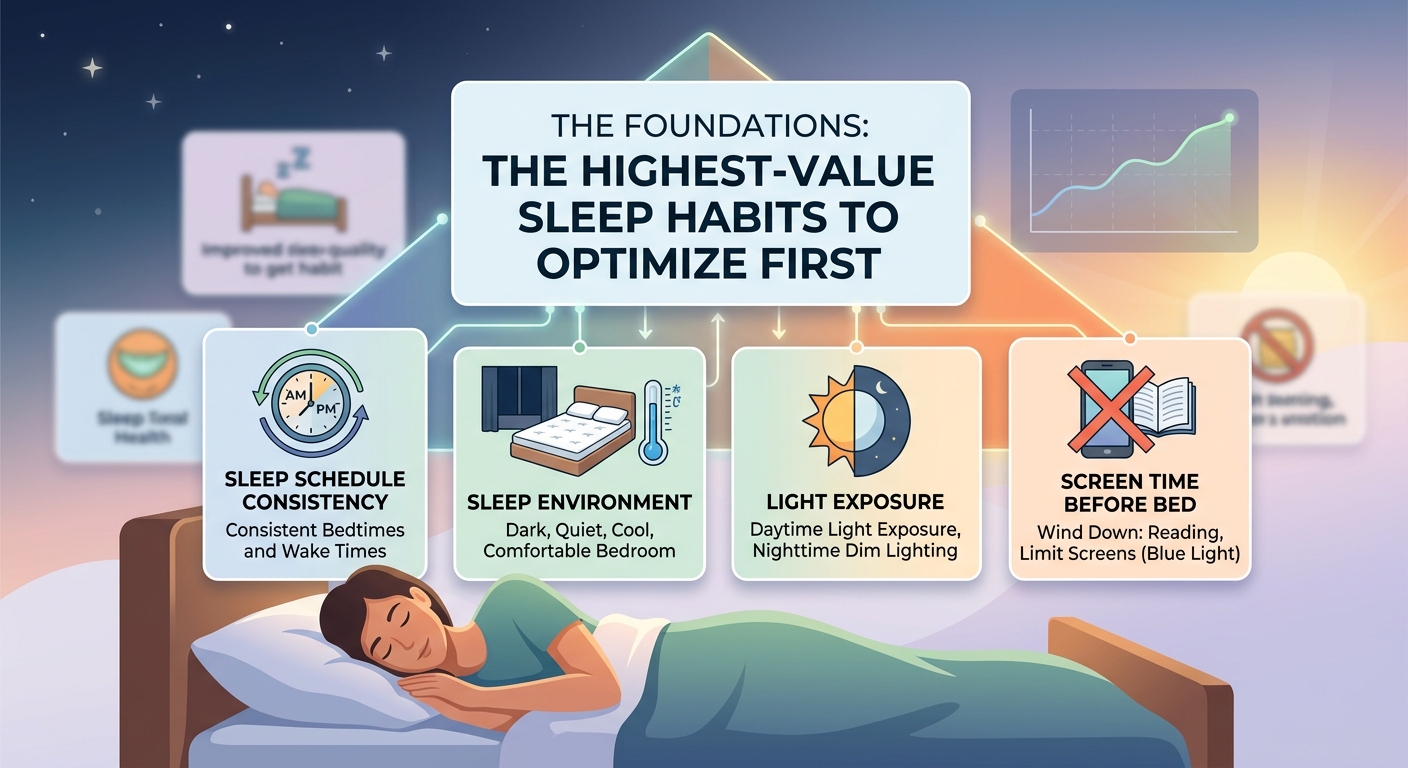
The Foundations: The Highest-Value Sleep Habits to Optimize First
If you are trying to biohack sleep, the first step is usually not a supplement. The highest-value changes often involve light, timing, caffeine, alcohol, meals, and environmental cues that tell the brain when it is time to sleep. These basics matter because they influence the circadian system, which is the body’s internal timing network.
Many people use the word “biohacking” to mean optimization, but the best results usually come from removing sleep disruptors before adding advanced tools. If your sleep schedule is inconsistent, the room is too bright, or caffeine timing is working against you, a supplement may offer only limited help. The goal is to make the environment and routine work with your biology, not against it.
1. Keep the sleep-wake schedule as consistent as practical
A regular wake time often matters more than a perfect bedtime. The body tends to respond to repeated timing cues, so going to bed and waking up at similar times may help stabilize sleep pressure and circadian rhythm. This can be especially helpful if you notice that you sleep better on routines than on “catch-up” sleep patterns that change dramatically from day to day.
For shift workers, parents of young children, frequent travelers, and people with irregular work demands, consistency may be difficult. In those cases, the goal may be a practical anchor time rather than a rigid schedule. A healthcare professional or sleep specialist can help if your sleep pattern is regularly misaligned with your life demands.
2. Use light strategically
Light is one of the most powerful timing signals for sleep. Bright light in the morning may help the body recognize that the day has started, while bright light late at night can delay sleepiness in some people. Many readers searching for sleep biohacking are actually looking for better light management, even if they do not realize it at first.
Practical steps may include getting outdoor light soon after waking, dimming lights in the evening, and reducing bright screen exposure before bed when possible. The exact timing and amount of light can vary based on schedule, season, and sensitivity, so there is no one-size-fits-all prescription. Still, light management is often one of the most effective non-supplement strategies available.
3. Be selective with caffeine, alcohol, and late meals
Caffeine can support alertness, but it may also interfere with sleep onset or sleep depth, depending on dose, timing, and individual metabolism. Alcohol can make a person feel sleepy at first, yet it may fragment sleep later in the night and worsen snoring in some people. Large, heavy, or very late meals may also be uncomfortable for some sleepers.
A useful biohacking approach is to observe how your own body responds instead of relying on generic advice. Some people are very sensitive to caffeine after midday, while others are not. Likewise, some people sleep poorly after even small amounts of alcohol, while others notice only mild effects. Tracking patterns for one to two weeks can reveal more than guesswork.
| Common sleep disruptor | Why it may matter | Practical adjustment |
|---|---|---|
| Late caffeine | May delay sleepiness or reduce sleep quality | Try moving caffeine earlier in the day |
| Bright evening light | Can send a “daytime” signal to the brain | Dim lights and reduce screen brightness at night |
| Alcohol close to bedtime | May fragment sleep later in the night | Limit timing and monitor your own response |
| Irregular schedule | Can confuse internal timing cues | Anchor wake time where possible |
How to Measure Sleep Without Obsessing Over It
Biohacking often includes measurement, but sleep tracking can be useful only if it improves decisions rather than anxiety. Wearables, sleep apps, and simple logs can help identify patterns such as late caffeine, weekend schedule drift, or frequent nighttime awakenings. The most useful data is the kind you can act on.
At the same time, consumer sleep trackers are estimates, not medical-grade diagnoses. They may be reasonably helpful for trends, but they should not be treated as perfect measures of deep sleep, REM sleep, or sleep quality. If tracking makes you worry excessively about each night, it may backfire and make sleep harder.
What to track
A simple sleep log is often enough. You might record bedtime, wake time, estimated time to fall asleep, nighttime awakenings, caffeine timing, alcohol use, exercise timing, stress level, and how rested you feel the next morning. This can reveal patterns faster than focusing only on a sleep score.
For people using a wearable, it can help to review weekly trends instead of reacting to one bad night. Sleep varies naturally, and a single poor night does not necessarily mean something is wrong. The aim is to identify repeatable changes that improve the average pattern over time.
How to interpret data safely
Data should support judgment, not replace it. If you consistently feel tired, unrefreshed, or sleepy despite a reasonable schedule, the problem may not be solved by another app or device. Persistent symptoms deserve medical attention, especially if they affect driving, work performance, or mood.
It also helps to remember that subjective sleep quality and measured sleep metrics do not always match. You may feel as though you slept badly but still obtained adequate total sleep, or vice versa. A balanced approach uses both the numbers and your lived experience.
Supplements in Sleep Biohacking: What They May and May Not Do
Supplements are a popular part of sleep biohacking, but they are best viewed as tools with limits. They may help some people with certain sleep-related concerns, yet they are not substitutes for sleep hygiene, medical evaluation, or treatment of underlying causes. The evidence varies by ingredient, dose, timing, and the person using it.
For U.S. readers, it is especially important to avoid assuming that “natural” means risk-free. Supplements can cause side effects, interact with medications, or be inappropriate for pregnancy, breastfeeding, liver disease, autoimmune conditions, or other situations. If you are considering a supplement for sleep, a licensed healthcare professional can help assess whether it is appropriate for your circumstances.
Commonly discussed sleep supplements
Several supplements are frequently mentioned in sleep biohacking communities, including magnesium, melatonin, glycine, L-theanine, valerian, chamomile, and sometimes cannabinoids or herbal blends. Each has different evidence, safety considerations, and limitations. Some are aimed more at relaxation than sleep itself, while others may influence timing or perceived sleep quality.
It is wise to start by asking what problem you are trying to solve. Trouble falling asleep, frequent waking, jet lag, shift-work adjustment, or pre-bed anxiety may call for different approaches. Without a clear target, people often combine multiple products at once and then cannot tell what is helping or causing side effects.
| Supplement | Common reason people try it | Key cautions |
|---|---|---|
| Melatonin | Sleep timing, jet lag, circadian support | May cause next-day grogginess, vivid dreams, or interaction concerns |
| Magnesium | Relaxation, low intake support | May cause digestive upset; caution with kidney disease |
| L-theanine | Calming effect, stress-related restlessness | May not be appropriate for everyone and can interact with sedating products |
| Valerian | Traditional sleep support | Possible drowsiness, interaction concerns, variable product quality |
How to think about “natural” sleep aids
“Natural” is not a safety category by itself. A botanical or nutrient can still be poorly tolerated, contaminated, mislabeled, or unsuitable with certain medications. Because supplements are not regulated like prescription drugs, product quality can vary, which makes third-party testing and reputable manufacturing practices worth considering.
It is also possible to overdo sleep support. Taking multiple calming supplements at once can make it difficult to know which ingredient is useful and which is causing fatigue, dizziness, or stomach upset. A cautious, stepwise approach is usually better than stacking many products.
Melatonin: Timing Tool, Not a Universal Sleep Pill
Melatonin is one of the most discussed ingredients in sleep biohacking, but it is often misunderstood. It is primarily associated with helping signal timing to the body rather than acting as a strong sedative. That makes it potentially useful for jet lag, schedule shifts, and circadian rhythm support, but less useful as a blanket fix for every kind of insomnia.
Some people expect melatonin to “knock them out,” then become disappointed when it does not feel dramatic. Others take too much and experience grogginess, vivid dreams, or an off feeling the next day. A careful, informed approach matters more with melatonin than many people realize.
What melatonin may help with
Melatonin may be discussed for sleep timing, difficulty falling asleep related to a delayed schedule, jet lag, and some shift-work situations. Its effects depend on when it is taken, the dose, and the problem being addressed. For some users, it is more about nudging the sleep clock than producing sedation.
Because it works differently than many sleep medications, melatonin should not be treated as interchangeable with a prescription sedative. If you are struggling with chronic insomnia or significant daytime impairment, it is better to seek evaluation rather than simply escalating melatonin use on your own.
Melatonin cautions and common mistakes
One common mistake is assuming that more is better. Higher amounts do not necessarily improve sleep and may worsen side effects or make the body feel out of sync. Another mistake is using melatonin without also addressing light exposure, which can reduce its practical value.
Product labeling can also be confusing. Over-the-counter melatonin products vary widely, and actual content may not always match expectations. This is one reason to choose products carefully and to discuss use with a healthcare professional if you take medications or have complex medical needs.
| Melatonin consideration | Why it matters | Practical takeaway |
|---|---|---|
| Timing | Influences circadian signaling | Ask a professional if you are using it for schedule shifting |
| Dose | More is not always better | Use the lowest practical amount on professional advice |
| Side effects | Grogginess, vivid dreams, headache may occur | Stop and reassess if effects are bothersome |
| Interactions | Can matter with several medicines and conditions | Check with a clinician before use if you take medications |
Magnesium, Glycine, L-Theanine, and Other Popular Sleep Support Nutrients
Some nutrients and amino acids are popular in sleep biohacking because they are associated with relaxation, nervous system function, or sleep quality in certain contexts. These are not magic ingredients, but they may be useful when a person has low intake, increased needs, or a pattern of stress-related restlessness. The most appropriate choice depends on the goal and the person’s overall health profile.
It is also important to separate what is plausible from what is proven. A nutrient that sounds calming is not necessarily the right fix for insomnia, and an ingredient that helps one person may do little for another. Still, these options are worth understanding because they are among the most commonly discussed non-prescription approaches.
Magnesium
Magnesium is involved in many body functions, including muscle and nerve activity, energy metabolism, and protein synthesis. People often look at magnesium for sleep because low intake is common in some diets and because magnesium is associated with relaxation in a broad sense. However, taking magnesium does not mean sleep will automatically improve.
Supplement forms differ. Magnesium glycinate is often chosen for its gentler digestive profile, while magnesium citrate may be more likely to affect the intestines. Magnesium oxide is common but is not always favored for absorption or tolerance. People with kidney disease should be especially careful with magnesium supplements and should consult a clinician before using them.
Glycine
Glycine is an amino acid that has been studied in relation to sleep quality and next-day subjective alertness in some contexts. People sometimes use it as part of a nighttime routine because it is not typically taken as a stimulant and may be easier to tolerate than stronger sedating compounds. Still, evidence is limited and the effect, when present, may be modest.
Glycine is not a substitute for improving schedule regularity, light exposure, or addressing conditions that interfere with sleep. It is best understood as one possible tool within a larger plan. If you are sensitive to supplements or have medical conditions, it is wise to review glycine use with a healthcare professional.
L-theanine
L-theanine is an amino acid commonly associated with a calm, non-sedating feeling. It is often discussed for pre-bed relaxation, especially when racing thoughts or stress make it hard to unwind. Some people prefer it because it may feel gentler than more sedating options, though individual response varies.
L-theanine may not be appropriate in every situation, especially if you are already taking products that cause drowsiness. As with other sleep aids, the biggest mistake is adding it without a plan or without observing how you respond. Try to isolate one change at a time so you can assess whether it is genuinely helpful.
| Ingredient | Why people use it | Key safety note |
|---|---|---|
| Magnesium glycinate | Relaxation support, often gentler on the stomach | Caution with kidney disease and product dosing |
| Magnesium citrate | Magnesium intake support | May cause loose stools in some people |
| Glycine | Nighttime calm and sleep quality support | Research is limited; assess response carefully |
| L-theanine | Calm focus, reduced pre-bed tension | Check for interactions with sedating products |
Food-First Sleep Support: Nutrients That May Matter
A food-first approach is often the safest place to start, especially if your sleep challenge may be connected to under-fueling, irregular meals, or general nutrient gaps. Sleep biohacking is not only about what happens right before bed. The whole day’s nutrition pattern can influence how well you sleep and how stable your energy feels.
Foods do not work like medication, and they should not be expected to create immediate sedation. But a consistently adequate diet may support the conditions that make good sleep easier. That includes enough total calories, balanced meals, and key nutrients involved in muscle function, nervous system activity, and circadian regulation.
Potentially helpful food sources
Magnesium-rich foods include nuts, seeds, legumes, leafy greens, and some whole grains. Foods containing tryptophan, such as dairy, poultry, soy foods, seeds, and certain nuts, are often discussed in sleep contexts, although the overall meal pattern matters more than any one ingredient. Complex carbohydrates and protein at appropriate times may also help some people feel more settled overnight.
If your diet is very restricted, heavily processed, or highly inconsistent, that can make sleep optimization harder. In those cases, basic nutrition may matter more than adding another supplement. If you suspect a deficiency or have dietary restrictions such as vegan eating, food allergies, or gastrointestinal issues, it is reasonable to ask a clinician or dietitian for guidance.
| Nutrient or food category | Why it may matter for sleep | Examples |
|---|---|---|
| Magnesium-containing foods | Supports normal nerve and muscle function | Pumpkin seeds, almonds, spinach, beans |
| Protein foods | Helps provide amino acids used in many body processes | Eggs, dairy, tofu, poultry, fish |
| Complex carbohydrates | May support evening meal satisfaction for some people | Oats, brown rice, potatoes, whole grains |
| Hydrating foods and fluids | Can influence nighttime thirst or awakenings | Soups earlier in the day, fruits, vegetables, water |
Choosing Sleep Supplements Wisely: Forms, Labels, and Quality Issues
Choosing a sleep supplement is not just about the ingredient name. Formulation, dose, quality control, and labeling all matter, especially because supplement products can differ from brand to brand. A careful buyer looks beyond marketing language and evaluates whether the product matches a specific need.
This matters in sleep biohacking because people often experiment with several products over time. If the products are not high quality or if they contain multiple active ingredients, it becomes harder to know what is actually helping. Simpler formulations are often easier to evaluate.
What to look for on the label
Review the Supplement Facts panel, ingredient list, serving size, and any cautions or directions. Check whether a product contains proprietary blends, which can make it difficult to know how much of each ingredient you are actually getting. If you have allergies, sensitivity to fillers, or dietary restrictions, confirm that the product is suitable for you.
Third-party testing can be helpful when available, though it is not a guarantee of perfection. It may provide more confidence that the product is manufactured with quality oversight. If you are using a supplement alongside prescription medications, label review should also include a careful interaction check.
Single-ingredient vs. combination products
Single-ingredient products can be easier to assess because you can attribute benefits or side effects more clearly. Combination products may be convenient, but they can include ingredients you do not need or tolerate well. Some blends are heavily marketed but poorly tailored to a specific sleep issue.
If you are new to sleep supplements, starting with one product at a time is usually more informative. That approach is not only more practical, but also more responsible if you are managing health conditions or taking other medications. It reduces the chance of accidental overuse or unintended interactions.
| Label feature | Why it matters | What to watch for |
|---|---|---|
| Serving size | Determines how much you actually take | Do not confuse “per capsule” with “per serving” |
| Proprietary blend | Masks ingredient amounts | Harder to assess dose and safety |
| Third-party testing | May improve confidence in quality control | Helpful, but not a substitute for caution |
| Added herbs or sedatives | Can change the product’s effect | Check for duplication with other products or medications |
Timing, Absorption, and How to Use Sleep Supplements More Effectively
Even a reasonable supplement can be used poorly if timing is off or absorption is affected by food, medications, or other habits. In sleep biohacking, the question is not just “What should I take?” but also “When, how, and in what context?” Those details often determine whether a product feels useful or disappointing.
General timing guidance should remain broad because individual needs differ. Some supplements are intended before bedtime, some with food, and some at a specific interval depending on the goal. A healthcare professional can help you interpret product directions in light of your health conditions and prescriptions.
General timing principles
If a product is intended to support sleep onset, it is often used in the evening, but exact timing can vary by ingredient and goal. If the goal is circadian timing rather than sedation, the timing may be especially important. That is one reason melatonin and similar products should be used thoughtfully.
For sensitive individuals, taking any new sleep supplement on a night when you do not need to drive early the next morning may make it easier to observe the effect safely. This is not because supplements are always sedating, but because you want to know how your body reacts before using them on a demanding day. That is a cautious, practical biohacking strategy.
Factors that may affect absorption or response
Food can alter how some supplements are tolerated or absorbed. Some products may be better on an empty stomach, while others are gentler with food. Minerals in particular can interact with other nutrients or medications, so spacing may matter in some cases.
Alcohol, caffeine, and other calming products can also change how a supplement feels. Stacking several sleep aids at once can make the response hard to predict. If you want useful feedback, keep the routine simple and change one variable at a time.
Side Effects, Contraindications, and Medication Interactions
Safety is central to responsible sleep biohacking. Many sleep-related supplements are widely used, but that does not make them appropriate for everyone. Side effects may be mild for one person and significant for another, especially when health conditions or medications are involved.
Readers sometimes focus on whether a product is “natural” instead of whether it is a good fit. A more reliable approach is to review known cautions, start conservatively, and avoid assuming that a calming product is harmless just because it is sold over the counter.
Possible side effects to watch for
Common issues with sleep supplements can include next-day grogginess, dizziness, headache, gastrointestinal upset, dry mouth, vivid dreams, or feeling unusually sluggish. Some people also experience paradoxical effects, such as feeling restless or having disrupted sleep after a product they expected to calm them. If that happens, stop and reassess rather than adding more supplements.
Product combinations increase risk. A supplement blend that includes multiple herbs, minerals, and melatonin may create a stronger or less predictable effect than a single ingredient. This is one reason to be cautious with “all-in-one” sleep formulas.
When supplements may not be appropriate
Sleep supplements may be inappropriate or require extra caution during pregnancy, breastfeeding, childhood, kidney disease, liver disease, autoimmune disorders, seizure disorders, and in people taking medications that affect the nervous system. That does not mean every supplement is forbidden in every case, but it does mean you should not guess. Professional guidance matters more when the stakes are higher.
If you have severe insomnia, loud snoring, breathing pauses, repeated nighttime awakenings, restless legs, or persistent daytime sleepiness, a supplement should not be the only strategy. Those symptoms can point to medical issues that need assessment. Using supplements instead of evaluation can delay appropriate care.
| Risk area | Why it matters | Safer approach |
|---|---|---|
| Medication interactions | May change drug effects or side effects | Check with pharmacist or clinician before starting |
| Multiple sedating products | Can cause excessive drowsiness | Avoid stacking without professional guidance |
| Underlying sleep disorder | Supplements may not address the cause | Seek evaluation for persistent symptoms |
| Pregnancy or breastfeeding | Safety data may be limited | Ask a licensed healthcare professional first |
Longevity-Oriented Sleep Biohacking Beyond Supplements
Longevity-focused sleep biohacking works best when it is not limited to pills or devices. Exercise timing, stress management, bedroom environment, and daytime structure can influence sleep as much as any supplement. These factors often shape the overall sleep environment that your body has to work with each night.
People sometimes chase advanced tools while missing the basics that create the biggest return. For many readers, the most helpful changes are the ones that increase regularity and reduce sleep-fragmenting habits. That can mean a better bedtime routine, less stimulation late at night, or improved management of pain and stress during the day.
Exercise and movement
Regular physical activity can support sleep quality for many people, though the timing and intensity that works best can vary. Some people sleep better when they move earlier in the day, while others are not affected by evening exercise. If you notice that a hard workout too close to bedtime keeps you alert, that pattern is worth respecting.
Movement also matters because it can improve daytime alertness and help regulate circadian cues. You do not need extreme training to benefit. Consistency is often more important than intensity, especially if your goal is sustainable long-term health.
Stress and nervous system downshifting
Stress can make sleep difficult by keeping the mind active and the body alert. Biohacking here does not mean “eliminating stress,” which is unrealistic. It means building a transition from daytime activity to nighttime rest that tells your nervous system the day is ending.
Examples include a short wind-down routine, reducing work-related input near bedtime, writing down next-day tasks earlier in the evening, or using calming practices that feel genuinely tolerable rather than forced. These are not cures for insomnia, but they may reduce the friction that keeps sleep from arriving naturally.
Common Sleep Biohacking Mistakes and Myths
Sleep biohacking can be helpful, but it is easy to make it more complicated than it needs to be. Many people accidentally turn sleep into a performance project, then end up more stressed about the process itself. A better approach is to identify the few changes most likely to matter for your situation.
Myths spread quickly in supplement culture because they are simple and appealing. Unfortunately, simple claims about sleep are often wrong or incomplete. Being skeptical is not the same as being dismissive; it is part of making safer, better decisions.
Common mistakes
- Changing too many variables at once, which makes it impossible to know what helped.
- Assuming supplements will override poor sleep timing, bright light, or late caffeine.
- Using a higher dose because a lower one did not create a dramatic effect.
- Ignoring side effects because the product is marketed as natural.
- Treating consumer sleep trackers as medical diagnoses.
- Continuing self-experimentation despite persistent fatigue or snoring.
Common myths
One myth is that every person should optimize sleep the same way. In reality, sleep needs and circadian patterns vary, especially across age, work schedules, medications, and health conditions. Another myth is that if a supplement is widely discussed, it must be a good fit for everyone. Neither is true.
It is also common to believe that poor sleep is always a personal failure. That is not accurate. Sleep problems can be driven by biologic, environmental, behavioral, and medical factors, many of which require more than willpower to address. The most useful biohacking mindset is curious and realistic, not self-critical.
| Myth | Reality | Better approach |
|---|---|---|
| “More supplement = better sleep” | Higher doses can increase side effects without improving results | Use the least complicated approach that is practical and safe |
| “Natural means risk-free” | Natural ingredients can still interact or cause side effects | Check safety, quality, and interactions |
| “A wearable can diagnose sleep problems” | Trackers estimate trends, not medical conditions | Use data as a guide, not a verdict |
| “If one trick doesn’t work, nothing will” | Different sleep issues require different strategies | Match the tool to the problem |
When to Talk to a Healthcare Professional About Sleep
Sleep biohacking is most appropriate for mild, situational, or lifestyle-related sleep challenges. It is not a substitute for medical evaluation when symptoms are persistent, severe, or suggest a sleep disorder or another health issue. Knowing when to seek help is part of using supplements responsibly.
For many people, the most useful next step is not to buy another product but to clarify what problem they are actually having. Difficulty falling asleep, frequent waking, early morning awakening, unrefreshing sleep, and excessive daytime sleepiness are related but not identical concerns. A clinician can help sort them out.
Situations that deserve evaluation
Talk with a licensed healthcare professional if you regularly snore loudly, gasp or choke during sleep, feel very sleepy during the day, have insomnia most nights, wake up with headaches, or notice leg discomfort that keeps you awake. Also seek care if sleep problems coincide with mood changes, medication changes, thyroid concerns, pain, reflux, or other health symptoms.
If you are pregnant or breastfeeding, have a chronic illness, or take prescription medication, it is especially important to check before starting any sleep supplement. The same applies if you are thinking about increasing the dose of something you already use. “Over-the-counter” does not mean “no guidance needed.”
What to bring to the conversation
A short sleep log can be very helpful. Include bedtime, wake time, caffeine intake, alcohol use, exercise, naps, nighttime awakenings, and any supplement or medication use. This gives your clinician a better picture than memory alone and can make the discussion more productive.
You can also bring the actual product bottles or labels if you are using supplements. That helps identify ingredients, doses, and possible interactions. In some cases, a clinician may suggest behavioral therapy, medication review, or evaluation for an underlying sleep disorder rather than more supplementation.
Frequently Asked Questions
What is sleep biohacking?
Sleep biohacking is the practice of intentionally improving sleep using habits, timing, environment changes, tracking tools, and sometimes supplements. The best approach focuses on better sleep quality and consistency, not chasing perfect numbers. It should be personalized and safe.
Is melatonin the best sleep biohacking supplement?
Not necessarily. Melatonin may be useful for sleep timing or jet lag, but it is not a universal fix for insomnia. It also has timing, dose, and interaction considerations, so it should be used thoughtfully.
Can magnesium help with sleep?
Magnesium may be helpful for some people, especially if dietary intake is low or if the goal is general relaxation support. It is not guaranteed to improve sleep, and some forms can cause digestive side effects. People with kidney disease should be cautious and ask a healthcare professional first.
What is the safest way to start a sleep supplement?
Start with one ingredient at a time, use the product as directed, and monitor how you feel the next day. Avoid combining multiple sedating products without professional guidance. If you take medications or have health conditions, check with a clinician or pharmacist before starting.
Do sleep trackers accurately show deep sleep?
Consumer sleep trackers can be useful for trends, but they are not perfect medical tools. They estimate sleep stages and may not match how rested you feel. Use them as rough guidance rather than a diagnosis.
Can I combine several sleep supplements together?
Combining multiple sleep supplements can increase the risk of side effects and make it hard to know what is helping. It may also create interaction issues if you take prescription medications. A more cautious approach is to test one product at a time with professional input when needed.
When should sleep problems be checked by a doctor?
You should seek evaluation if sleep problems are frequent, severe, or paired with snoring, gasping, excessive daytime sleepiness, restless legs, mood changes, or pain. Persistent sleep issues can reflect a medical condition that supplements alone will not address. This is especially important if you are pregnant, breastfeeding, or taking prescription medication.
Is sleep biohacking appropriate for everyone?
No. Sleep biohacking can be useful, but the right tools depend on age, health conditions, medications, work schedule, and symptoms. People with persistent sleep problems or medical concerns should get professional guidance instead of relying only on self-experimentation.
Conclusion
Sleep biohacking for longevity works best when it is practical, cautious, and grounded in real-life habits rather than hype. For most people, the highest-value steps are regular sleep timing, smart light exposure, reduced caffeine and alcohol disruption, a comfortable sleep environment, and careful attention to symptoms that may need medical evaluation. Supplements can be part of the picture, but they are usually secondary to the foundations.
The most effective sleep strategy is the one that fits your schedule, health status, and comfort level while minimizing side effects and complexity. If you want to use supplements, do so one at a time, review interactions carefully, and speak with a licensed healthcare professional if you have symptoms, chronic conditions, pregnancy or breastfeeding considerations, or prescription medications. Sleep optimization should support your health, not create new risks.