
vitamine -
Pantothenic Acid: The Stress-Busting Vitamin
The primary benefits of pantothenic acid, also known as vitamin B5, revolve around its essential role in converting food into energy, synthesizing hormones, and supporting nervous system function. As a critical component of Coenzyme A (CoA), vitamin B5 is involved in over 150 met
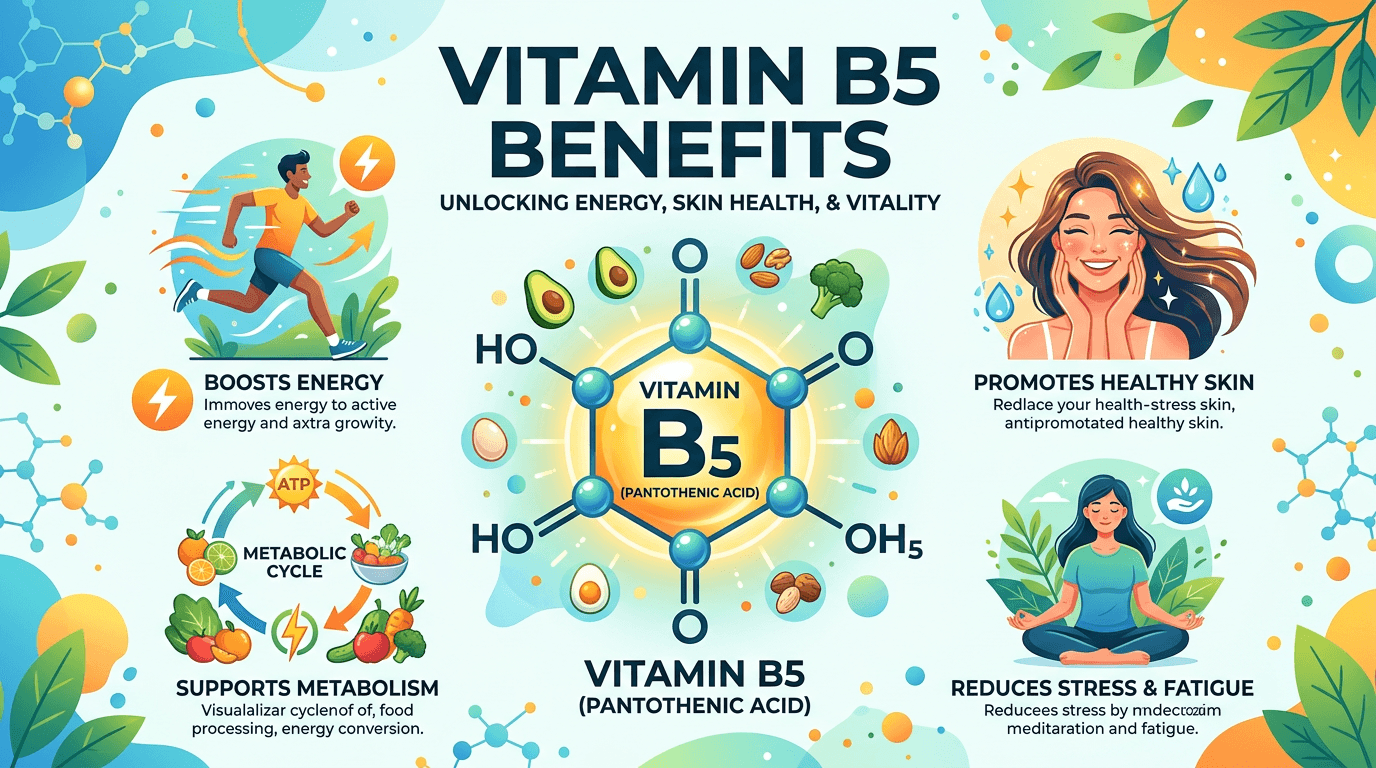
The primary benefits of pantothenic acid, also known as vitamin B5, revolve around its essential role in converting food into energy, synthesizing hormones, and supporting nervous system function. As a critical component of Coenzyme A (CoA), vitamin B5 is involved in over 150 metabolic pathways, making it fundamental for cellular health, energy production, and the manufacturing of vital compounds like cholesterol, neurotransmitters, and red blood cells. While its name comes from the Greek word "pantothen," meaning "from everywhere," reflecting its wide availability in foods, understanding its specific functions helps clarify its importance for overall health.
This article provides a comprehensive overview of pantothenic acid (vitamin B5), exploring its intricate roles within the human body. We will examine the scientific evidence behind its potential health benefits, particularly its connection to adrenal function and stress response. You will also learn about the signs of deficiency, recommended daily intakes, the best food sources, and practical guidance on supplementation, including different forms, safety considerations, and potential interactions. The goal is to offer a clear, evidence-based resource to help you understand this vital nutrient.
What Is Pantothenic Acid (Vitamin B5)?

Pantothenic acid, or vitamin B5, is one of the eight essential B vitamins and is water-soluble, meaning your body doesn't store it and you need a consistent supply through your diet. Its core function is to serve as a precursor for the synthesis of Coenzyme A (CoA), a molecule that is indispensable for a vast array of biochemical reactions. Without sufficient pantothenic acid, the body cannot produce enough CoA, leading to a breakdown in fundamental metabolic processes. This makes vitamin B5 a cornerstone nutrient for sustaining life and maintaining health at a cellular level.
The name "pantothenic" is derived from the Greek root "pantothen," which means "from everywhere." This name is fitting because vitamin B5 is found in a wide variety of plant and animal-based foods, making severe deficiency extremely rare in individuals who consume a reasonably balanced diet. Despite its ubiquity, understanding its specific roles is crucial because its functions extend beyond basic nutrition, touching upon energy, hormonal balance, and neurological health. It is commercially available in dietary supplements, often as calcium pantothenate, a stable and well-absorbed salt of the vitamin.
The Role of Pantothenic Acid in the Body
Pantothenic acid is a key player in numerous critical bodily functions, primarily through its role in forming Coenzyme A (CoA) and Acyl Carrier Protein (ACP). These compounds are central to energy metabolism, the synthesis and breakdown of fatty acids, and the production of many vital molecules. Its influence is felt in virtually every cell, supporting everything from your ability to move and think to the health of your skin and hair.
Energy Metabolism
Perhaps the most critical role of vitamin B5 is its contribution to energy production. As a component of CoA, it is essential for the citric acid cycle (also known as the Krebs cycle), the body's primary process for generating energy from carbohydrates, fats, and proteins. CoA helps usher acetyl groups derived from food into the cycle, where they are oxidized to produce adenosine triphosphate (ATP), the main energy currency of the cell. Without adequate pantothenic acid, this entire energy-generating machine would falter, leading to fatigue and impaired cellular function.
Hormone and Neurotransmitter Synthesis
Vitamin B5 is deeply involved in the synthesis of many essential compounds. CoA is necessary for the production of steroid hormones, including sex hormones (like estrogen and testosterone) and stress hormones (like cortisol) produced by the adrenal glands. This is the basis for its reputation as a "stress-busting" vitamin; it doesn't eliminate stress, but it provides a crucial building block for the adrenal glands to function properly and manage the stress response. Furthermore, B5 is required for the synthesis of acetylcholine, a key neurotransmitter responsible for memory, learning, and muscle control.
Skin and Hair Health
Pantothenic acid contributes to the health of the skin and hair through several mechanisms. Its role in fat metabolism helps maintain the skin's lipid barrier, which is essential for retaining moisture and protecting against environmental damage. This is why a derivative of B5, panthenol, is a common ingredient in skincare and haircare products, where it functions as a humectant (moisturizer) and aids in skin repair. Internally, vitamin B5's role in cell division and regeneration is vital for wound healing and maintaining healthy skin structure.
Red Blood Cell Production
While iron and vitamin B12 are more famous for their roles in red blood cell health, pantothenic acid also plays a supportive part. CoA is involved in the synthesis of heme, a component of hemoglobin, the protein in red blood cells that transports oxygen throughout the body. While a deficiency is unlikely to be the primary cause of anemia in most people, adequate B5 levels are part of the complex nutritional puzzle required for healthy blood.
Potential Benefits of Pantothenic Acid: What Does the Science Say?
While pantothenic acid is undeniably essential for basic bodily functions, research into the benefits of supplemental B5, beyond correcting a deficiency, is ongoing. Many of the widely discussed benefits are based on its known biochemical roles or preliminary studies. It's important to approach these claims with a clear understanding of the current state of scientific evidence.
Adrenal Function and Stress Support
Pantothenic acid is often marketed for stress relief due to its critical role in adrenal gland function. The adrenal glands, which sit atop the kidneys, produce cortisol and other stress-related hormones. Vitamin B5 is required as a substrate for CoA, which is necessary to synthesize these hormones. The theory is that during periods of chronic stress, the body's demand for these hormones increases, thereby increasing the need for B5. Supplementing with B5 is thought to provide the adrenal glands with the raw materials they need to function optimally.
However, it is crucial to frame this benefit carefully. Vitamin B5 supports the *physiological* capacity to produce stress hormones; it does not directly reduce feelings of stress or anxiety like a pharmaceutical drug. Human clinical trials demonstrating that B5 supplements can lower perceived stress or improve stress resilience in otherwise healthy individuals are lacking. It is more accurate to say that ensuring adequate B5 intake is a foundational step for supporting the body's natural stress response system.
Cholesterol and Triglyceride Levels
Some of the most compelling research on a form of vitamin B5 relates to cardiovascular health, specifically lipid management. These studies have focused on pantethine, a derivative of pantothenic acid, not the standard pantothenic acid found in most supplements. Several clinical trials have suggested that pantethine supplementation may help support healthy cholesterol and triglyceride levels already within the normal range. It is thought to work by inhibiting an enzyme involved in cholesterol and triglyceride synthesis.
The results from these studies are promising, but pantethine is not considered a first-line therapy. It may be considered as part of a comprehensive plan for individuals looking to support their cardiovascular health, always in consultation with a doctor who can monitor lipid panels and overall progress.
Skin Health (Acne and Wound Healing)
The link between pantothenic acid and skin health has generated significant interest, particularly concerning acne. A few small studies have explored the use of very high-dose pantothenic acid supplements for reducing facial acne lesions. One randomized controlled trial published in 2014 found that a B5-based dietary supplement resulted in a significant reduction in blemishes compared to a placebo after 12 weeks. The proposed mechanism is that B5 helps regulate sebum production by improving lipid metabolism.
Despite these findings, the evidence is still considered preliminary. The doses used in these studies are often in the range of several grams per day, far exceeding the dietary reference intake, and should not be attempted without medical supervision due to the potential for side effects. For wound healing, B5's role is better established. Both topical and internal B5 support cell proliferation and skin barrier function, which are crucial for the healing process.
Pantothenic Acid Deficiency: Signs, Symptoms, and Risk Factors
A clinically significant deficiency of pantothenic acid is extremely rare in the United States and other developed countries. This is due to its widespread availability in a variety of common foods. Deficiency is so uncommon that it generally only occurs in the context of severe, overall malnutrition. Historically, it was observed in prisoners of war during World War II, where it was linked to a condition known as "burning feet syndrome."
Signs and Symptoms
When severe deficiency does occur, it doesn't happen in isolation; it is typically accompanied by deficiencies in other nutrients. The symptoms are often generalized and can be easily mistaken for other conditions. Therefore, self-diagnosis is unreliable and potentially dangerous. A medical evaluation is essential.
Symptoms associated with severe pantothenic acid deficiency include:
- Neurological Symptoms: Numbness, tingling, and burning sensations in the hands and feet ("paresthesia") are hallmark signs. Headaches, fatigue, irritability, and restlessness are also common.
- Gastrointestinal Issues: Stomach pain, vomiting, and other digestive disturbances can occur.
- Impaired Motor Coordination: Difficulty with muscle control and coordination may develop.
- Sleep Disturbances: Insomnia and general sleep disruptions have been reported.
It's critical to reiterate that these symptoms are non-specific. Many other medical conditions, including diabetes, other B-vitamin deficiencies (like B12 or B6), and nerve disorders, can cause similar symptoms. A healthcare professional is needed to perform a proper diagnosis.
Causes and Risk Factors
The primary risk factor for pantothenic acid deficiency is severe malnutrition. Beyond that, there are very few specific groups at high risk.
- Severe Malnutrition: Individuals with extremely limited and unvaried diets, such as those suffering from starvation or certain eating disorders, are at risk.
- Chronic Alcoholism: Excessive alcohol consumption can impair the absorption and utilization of many B vitamins, including B5, and is often associated with a poor-quality diet.
- Rare Genetic Disorders: There is a very rare inherited disorder called Pantothenate Kinase-Associated Neurodegeneration (PKAN), where the body cannot properly use pantothenic acid. This is a serious neurological condition and is not the same as a dietary deficiency.
While some theories suggest that people with chronic digestive conditions like inflammatory bowel disease (IBD) might have impaired absorption, pantothenic acid deficiency is not typically a major clinical concern for these populations compared to other nutrients like B12 or iron.
How Much Pantothenic Acid Do You Need?
The Food and Nutrition Board (FNB) at the National Academies of Sciences, Engineering, and Medicine has established dietary reference intakes for pantothenic acid. Because there is not enough scientific evidence to establish a precise requirement, the FNB has set an Adequate Intake (AI) level. The AI is an amount assumed to ensure nutritional adequacy and is based on observed intake levels in healthy populations. For most people in the U.S., dietary intake of pantothenic acid is well above the AI.
| Age Group | Adequate Intake (AI) per Day |
|---|---|
| Birth to 6 months | 1.7 mg |
| Infants 7–12 months | 1.8 mg |
| Children 1–3 years | 2 mg |
| Children 4–8 years | 3 mg |
| Children 9–13 years | 4 mg |
| Teens 14–18 years | 5 mg |
| Adults 19+ years | 5 mg |
| Pregnant women | 6 mg |
| Breastfeeding women | 7 mg |
The increased need during pregnancy and lactation reflects the vitamin's role in rapid cell growth and development, as well as its transfer to the growing fetus and into breast milk. Most high-quality prenatal vitamins will contain sufficient pantothenic acid to meet these increased demands, but a balanced diet remains the primary source.
Top Food Sources of Pantothenic Acid
True to its name, pantothenic acid is found in nearly all foods. Some sources, however, are particularly rich in this nutrient. Including a variety of these foods in your diet is the best way to ensure you meet your daily needs. Animal products, especially organ meats, are highly concentrated sources, but many plant-based foods are also excellent choices. It is important to note that vitamin B5 can be lost during food processing, such as canning, freezing, and milling of grains. Therefore, fresh, minimally processed foods are generally superior sources.
| Food | Serving Size | Pantothenic Acid (mg) | % Daily Value (DV)* |
|---|---|---|---|
| Beef liver, cooked | 3 ounces | 8.3 mg | 166% |
| Shiitake mushrooms, cooked | 1/2 cup | 2.6 mg | 52% |
| Sunflower seeds, roasted | 1/4 cup | 2.4 mg | 48% |
| Chicken breast, cooked | 3 ounces | 1.3 mg | 26% |
| Tuna, light, canned in water | 3 ounces | 1.2 mg | 24% |
| Avocado | 1/2 medium | 1.0 mg | 20% |
| Fortified breakfast cereal | 1 serving | Varies (often 100%) | Varies |
| Milk, 2% | 1 cup | 0.9 mg | 18% |
| Potatoes, cooked | 1 medium | 0.7 mg | 14% |
| Egg, hard-boiled | 1 large | 0.7 mg | 14% |
| Greek yogurt, plain, low-fat | 1 container (7 oz) | 0.6 mg | 12% |
| Broccoli, cooked | 1/2 cup | 0.5 mg | 10% |
*The % Daily Value (DV) is based on a 5 mg reference value for adults and children age 4 years and older.
Understanding Pantothenic Acid Supplements
While most people can get enough pantothenic acid from food, supplements are widely available for those who wish to use them. They are sold as standalone B5 supplements, as part of B-complex formulas, and in most multivitamins. Understanding the different forms and how to choose a quality product is key for safe and effective supplementation.
Forms of Vitamin B5 Supplements
When you look at a supplement label, you might see pantothenic acid listed in a few different ways. These forms have different properties and are sometimes used for different purposes.
- Pantothenic Acid (as Calcium D-Pantothenate): This is the most common form found in dietary supplements. It is a salt of D-pantothenic acid, the biologically active isomer of the vitamin. It is stable, cost-effective, and well-absorbed by the body.
- Pantethine: This is a more complex derivative of pantothenic acid, composed of two molecules of pantetheine. It is the form that has been most studied for its potential role in supporting healthy cholesterol and triglyceride levels. Pantethine is more expensive and is considered a distinct supplement from standard pantothenic acid.
- Panthenol (Provitamin B5): This is an alcohol analog of pantothenic acid. It is often found in topical skincare and haircare products because it is readily absorbed by the skin and converted into pantothenic acid. While it can be taken orally, it is not the typical form used for dietary supplementation.
How to Choose a Supplement
When selecting a vitamin B5 supplement, quality and transparency are important. Since dietary supplements are not regulated by the FDA in the same way as prescription drugs, choosing a reputable brand is crucial.
- Check for Third-Party Testing: Look for seals from independent organizations like USP (United States Pharmacopeia), NSF International, or ConsumerLab.com. These seals indicate that the product has been tested for purity, potency, and contaminants, and that it contains what the label claims.
- Consider the Dosage: Standalone B5 supplements often come in high doses, such as 250 mg or 500 mg. B-complex vitamins and multivitamins typically contain a smaller amount, closer to 5-10 mg, which is 100-200% of the Daily Value. The appropriate dosage depends entirely on your reason for taking the supplement and should be discussed with a healthcare provider.
- Read the "Other Ingredients": Check the label for unnecessary fillers, artificial colors, or allergens if you have sensitivities.
When and How to Take Vitamin B5
As a water-soluble vitamin, pantothenic acid does not need to be taken with fat for absorption. However, taking it with a meal can be a good habit for a few reasons. First, it can help prevent the mild gastrointestinal upset that some people experience with high-dose supplements. Second, it aids in the absorption of other nutrients in your meal. For B vitamins involved in energy metabolism, some people prefer to take them in the morning or early afternoon. The most important factor is consistency, so find a time that works for your daily routine.
Safety, Side Effects, and Interactions
Pantothenic acid is generally considered to be very safe, with a low potential for toxicity. This is reflected in the fact that the Food and Nutrition Board has not established a Tolerable Upper Intake Level (UL) for it. However, this does not mean that unlimited amounts are beneficial or completely without risk. It's essential to understand the potential for side effects at very high doses and its interactions with certain medications.
Upper Tolerable Intake Level (UL)
A Tolerable Upper Intake Level (UL) is the maximum daily intake of a nutrient that is unlikely to cause adverse health effects in almost all individuals. The absence of a UL for pantothenic acid is because there is no evidence of toxicity at high intakes from food or typical supplements. The body effectively excretes any excess amount through the urine. This excellent safety profile is a key feature of vitamin B5. However, this does not mean that megadoses are warranted or free of any physiological effects.
Potential Side Effects
While standard supplemental doses (e.g., 5-100 mg) are not associated with any side effects, extremely high doses can cause issues. Doses in the range of several grams (1 gram = 1,000 mg) per day, such as those used in some acne studies, may cause mild gastrointestinal symptoms.
- Diarrhea and Digestive Upset: This is the most commonly reported side effect of taking very large amounts of pantothenic acid (e.g., 10 grams per day). It is generally mild and resolves when the dose is lowered or discontinued.
- Potential for Nutrient Imbalance: Taking a very high dose of a single B vitamin over a long period could theoretically interfere with the metabolism of other B vitamins. This is one reason why B vitamins are often recommended as a balanced B-complex, unless a specific high-dose therapy is medically indicated.
Drug Interactions
Pantothenic acid has few known clinically significant drug interactions. However, a few theoretical or minor interactions are worth noting, and you should always inform your doctor and pharmacist about all supplements you take.
- Cholinesterase Inhibitors: These drugs (e.g., donepezil, rivastigmine) are used to treat Alzheimer's disease. They work by increasing levels of the neurotransmitter acetylcholine. Since pantothenic acid is a precursor to CoA, which is needed to synthesize acetylcholine, taking B5 supplements could theoretically increase the effects and potential side effects (like nausea or diarrhea) of these medications. This combination should be used only with medical approval.
- Tetracycline Antibiotics: Some sources suggest that B-complex vitamins, including B5, might interfere with the absorption and effectiveness of tetracycline antibiotics. While the evidence for B5 specifically is weak, it is a common recommendation to take B vitamins at a different time of day than antibiotics, typically separated by at least 2-4 hours.
Special Considerations
While the general recommendations for pantothenic acid apply to most adults, certain life stages and lifestyles may warrant special attention to ensure adequate intake. In these cases, needs may be slightly higher or dietary patterns may require more careful planning.
Pregnancy and Breastfeeding
The need for pantothenic acid increases during pregnancy and lactation to support the rapid growth and high metabolic rate of the fetus and infant. The Adequate Intake (AI) increases from 5 mg/day for non-pregnant adults to 6 mg/day during pregnancy and 7 mg/day during lactation. This increased need is crucial for the baby's development. Most women can meet these needs through a nutrient-dense diet. A high-quality prenatal vitamin, as recommended by an obstetrician or healthcare provider, will also typically provide sufficient B5 to bridge any dietary gaps.
Athletes
Athletes and highly active individuals have a higher energy turnover, which theoretically increases the demand for all B vitamins involved in metabolism, including pantothenic acid. The physical stress of intense exercise also places a greater demand on the adrenal glands. While there is a plausible argument for slightly increased needs, most athletes who consume enough calories to support their training will also consume enough B5 from their food. There is no strong evidence that mega-dosing B5 enhances athletic performance in well-nourished individuals. Focusing on a varied, whole-foods diet is the most effective strategy.
Vegetarians and Vegans
Fortunately for those following plant-based diets, pantothenic acid deficiency is not a significant concern. Vitamin B5 is abundant in many plant foods. Excellent vegan sources include:
- Mushrooms (especially shiitake)
- Avocados
- Potatoes and sweet potatoes
- Whole grains (oats, brown rice)
- Legumes (lentils, chickpeas)
- Nuts and seeds (especially sunflower seeds)
- Broccoli and other cruciferous vegetables
By consuming a varied diet rich in these foods, vegetarians and vegans can easily meet and exceed their daily pantothenic acid requirements. Unlike vitamin B12, which is a common concern for vegans, B5 is readily available from plant sources.
When to Talk to Your Doctor
While pantothenic acid is a safe and common nutrient, it's always wise to involve a healthcare professional in decisions about your health, especially when it comes to supplements and unexplained symptoms. Self-diagnosing and self-treating can be ineffective and may delay the diagnosis of a more serious underlying condition.
You should consult a licensed healthcare professional in the following situations:
- If You Suspect a Deficiency: If you are experiencing persistent symptoms associated with B vitamin deficiency, such as numbness, tingling, burning sensations in your feet, extreme fatigue, or confusion, it is crucial to see a doctor. These symptoms are non-specific and require a professional medical workup to identify the cause.
- Before Starting High-Dose Supplementation: If you are considering taking high doses of pantothenic acid (e.g., more than 100 mg per day) for a specific purpose like acne or cholesterol support, this should only be done under medical guidance. A doctor can assess whether this approach is safe and appropriate for you and monitor your progress.
- If You Have a Chronic Medical Condition: Individuals with pre-existing conditions, particularly liver or kidney disease, or rare metabolic disorders, should always discuss supplement use with their specialist.
- If You Take Prescription Medications: Provide your doctor and pharmacist with a complete list of all supplements you take to screen for potential interactions. This is especially important if you take cholinesterase inhibitors or antibiotics.
- If You Are Pregnant or Breastfeeding: While B5 is essential during this time, all supplement use should be reviewed by your obstetrician or midwife to ensure the safety of both you and your baby.
Frequently Asked Questions
What is the best form of vitamin B5 to take?
For general dietary supplementation, the most common and effective form is calcium D-pantothenate, which is what you'll find in most multivitamins and B-complex formulas. Pantethine is a different derivative that has been studied for its effects on cholesterol and triglycerides and should be considered a separate supplement used for a specific purpose, ideally with medical guidance.
Can I get enough pantothenic acid from my diet?
Yes, almost certainly. Pantothenic acid is found in a vast array of foods, including meats, dairy, whole grains, legumes, and vegetables. Deficiency is extremely rare in people who eat a varied diet. Focusing on whole, unprocessed foods is the best way to ensure you get plenty of vitamin B5 and other essential nutrients.
Does vitamin B5 really help with stress?
Vitamin B5 supports the body's ability to manage stress by providing a necessary building block for the adrenal glands to produce stress hormones like cortisol. However, it does not act as a direct anti-anxiety agent or stress-reducer. Ensuring adequate B5 intake is a foundational part of supporting your body's stress response system, but it is not a standalone solution for managing feelings of stress.
What are the symptoms of too much vitamin B5?
Pantothenic acid has a very high safety profile, and there are no known toxic symptoms from amounts obtained through food or standard supplements. At extremely high doses (several grams per day), the most common side effect is mild digestive upset, such as diarrhea. There is no established Tolerable Upper Intake Level (UL) due to its low toxicity.
Is vitamin B5 the same as panthenol?
No, they are related but different. Panthenol is the alcohol precursor to pantothenic acid and is often called "provitamin B5." It is most commonly used topically in skincare and haircare products, where it is converted into pantothenic acid within the skin cells. While it can be taken orally, pantothenic acid (usually as calcium pantothenate) is the standard form for dietary supplements.
Can vitamin B5 help with weight loss?
While vitamin B5 is essential for energy metabolism and breaking down fats, carbohydrates, and proteins for energy, there is no direct evidence that taking extra B5 supplements leads to weight loss. A deficiency could impair metabolism, but for a well-nourished person, supplementing with B5 will not magically burn more fat. Sustainable weight loss relies on a balanced diet, calorie management, and regular physical activity.
Is it better to take vitamin B5 alone or in a B-complex?
For general health maintenance, taking B5 as part of a balanced B-complex vitamin is often recommended. B vitamins work together synergistically in many metabolic pathways, and taking them in a balanced ratio can be beneficial. High-dose standalone B5 supplements are generally reserved for specific therapeutic purposes under the guidance of a healthcare professional.
Conclusion
Pantothenic acid, or vitamin B5, is a fundamental yet often overlooked nutrient that is vital for health. Its central role in energy metabolism, hormone synthesis, and nervous system function makes it indispensable for virtually every cell in the body. Its widespread availability in foods means that deficiency is rare, and most people can easily meet their needs through a balanced and varied diet rich in whole foods like mushrooms, avocados, lean meats, and whole grains.
While the nickname "the anti-stress vitamin" may be an oversimplification, B5's role in supporting adrenal gland function is a key aspect of its importance. Promising research into specific forms like pantethine for lipid support and high-dose B5 for skin health highlights areas for future study, but these applications require careful consideration and professional guidance. For the vast majority of people, the best approach is to focus on a nutrient-dense diet as the primary source of this essential vitamin.
Ultimately, understanding pantothenic acid helps complete the picture of how B vitamins work together to sustain our health. Before beginning any new supplement regimen, especially at high doses, it is always best to consult with a licensed healthcare professional to ensure it is safe and appropriate for your individual health needs.