
vitamine -
Vitamin K1 vs K2: Understanding the Difference
The key difference between vitamin K types is their function and dietary source: Vitamin K1, or phylloquinone, primarily supports blood coagulation and is abundant in leafy green vegetables. Vitamin K2, a group of compounds called menaquinones, is crucial for regulating calcium p
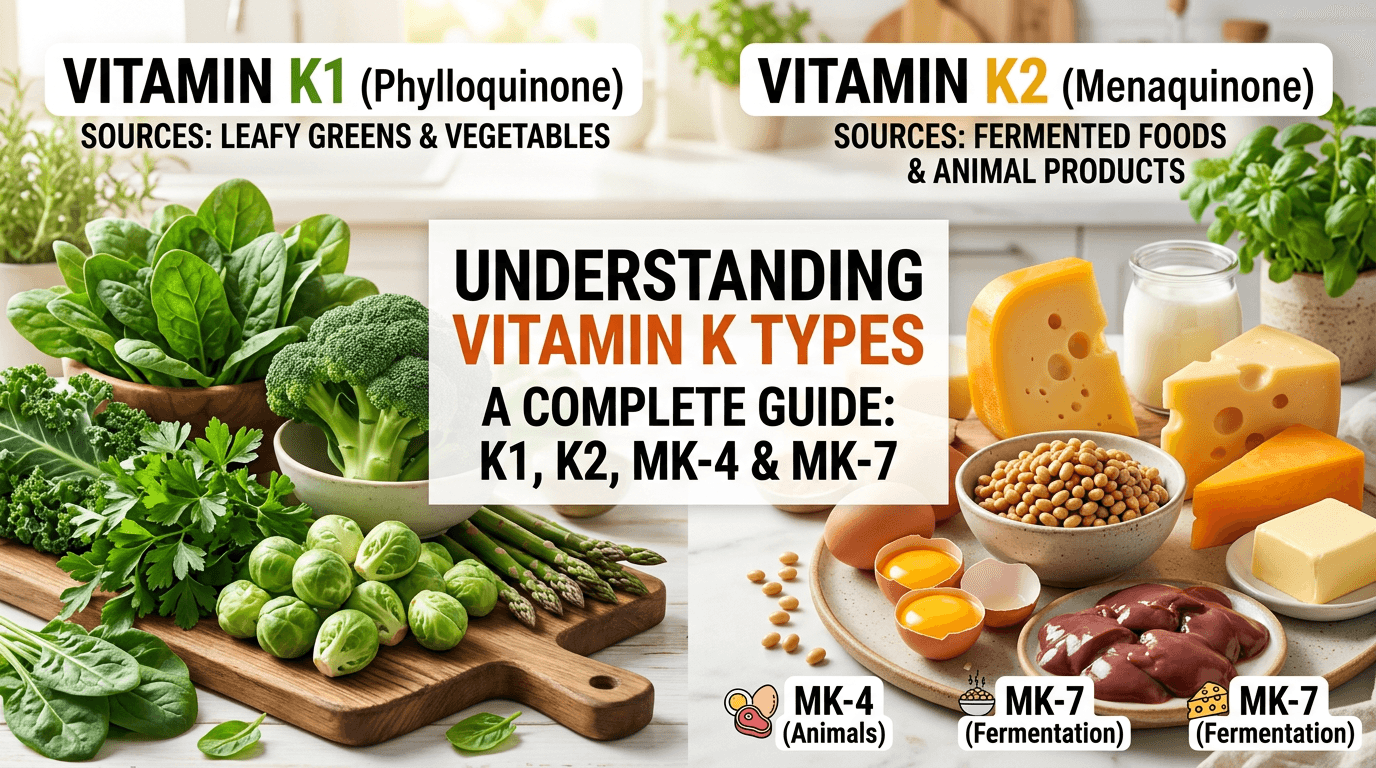
The key difference between vitamin K types is their function and dietary source: Vitamin K1, or phylloquinone, primarily supports blood coagulation and is abundant in leafy green vegetables. Vitamin K2, a group of compounds called menaquinones, is crucial for regulating calcium placement in the body—directing it to bones and teeth while helping to keep it out of arteries—and is found mainly in fermented foods and animal products.
While both K1 and K2 are forms of the essential, fat-soluble Vitamin K, they play distinct and complementary roles in maintaining health. Understanding these differences is vital for appreciating their unique contributions to everything from wound healing to long-term bone and cardiovascular wellness. This article will provide a comprehensive look at the different vitamin K types, exploring their specific functions, food sources, bioavailability, deficiency risks, and considerations for supplementation, helping you make more informed dietary and health decisions.
What Is Vitamin K? A Family of Nutrients

Vitamin K is not a single compound but a family of related, fat-soluble vitamins essential for human health. The two main forms found in the human diet are Vitamin K1 and Vitamin K2. Though they share a similar core chemical structure, their differing side chains give them unique properties and functions within the body. Their primary job is to act as a cofactor for an enzyme that "activates" a specific group of proteins known as vitamin K-dependent proteins (VKDPs). Without sufficient Vitamin K, these proteins are created in an inactive form and cannot perform their vital physiological tasks.
This process of activation is called carboxylation. Think of it like turning on a series of switches: Vitamin K is the hand that flips the switch, enabling proteins involved in blood clotting, bone metabolism, and the prevention of arterial calcification to function correctly. While K1 and K2 can both perform this basic activation step, their different structures and distributions in the body cause them to have distinct areas of influence.
Beyond the naturally occurring K1 and K2, there are also synthetic forms of Vitamin K. The most notable is Vitamin K3 (menadione). While it can be converted to K2 in an animal's body, it is not used in human supplements due to concerns about its potential to cause oxidative stress and liver toxicity. For human health and nutrition, the focus remains squarely on Vitamin K1 and the various forms of Vitamin K2.
Vitamin K1 (Phylloquinone): The Coagulation Vitamin
Vitamin K1, known scientifically as phylloquinone, is the most common form of Vitamin K in the diet and is almost entirely sourced from plants. Its name, derived from Greek and German words related to "leaf," points directly to its primary sources. The body is highly efficient at using Vitamin K1 for its most well-known and life-sustaining purpose: blood clotting.
Primary Role of Vitamin K1: Blood Clotting
The central role of Vitamin K1 is to support the synthesis of coagulation proteins in the liver. When you get a cut or injury, the body initiates a complex cascade of events to form a blood clot and stop the bleeding. Several of these critical steps rely on proteins that must first be activated by Vitamin K. Vitamin K1 is transported preferentially to the liver, where it enables the carboxylation of at least seven distinct vitamin K-dependent clotting factors (Factors II, VII, IX, X, and proteins C, S, and Z).
Without adequate Vitamin K1, the liver produces inactive clotting factors. This leads to impaired coagulation, meaning the blood cannot clot effectively. The consequences can range from minor issues like easy bruising and nosebleeds to severe, life-threatening hemorrhaging in cases of clinical deficiency. The standard measurement of blood clotting time, the Prothrombin Time (PT) test, is essentially a functional test of the Vitamin K1-dependent clotting factors.
Dietary Sources of Vitamin K1
Vitamin K1 is abundant in the plant world, particularly in the chloroplasts of green vegetables where it participates in photosynthesis. Dark leafy greens are the most potent sources.
- Excellent Sources: Kale, collard greens, spinach, turnip greens, Swiss chard, and mustard greens are nutritional powerhouses for K1.
- Good Sources: Broccoli, Brussels sprouts, parsley, romaine lettuce, and cabbage also provide significant amounts.
- Other Sources: Smaller amounts are found in certain vegetable oils like soybean and canola oil, as well as some fruits like kiwifruit and prunes.
| Food Source (Cooked) | Serving Size | Approximate Vitamin K1 (mcg) |
|---|---|---|
| Collard Greens | 1 cup, chopped | ~770 |
| Kale | 1 cup, chopped | ~490 |
| Spinach | 1 cup | ~890 |
| Turnip Greens | 1 cup, chopped | ~530 |
| Broccoli | 1 cup, chopped | ~220 |
| Brussels Sprouts | 1 cup | ~220 |
Note: Values are approximate and can vary based on preparation and food variety. Data compiled from USDA FoodData Central.
Absorption and Bioavailability of K1
Despite being plentiful in many vegetables, the bioavailability of Vitamin K1 from plant sources can be surprisingly low. Because it is tightly bound within the plant cell's chloroplasts, only about 5-15% of the K1 from raw leafy greens may be absorbed by the body. The absorption process is highly dependent on the presence of dietary fat, as Vitamin K is fat-soluble.
You can significantly improve the absorption of Vitamin K1 by eating your greens with a source of fat. For example, adding olive oil dressing to a salad, sautéing spinach in butter or oil, or eating broccoli with a cheese sauce can increase the amount of K1 your body is able to use. Once absorbed in the small intestine with the help of bile salts and pancreatic enzymes, K1 is incorporated into chylomicrons, transported through the lymphatic system, and then primarily delivered to the liver, where it is put to work for coagulation.
Vitamin K2 (Menaquinones): The Calcium Director
Vitamin K2 refers to a group of compounds called menaquinones (abbreviated as MK-n), where 'n' denotes the number of repeating isoprenoid units in their side chain. While K1 is concentrated in the liver for clotting, K2 is distributed throughout the body and has a profound impact on tissues outside the liver, most notably on bones and blood vessels. Its primary function is to act as a "calcium traffic cop," ensuring calcium goes where it is needed and stays out of places where it can cause harm.
Primary Role of Vitamin K2: Calcium Metabolism
Vitamin K2 carries out its crucial role by activating two specific vitamin K-dependent proteins that are not directly involved in blood clotting:
- Osteocalcin: This is a protein produced by osteoblasts, the bone-building cells. In its inactive state, osteocalcin cannot bind to calcium. Vitamin K2 activates (carboxylates) osteocalcin, giving it the ability to bind calcium ions and incorporate them into the bone mineral matrix. This process is fundamental for building strong, dense bones and maintaining skeletal integrity. Insufficient K2 can lead to an accumulation of inactive osteocalcin, which is associated with lower bone mineral density.
- Matrix Gla-Protein (MGP): This protein is produced by cells in the walls of blood vessels and other soft tissues. MGP is arguably the most potent inhibitor of soft tissue calcification known. When activated by Vitamin K2, MGP binds to free-floating calcium crystals, preventing them from depositing in the arterial walls, cartilage, and other soft tissues. This helps maintain the elasticity and health of blood vessels. When K2 levels are low, MGP remains inactive, and this protective mechanism is impaired, potentially contributing to arterial stiffening over time.
In essence, K2 works synergistically with Vitamin D. Vitamin D increases the absorption of calcium from the intestines into the bloodstream, while Vitamin K2 then helps direct that calcium out of the bloodstream and into the bones and teeth, preventing its inappropriate deposition in arteries and organs.
The Different Forms of K2 (MK-4 vs. MK-7)
The two most studied and relevant forms of Vitamin K2 are MK-4 and MK-7. They differ in the length of their side chain, which affects how they are absorbed, transported, and how long they remain active in the body.
- MK-4 (Menatetrenone): This form has a short side chain. It is found in animal-derived foods like butter from grass-fed cows, egg yolks, and organ meats (especially liver and pancreas). The human body can also convert some Vitamin K1 into MK-4 in certain tissues, although the efficiency of this conversion is debated and may not be sufficient to meet all needs. MK-4 has a very short half-life in the blood, typically lasting only a few hours. This means it is cleared from the body quickly and may require multiple doses throughout the day to maintain stable levels.
- MK-7 (Menaquinone-7): This form has a long side chain. It is primarily produced by bacteria during fermentation and is found in high concentrations in a Japanese fermented soybean dish called natto. It is also present in smaller amounts in certain hard and soft cheeses (like Gouda and Brie) and sauerkraut. The major advantage of MK-7 is its extremely long half-life, which can be over 72 hours. This allows it to build up to more stable and consistent levels in the blood with once-daily dosing, reaching tissues all over the body more effectively than MK-4. For this reason, MK-7 is the most common form found in modern Vitamin K2 supplements.
| Feature | MK-4 | MK-7 |
|---|---|---|
| Primary Dietary Source | Animal products (butter, egg yolks, organ meats) | Fermented foods (natto, some cheeses, sauerkraut) |
| Origin | Animal synthesis, some conversion from K1 | Bacterial synthesis |
| Half-Life in Blood | Short (a few hours) | Long (2-3 days) |
| Typical Supplement Dose | High (milligrams, e.g., 1.5-45 mg), often multiple times daily | Low (micrograms, e.g., 90-200 mcg), once daily |
| Tissue Distribution | Rapidly cleared, acts in specific tissues like pancreas, brain, salivary glands | Circulates longer, reaching bone, blood vessels, and other peripheral tissues effectively |
Dietary Sources of Vitamin K2
Obtaining significant amounts of Vitamin K2 from a typical Western diet can be challenging. The food sources are less common, and the quantities can be highly variable depending on production methods.
- Natto: This fermented soybean dish is by far the richest source of Vitamin K2, specifically MK-7. A single tablespoon can contain hundreds of micrograms. However, its strong flavor and slimy texture make it an acquired taste for many.
- Hard Cheeses: Cheeses like Gouda, Jarlsberg, and Munster contain moderate amounts of K2 (both MK-4 and longer-chain menaquinones) produced by the bacteria used in the ripening process.
- Animal Products: The K2 (primarily MK-4) content in animal foods depends on what the animal ate. Butter, cheese, and egg yolks from grass-fed animals will have higher levels of K2 than those from grain-fed animals because the animals convert the K1 from grass into MK-4. Dark meat poultry (like chicken thighs and legs) and organ meats (goose liver, chicken liver) are also notable sources.
Key Differences Summarized: K1 vs. K2 at a Glance
While both are essential vitamins, K1 and K2 operate in different domains within the body. Vitamin K1's primary function is efficiently managed by the liver for blood clotting, a role for which a relatively small dietary intake from greens is sufficient for most people. Vitamin K2, however, has a broader systemic role in managing calcium, which appears to require different sources and may have implications for long-term bone and cardiovascular health. The following table provides a direct comparison of their main characteristics.
| Feature | Vitamin K1 (Phylloquinone) | Vitamin K2 (Menaquinones) |
|---|---|---|
| Primary Function | Blood coagulation (clotting) | Calcium regulation, bone and heart health |
| Key Proteins Activated | Clotting factors in the liver (e.g., prothrombin) | Osteocalcin (in bones) and Matrix Gla-Protein (in blood vessels) |
| Main Dietary Sources | Dark leafy green vegetables (kale, spinach, broccoli) | Fermented foods (natto, cheese) and animal products (egg yolks, liver, butter) |
| Primary Site of Action | Liver | Bone, blood vessels, and other soft tissues |
| Bioavailability from Food | Relatively low (~5-15% from raw greens); improved with fat | Generally higher, as it is often sourced from fat-containing foods |
| Half-Life in Body | Short (~1-2 hours); rapidly recycled in the liver | Varies by form; short for MK-4 (~hours), long for MK-7 (~days) |
| Common Supplement Form | Less common; used for specific medical purposes | MK-7 is most common; MK-4 used in some contexts |
Vitamin K Deficiency: Signs, Symptoms, and Risk Factors
An outright clinical deficiency of Vitamin K, severe enough to cause spontaneous bleeding, is very rare in healthy adults in the United States. This is because the body is adept at recycling Vitamin K, and the amount of K1 needed for basic blood clotting is relatively small and easily obtained from a moderately healthy diet. However, the concept of "subclinical" deficiency, where levels are too low for optimal bone and cardiovascular health, is a subject of growing scientific interest.
Signs of Severe Deficiency
When Vitamin K levels fall critically low, the blood's ability to clot is compromised. This is a serious medical issue that requires immediate attention. The signs are directly related to bleeding and may include:
- Excessive bruising from minor bumps
- Small red or purple dots (petechiae) under the skin
- Frequent or prolonged nosebleeds
- Bleeding from the gums
- Heavy menstrual bleeding in women
- Blood in the urine or stool
- Oozing from puncture sites or wounds
If you experience any of these symptoms, particularly if they are new or severe, it is crucial to seek evaluation from a healthcare professional immediately.
Potential Indicators of Subclinical Deficiency
Subclinical deficiency refers to a state where there is enough Vitamin K for normal blood clotting, but not enough to fully activate proteins like osteocalcin and MGP. This state does not produce obvious, immediate symptoms. Instead, researchers hypothesize that it could contribute to long-term health problems over many years or decades. Evidence for this comes from observational studies that link lower Vitamin K intake or status with:
- Higher rates of bone fractures
- Lower bone mineral density (osteoporosis)
- Increased arterial calcification and stiffness
- A higher risk of cardiovascular events
It is important to understand that these are associations, and research is ongoing to determine the exact cause-and-effect relationship. A diet low in K2 might not be the sole cause but rather one contributing factor among many.
Who Is at Risk?
Certain populations are more vulnerable to developing Vitamin K deficiency for various reasons:
- Newborns: Infants are born with very low Vitamin K stores, and breast milk is low in Vitamin K. To prevent a dangerous bleeding disorder called Vitamin K Deficiency Bleeding (VKDB), it is standard practice in the U.S. and many other countries to give all newborns a single injection of Vitamin K1 at birth.
- Individuals with Malabsorption Disorders: Conditions that impair fat absorption, such as celiac disease, Crohn's disease, ulcerative colitis, cystic fibrosis, and short bowel syndrome, significantly increase the risk of deficiency for all fat-soluble vitamins, including K.
- People with Liver Disease: Since the liver is the main site of Vitamin K metabolism and storage, severe liver dysfunction can interfere with its use and lead to deficiency.
- Post-Bariatric Surgery Patients: Certain types of weight-loss surgery can alter the digestive tract and lead to malabsorption of nutrients.
- Those on Long-Term Antibiotic Therapy: Broad-spectrum antibiotics can disrupt the gut microbiome, reducing the population of bacteria that produce some Vitamin K2. While gut production is not considered a primary source for meeting total needs, it may contribute to overall K status.
- Individuals on Anticoagulant Therapy: As discussed later, people taking warfarin are a special case where Vitamin K intake must be carefully managed with a doctor.
Do You Need to Supplement with Vitamin K?
The question of supplementation depends heavily on which form of Vitamin K is being discussed and for what purpose. For most healthy people, a diet including a few servings of green vegetables per week provides enough Vitamin K1 to prevent bleeding disorders. The conversation around supplementation, therefore, typically centers on Vitamin K2 and its potential long-term benefits for bone and cardiovascular health.
Assessing Your Individual Need
Determining whether you might benefit from a Vitamin K supplement is a nuanced decision that should be made in consultation with a qualified healthcare professional. They can help you evaluate several factors:
- Your Diet: Do you regularly consume K1-rich leafy greens? More importantly for K2, does your diet include fermented foods like natto or specific cheeses, or grass-fed animal products? A typical Western diet is often low in K2.
- Your Health Goals and Status: Are you concerned about bone health, perhaps due to family history, age (e.g., postmenopausal women), or a bone density scan? Do you have risk factors for cardiovascular disease?
- Lab Testing: While direct measurement of Vitamin K in the blood is not routine and can be misleading, specialized lab tests can measure the percentage of inactive osteocalcin and MGP. High levels of these undercarboxylated proteins suggest a suboptimal Vitamin K status. These tests are not standard but may be used by some integrative or functional medicine practitioners to guide therapy.
Self-diagnosing a need for supplements based on diet or symptoms alone is not recommended. A conversation with a doctor or registered dietitian can provide personalized guidance based on your complete health picture.
Choosing a Vitamin K Supplement: K1, K2, or a Combination?
If you and your healthcare provider decide that a supplement is appropriate, you will find several options on the market.
- Vitamin K1 Supplements: These are less common for general wellness. They are typically used in clinical settings, for example, to rapidly reverse the effects of warfarin in an emergency or to manage deficiency in individuals with severe malabsorption, always under medical supervision.
- Vitamin K2 Supplements: These are widely available and are the focus of most consumer interest. The primary choice is between MK-4 and MK-7.
- MK-7 is the most popular form due to its long half-life, which allows for convenient, once-daily dosing and provides stable blood levels. Doses typically range from 90 to 200 micrograms (mcg).
- MK-4 is also available but is often sold in much higher doses (e.g., 1000 mcg or 1 mg, up to 45 mg) due to its short half-life. High-dose MK-4 (45 mg/day) has been studied, particularly in Japan, for bone health, but these are pharmacological doses that should only be used under medical guidance.
- Combination K1 and K2 Supplements: Some products offer a blend of both forms, with the rationale of providing comprehensive support for both clotting and calcium metabolism.
- Vitamin K2 with Vitamin D3: This is an extremely common and logical pairing. Vitamin D3 enhances calcium absorption, and Vitamin K2 directs that calcium to the proper place (bones). Taking them together supports this synergistic relationship. Many bone health and cardiovascular support formulas will include D3 and K2 together.
Dosage, Safety, and Potential Side Effects
Vitamin K is generally considered very safe, particularly the natural forms K1 and K2 found in foods and supplements. However, it's still important to understand the established intake guidelines and potential safety considerations, especially when using supplements.
Recommended Intake and General Dosage Guidelines
The U.S. National Academies of Sciences, Engineering, and Medicine has established an Adequate Intake (AI) for Vitamin K. The AI is the level assumed to ensure nutritional adequacy.
- For adult men (19+ years): 120 micrograms (mcg) per day
- For adult women (19+ years): 90 micrograms (mcg) per day
It is critical to note that these AI values were established based primarily on the amount of Vitamin K1 required to maintain normal blood clotting function. They do not specifically address the optimal intake of Vitamin K2 for bone and cardiovascular health, and there is no separate AI for K2. Many researchers in the field believe that higher total Vitamin K intake, particularly of K2, may be beneficial.
Supplement dosages for Vitamin K2 typically reflect this. Common doses for MK-7 range from 90 mcg to 180 mcg per day, while MK-4 may be dosed much higher. These amounts are generally considered safe for the general population (excluding those on specific medications).
Safety and Tolerable Upper Intake Level (UL)
A key indicator of a nutrient's safety is its Tolerable Upper Intake Level (UL), the maximum daily intake unlikely to cause adverse health effects. Uniquely for a vitamin, no UL has been established for Vitamin K1 or K2 from food or supplements.
This is because no significant toxicity or adverse effects have been observed in studies with high intakes of either K1 or K2. The body appears to be very effective at metabolizing and excreting excess amounts. This excellent safety profile does not apply to the synthetic form, Vitamin K3 (menadione), which can interfere with the function of glutathione, a key antioxidant, and can cause liver damage and other toxic effects. For this reason, menadione is not permitted for use in human dietary supplements in the U.S.
Potential Side Effects
Vitamin K supplements are exceptionally well-tolerated by most people. Side effects are rare and generally mild when they do occur. Some individuals taking very high doses may experience mild digestive upset. There are anecdotal reports from some users of high-dose MK-7 (typically 300 mcg or more) experiencing issues like insomnia, heart palpitations, or anxiety. While not supported by major clinical trials, this has led some experts to recommend starting with a lower dose (e.g., 45-90 mcg) and increasing gradually if needed. If you experience any unusual symptoms after starting a new supplement, it is best to discontinue use and consult your healthcare provider.
Critical Interactions: Vitamin K and Medications
This is the most critical safety consideration for Vitamin K. Because of its central role in blood clotting, Vitamin K can interact significantly with certain medications. It is absolutely essential to speak with your doctor and pharmacist before starting any Vitamin K supplement if you take any prescription drugs, especially blood thinners.
The Warfarin (Coumadin®) Interaction
The interaction between Vitamin K and the anticoagulant drug warfarin (also known by brand names like Coumadin® and Jantoven®) is the most well-known and clinically significant drug-nutrient interaction.
- How it works: Warfarin prevents blood clots by blocking the enzyme that recycles and activates Vitamin K in the liver. It is a "Vitamin K antagonist."
- The conflict: Taking Vitamin K supplements or dramatically changing your intake of Vitamin K-rich foods works directly against the medication. An increase in Vitamin K can make warfarin less effective, increasing the risk of dangerous blood clots. A sudden decrease in Vitamin K intake can make the drug too powerful, increasing the risk of severe bleeding.
- The goal is consistency: The standard medical advice for people on warfarin is NOT to avoid Vitamin K. Instead, the goal is to maintain a stable and consistent daily intake of Vitamin K from all sources (food and supplements). This allows the doctor to adjust the warfarin dose to that stable level of Vitamin K.
Other Potential Interactions
While the warfarin interaction is the most serious, other medications can also affect Vitamin K status:
- Bile Acid Sequestrants: Medications like cholestyramine (Questran®) and colestipol (Colestid®), used to lower cholesterol, work by binding to bile acids in the intestine. This can also reduce the absorption of fat-soluble vitamins, including Vitamin K.
- Orlistat (Alli®, Xenical®): This weight-loss medication works by blocking the absorption of dietary fat. Since Vitamin K is fat-soluble, orlistat can also reduce its absorption. It is often recommended to take a multivitamin containing fat-soluble vitamins at a different time of day if using this drug.
- Certain Antibiotics: Long-term use (over several weeks) of broad-spectrum antibiotics, particularly cephalosporins, can interfere with Vitamin K activity and production by gut bacteria.
Common Myths and Misconceptions about Vitamin K
As interest in Vitamin K, particularly K2, has grown, so have the myths and misunderstandings surrounding it. Let's clarify some common points of confusion.
Myth: "You must avoid leafy greens if you take a blood thinner." Correction: This is outdated and potentially harmful advice. For patients on warfarin, the key is consistency, not avoidance. Maintaining a steady, predictable daily intake of Vitamin K from foods like leafy greens allows for more stable medication management. Suddenly eliminating greens can be just as disruptive as suddenly eating large amounts. Always follow the specific dietary guidance from your doctor or a registered dietitian familiar with anticoagulation management. Myth: "All Vitamin K is the same." Correction: As this article details, K1 and K2 have different structures, sources, and primary roles in the body. While both are "Vitamin K," thinking of them as distinct nutrients with different jobs (K1 for clotting, K2 for calcium directing) is a more accurate way to understand their importance. Myth: "Vitamin K2 supplements will reverse or 'clean out' arterial plaque." Correction: This is a significant overstatement of the current evidence. Research suggests that adequate Vitamin K2 intake may help to slow the progression of arterial calcification and may, in some studies, show a modest improvement in arterial flexibility over time. However, it is not a "cure" that can reverse years of established, hardened atherosclerotic plaque. Its role is primarily seen as preventative and supportive for maintaining vascular health. Myth: "I eat a healthy salad every day, so my Vitamin K levels are optimal." Correction: You likely have an excellent intake of Vitamin K1, which is great for supporting blood clotting. However, your salad provides very little, if any, Vitamin K2. To get K2 from your diet, you need to consume specific fermented foods or animal products. So while your K1 status may be optimal, your K2 status might still be low.Frequently Asked Questions
Can I get enough Vitamin K2 from a vegan diet?
It can be very challenging. Most vegan diets are rich in K1 from vegetables, but K2 is primarily found in animal products and fermented dairy. The single best vegan source is natto, a fermented soybean dish. If you do not consume natto regularly, a vegan K2 supplement (often derived from fermented chickpeas or natto) may be a practical option to consider discussing with a healthcare professional.
Is Vitamin K2 (MK-7) from natto better than other forms?
Natto is the richest food source of MK-7. Most MK-7 supplements are also derived from a fermentation process, often using chickpeas or soy, to produce a highly concentrated and bioavailable form. As a supplement, high-quality MK-7 is effective regardless of its original food source, provided it is stable and pure. The main benefit of natto as a food is that it provides K2 along with other nutrients like fiber and probiotics.
Should I take Vitamin K2 with Vitamin D3?
Many experts recommend taking them together due to their synergistic relationship. Vitamin D3 increases the amount of calcium absorbed into your blood, and Vitamin K2 helps ensure that calcium is transported to your bones and not deposited in your arteries. Taking both may offer more comprehensive support for bone and cardiovascular health than taking either one alone.
What's the best time of day to take Vitamin K?
Because Vitamin K is a fat-soluble vitamin, it is best absorbed when taken with a meal or snack that contains some fat or oil. The specific time of day (morning or evening) is less important than taking it with food. For MK-7, which has a long half-life, timing is very flexible. For MK-4, some protocols suggest splitting the dose throughout the day, but this should be discussed with a provider.
How long does it take for Vitamin K2 supplements to work?
The effects of Vitamin K2 are not immediately noticeable. Its role is in long-term structural health maintenance. Lab tests can show an improvement in the activation of K2-dependent proteins within days or weeks of starting supplementation. However, any measurable changes in bone density or arterial health would be expected to occur over many months or years of consistent intake.
Can too much Vitamin K be harmful?
For the natural forms, Vitamin K1 and Vitamin K2, no toxicity has been observed even at very high doses, and no Tolerable Upper Intake Level (UL) has been set. This makes them among the safest fat-soluble vitamins. The major risk is not from toxicity but from interaction with anticoagulant medications like warfarin. Synthetic Vitamin K3 (menadione) is toxic and should not be used by humans.
Is there a blood test for Vitamin K deficiency?
Standard blood tests can measure clotting time (Prothrombin Time), which can indicate a severe K1 deficiency. For assessing subclinical status related to K2, specialized tests are needed. These tests measure the levels of "undercarboxylated" (inactive) osteocalcin or MGP. High levels suggest an insufficient Vitamin K status. These are not routine tests and are typically ordered by functional or integrative medicine practitioners.
Does cooking destroy Vitamin K in vegetables?
Vitamin K is relatively stable during cooking. Unlike some water-soluble vitamins like Vitamin C, it is not easily destroyed by heat. In fact, cooking methods like steaming or sautéing (especially with oil) can break down the plant's cell walls, which may help release the Vitamin K1 and improve its absorption by the body.
Conclusion: Integrating Vitamin K Knowledge into Your Health
The distinction between Vitamin K1 and Vitamin K2 is a perfect example of how nutritional science continues to evolve, revealing deeper layers of complexity and function. While both are members of the same essential vitamin family, their roles are beautifully divided. Vitamin K1 stands as the diligent guardian of our blood, ensuring the clotting process is ready at a moment's notice, a role fulfilled by a diet rich in leafy green vegetables. Vitamin K2, in contrast, acts as a master logistician, meticulously managing calcium throughout the body to build strong bones and maintain flexible arteries, a task that relies on different dietary sources like fermented foods and certain animal products.
For most people, the foundation of good health remains a diverse, whole-foods-based diet. This includes plenty of K1-rich greens and, where possible, sources of K2. Recognizing that K2 can be difficult to obtain from a standard American diet, supplementation has become a popular strategy for those seeking to optimize their intake for long-term bone and cardiovascular support. This decision, however, is not one to be made lightly.
A thorough understanding of your diet, your individual health risks, and your current medications is paramount. The journey to optimal health is personal, and integrating knowledge about nutrients like the different vitamin K types is a powerful step. By working with a licensed healthcare professional, you can translate this information into safe, effective, and personalized strategies that support your well-being for years to come.